Why Did They Change the Ending of Gone Girl?
As an Amazon Associate we earn from qualifying purchases.
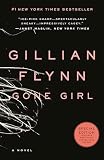
Gillian Flynn's Gone Girl is one of the rare cases where "the book vs. the movie" isn't really a story of Hollywood softening a dark ending — it's a story of Hollywood keeping the dark ending intact. Flynn wrote the screenplay herself, and that fact shapes almost everything below. If you want to compare the two side by side, the Gone Girl paperback is the cheapest way to revisit the novel's prose before or after a rewatch.
The short answer is: they mostly didn't. A lot of people search this question expecting to learn the studio forced a happier, more conventional finale — the way adaptations often do — but David Fincher and Gillian Flynn went the opposite direction. Flynn adapted her own novel, which meant there was no third-party screenwriter softening Amy's manipulations or giving Nick a clean escape. The marriage-as-trap ending, with Nick staying because leaving is somehow more dangerous than staying, survives on screen essentially intact. What changed is less the plot than the delivery: film compresses interior monologue into performance and pacing, so beats that unfold slowly in Amy's diary entries and Nick's first-person doubt land faster and colder on screen. The "change" people are reacting to is really the shift from page-based ambiguity to a single, tightly controlled visual and tonal gut-punch in the final act.
Gone Girl Book vs. Movie Changes Explained
Because Flynn controlled the script, the differences between the novel and the film are mostly matters of compression rather than invention. The book's structure leans heavily on dueling diary/narration chapters that let readers sit inside both Nick's and Amy's justifications for pages at a time; the film has to trim that internal reasoning down to voiceover fragments and visual cues, which changes the pace of how much you distrust each narrator, even if it doesn't change the facts. Side characters and subplots that get room to breathe in the novel are tightened for runtime, and some of Amy's backstory — her childhood as the real-life inspiration for the "Amazing Amy" book series her parents wrote — is present in the film but delivered in a more clipped, expository form than the novel's slower unpacking of that resentment.
Book Adaptations That Changed the Protagonist
Gone Girl is an interesting case study in this topic because it doesn't fully change the protagonist — but it does subtly rebalance whose story you feel like you're watching. The novel is built on true dual narration: Nick's present-tense chapters and Amy's diary entries carry roughly equal narrative weight, and the twist depends on readers trusting Amy's voice on the page just as much as Nick's. The film, by necessity of runtime and marketing (Ben Affleck's name and face anchor the poster), tilts slightly toward Nick as the audience's entry point, with Amy's perspective delivered in more concentrated, almost theatrical bursts rather than sustained first-person interiority. It's a small shift, but it's the kind of change that happens constantly in adaptation: when a book splits its "protagonist" duties evenly, film often has to pick a primary point of view for the audience to anchor to, even while technically preserving both characters' arcs.
If you're building out a full home library comparison, both the Kindle edition and the paperback are worth having on hand — the diary-entry chapters in particular reward a slower, page-flipping read that the film simply can't replicate.