Why Did They Change the Ending of The Lord of the Rings?
As an Amazon Associate we earn from qualifying purchases.
Peter Jackson's "The Lord of the Rings" trilogy is one of the rare cases where cutting huge swaths of a beloved book actually made the story move better on screen — even as it infuriated purists who wanted every page of Tolkien's prose preserved. Understanding what got trimmed, and why, explains a lot about why the films still hold up while remaining meaningfully different from the source material.
Tolkien's "The Return of the King" doesn't end at Mount Doom. After the Ring is destroyed, the hobbits return to the Shire only to find it's been industrialized and terrorized by Saruman's men — a whole chapter, "The Scouring of the Shire," where Merry, Pippin, Sam, and Frodo lead a small rebellion to take back their home. Jackson cut it entirely. On the page, it's the emotional capstone: the hobbits who left as naive homebodies come back as capable leaders and liberate their own people. On screen, that would have meant introducing a new villain arc after audiences had already emotionally exhaled at the Ring's destruction. Instead, the films replaced it with the much-mocked but narratively deliberate string of farewell scenes — Frodo waking in Rivendell, the coronation, the journey home, the Grey Havens — trading political resolution for emotional closure. It's a different kind of ending, built for pacing rather than plot, and it's why the film's finale feels drawn-out rather than abrupt.
The Lord of the Rings: Book vs Movie Changes Explained
Beyond the ending, entire relationships were reshaped. Arwen absorbs plot functions that belong to the elf-lord Glorfindel in the book, and her romance with Aragorn is expanded dramatically to give the trilogy an emotional through-line that the books, dense with lineage and lore, don't prioritize the same way. Faramir's characterization changes just as sharply — book-Faramir refuses the Ring almost instantly, while movie-Faramir wavers and nearly takes Frodo and Sam to Osgiliath, adding tension but softening what Tolkien intended as a contrast to his brother Boromir. Merry and Pippin, meanwhile, are demoted from competent conspirators who plan their departure from the Shire in advance to comic-relief stowaways who sneak into the story almost by accident.
The Lord of the Rings: Scenes Left Out of Movies
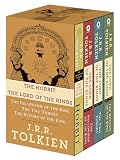
The most-mourned cuts are Tom Bombadil and the Old Forest, along with the Barrow-downs sequence where the hobbits are nearly killed by wights before Bombadil rescues them. It's an atmospheric, folkloric detour that slows the book down on purpose but had no clear function in a three-film structure already straining under runtime. Also gone or reduced: the deep backstory delivered at the Council of Elrond, much of the appendix-level history around the rings' forging, and quieter character beats like the Houses of Healing sequence, where Aragorn's role as healer-king is fully explored. If you want to see exactly what got left on the cutting-room floor, reading the source material side-by-side is the best way to catch it — the J.R.R. Tolkien 4-Book Boxed Set is the most practical way to read all three volumes plus "The Hobbit" in the original text.
Book Adaptations That Changed the Protagonist
Frodo himself shifts the most. In the book, he grows steadily more capable and clear-eyed even as the Ring's burden deepens — a quiet, internal heroism. In the films, he's frequently framed as a victim being acted upon, pushed toward Mordor by Sam, Gollum, and circumstance rather than driving his own choices. Aragorn undergoes the inverse change: Tolkien's Aragorn is already a confident, destined king-in-waiting from the start, while Jackson's version is a reluctant hero who spends three films talking himself into his own legitimacy. Neither choice is wrong for its medium — film thrives on visible internal conflict, while Tolkien's prose could afford quiet certainty — but it does mean the "same" characters read very differently across the two versions. For readers who want to experience that original characterization in full, without the film's lens shaping expectations, The Lord of the Rings Illustrated edition pairs the unedited text with artwork that leans closer to Tolkien's own descriptions than the movies did.