How Have Book Adaptations Changed Over Time?
As an Amazon Associate we earn from qualifying purchases.
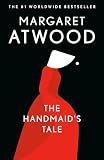
Margaret Atwood's 1985 novel has now been filtered through two very different screen adaptations — a 1990 feature film and the Hulu series that began in 2017 — and the gap between them says a lot about how the industry's relationship to source material has evolved. If you want the original text to compare against either version, The Handmaid's Tale: A Novel ($8.95) is the cleanest starting point.
Book-to-screen adaptations used to work under hard constraints: a two-hour theatrical runtime, a single writer or small writing team compressing an entire novel into a linear plot, and a budget that discouraged risk-taking with tone or structure. The 1990 film version of The Handmaid's Tale is a product of exactly that era — it had to condense Atwood's dense, first-person, fragmented narrative into a conventional feature-length story with a beginning, middle, and end. Streaming television changed the math entirely. A series can spend ten or thirteen episodes on material a film would compress into twenty minutes, which means adaptations no longer have to choose between "faithful" and "watchable." That shift — from film-length compression to season-length expansion — is the single biggest reason modern adaptations of dense literary fiction tend to feel closer to their source material.
Classic Literature Adaptations Then and Now
The Handmaid's Tale isn't unique in this pattern. Plenty of literary novels once got the "one movie, hit the highlights" treatment decades ago, only to be revisited later as prestige limited series or multi-season shows once streaming platforms proved there was an audience for slower, more textured storytelling. What's different with Atwood's novel specifically is voice: the book is narrated entirely from inside Offred's head, in a claustrophobic, interior style that a two-hour film struggles to replicate without heavy narration. Television's slower pace, plus the ability to use visual repetition, silence, and sustained close-ups, gives a series far more room to imitate that interiority than a 90-minute film ever could. Readers who want to see how much of that internal voice survives translation into any visual medium at all might enjoy the Handmaid's Tale graphic novel ($12.99), which handles the same problem through illustration and captioned narration rather than film or TV pacing.
Are Modern Book Adaptations More Faithful?
In terms of raw plot coverage and tone, the 2010s series had far more room to stay close to Atwood's novel simply because of its format — more episodes means less need to cut, merge, or invent shortcuts to reach an ending. The show also had the advantage of hindsight: it began adapting the book decades after the original film, at a moment when audiences and critics were actively rewarding slow-burn, faithful literary adaptations rather than punishing them as "slow." That said, "more faithful" doesn't mean "identical" — expanding a single novel across multiple seasons eventually requires the show to invent material beyond the book's actual events, something the shorter 1990 film never had to do. If you want to track exactly where the series lines up with, and later diverges from, Atwood's original text (and its sequel), the box set of The Handmaid's Tale and The Testaments ($20.42) makes it easy to read both starting points side by side before comparing them to either screen version.