Cultural Impact of The Hunger Games Adaptations
As an Amazon Associate we earn from qualifying purchases.
Few young adult franchises have crossed over into mainstream cultural consciousness the way Suzanne Collins's "The Hunger Games" did. What began as a dystopian trilogy aimed at teen readers became a shorthand for real-world commentary on reality television, class inequality, and authoritarian spectacle. The film adaptations amplified that reach exponentially, turning Katniss Everdeen's three-finger salute into a genuine symbol of protest recognized well outside fandom circles. Comparing the cultural footprint of the books against the movies reveals a lot about how adaptations can either dilute or supercharge an author's original intent.
It's useful to put "The Hunger Games" alongside another franchise that made the leap from page to screen on a massive scale: Harry Potter. Both started as book series with devoted readerships, and both saw their cultural footprint expand dramatically once the films arrived — but the nature of that expansion differed. Harry Potter's movies functioned largely as a visual companion to an already sprawling universe, giving fans a shared shorthand (Hogwarts houses, wand types, spells) that deepened engagement with the books rather than replacing them. The Hunger Games films did something a bit different: they took Collins's fairly interior, first-person narrative — much of the trilogy's power comes from being locked inside Katniss's head — and translated it into an external, visual spectacle that arguably reached a different audience than the readers who found the books first.
That distinction matters. Where Harry Potter's cultural impact tended to reinforce the books, The Hunger Games' film adaptations arguably became the dominant cultural reference point in their own right. References to "The Hunger Games" in politics, media criticism, and social commentary today are as likely to be visual (the Capitol's aesthetics, the reaping ceremony staging) as they are textual, which speaks to how thoroughly the movies reshaped public perception of the source material.
Book vs Movie Cultural Analysis
A proper cultural analysis of book versus movie has to start with what each medium does well. The novels, told in Katniss's claustrophobic first-person present tense, root the story's horror in her exhaustion, hunger, and moral compromise — readers feel her unreliability and trauma directly. The films, by necessity, externalize that: added scenes inside the Gamemakers' control room or President Snow's private conversations gave audiences context Katniss herself never has in the books, which shifts the story's center of gravity from personal survival to political machinery.
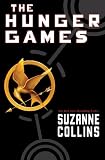
That shift is a big part of why the franchise resonated culturally the way it did — it made the series legible as political allegory to viewers who might never have picked up the novels. If you want to trace that difference firsthand, starting with The Hunger Games (Book 1) and reading Katniss's internal voice before rewatching the film is the clearest way to see how much the adaptation externalizes.
For readers who want to trace this evolution across the entire saga, including the prequel material, the Hunger Games 5-Book Hardcover Box Set collects the original trilogy alongside "The Ballad of Songbirds and Snakes" and "Sunrise on the Reaping," making it easier to see how Collins's cultural critique deepened over time — commentary the films could only hint at through visual staging rather than the sustained internal monologue the books provide.