Cultural Impact of The Lord of the Rings Adaptations
As an Amazon Associate we earn from qualifying purchases.
J.R.R. Tolkien's The Lord of the Rings occupies a strange dual existence: it is simultaneously the foundational text of modern fantasy literature and the source material for one of the most influential film trilogies ever made. Peter Jackson's early-2000s adaptations didn't just bring Middle-earth to a new audience — they reshaped how mainstream culture pictures Hobbits, Elves, and the sweep of an epic quest narrative. Understanding the cultural footprint of the books versus the movies means looking at two very different eras of fandom, two different media, and two very different kinds of staying power.
It's become common to compare The Lord of the Rings films to other genre-defining adaptations, especially the Harry Potter series, when people talk about "book vs movie impact." The comparison is useful because it highlights something specific about Tolkien's case: unlike Harry Potter, which arrived as books and films released in close succession to the same generation of readers, The Lord of the Rings had already spent nearly half a century as a beloved, slow-burn literary phenomenon before Jackson's trilogy hit theaters. That gap meant the films weren't just adapting a story — they were adapting decades of accumulated fan imagination, academic study, and countercultural association (the books had been embraced by 1960s and '70s readers as much for their themes of nature and resistance to industrialization as for their adventure).
Where Harry Potter's films arguably cemented a single visual vocabulary for an audience still discovering the books in real time, Jackson's Lord of the Rings had the harder job of visualizing something millions of readers had already pictured differently in their heads for a generation. The films largely succeeded anyway, to the point that Jackson's version of Hobbiton, the Fellowship's costuming, and even the casting became the default mental image for new readers picking up the novels afterward — a reversal of the usual book-to-movie relationship, where the book's imagery normally comes first.
Book vs Movie Cultural Analysis
Culturally, the book and the films now serve almost different purposes for different audiences. The novels remain the reference point for readers drawn to Tolkien's dense worldbuilding, invented languages, and the slower, more meditative pacing of the journey — qualities that necessarily got compressed or streamlined for a three-film runtime. The movies, meanwhile, became the cultural shorthand: quoted dialogue, iconic musical themes, and visual set pieces that now function as pop-culture reference points independent of whether someone has read a page of the source material.
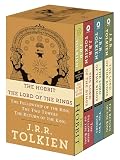
This split is part of why so many readers end up wanting both versions in their collection rather than choosing one. For newcomers who want the complete original text in one place, the J.R.R. Tolkien 4-Book Boxed Set ($25.90) pairs The Hobbit with the full trilogy exactly as Tolkien wrote it, letting readers see firsthand what the films chose to compress. Readers who want to sit with the prose the way Tolkien originally envisioned it, alongside rich visual reference that doesn't lean on the films' aesthetic, often turn to The Lord of the Rings Illustrated ($53.19), which offers an alternative visual language to Jackson's now-dominant one. Either edition makes clear how much of the story's cultural weight was already present on the page long before it reached the screen.