Cultural Impact of The Shining Adaptations
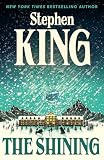
As an Amazon Associate we earn from qualifying purchases.
Few adaptations generate as much passionate disagreement as Stanley Kubrick's 1980 film version of Stephen King's 1977 novel. King has been famously vocal about his dissatisfaction with Kubrick's interpretation, arguing it stripped away the emotional warmth and redemption arc he built into Jack Torrance's descent. Kubrick, meanwhile, was chasing something colder and more architectural — a film about madness, isolation, and the Overlook Hotel as a kind of haunted machine rather than a supernatural force acting on a fundamentally decent man. That tension between author's intent and director's vision is exactly why "The Shining" remains a perennial subject of book-versus-movie debate decades later, and why readers still return to the source material to see what Kubrick left out.
When people search for how a story's book and film versions each shaped culture, "The Shining" often gets compared to other King adaptations and to franchises like Harry Potter, where the book-first fandom and the movie-first fandom sometimes feel like they're discussing different stories entirely. The Harry Potter comparison is instructive: J.K. Rowling's novels built an enormously detailed internal world that the films could only partially compress, yet the movies became the dominant cultural touchstone for a generation who experienced Hogwarts visually before ever opening a page. "The Shining" followed a similar but inverted path — Kubrick's imagery (the twins in the hallway, the elevator of blood, "Here's Johnny," the hedge maze that doesn't even exist in the book) became so iconic that most casual audiences now picture the movie first and assume its details are canon. Just as Harry Potter fans debate which medium "counts" as the real story, King readers argue that the novel's Jack Torrance — a struggling, sympathetic alcoholic fighting his own worst impulses — is a fundamentally different, more humane character than Jack Nicholson's increasingly unhinged performance. Both cases show how a film adaptation can eclipse its source in the public imagination while diverging sharply from the author's original psychological intent.
If you want to see that difference for yourself, the novel is easy to pick up in the standard paperback edition or as a more affordable mass-market paperback, both of which let you track exactly where King's Overlook Hotel and Kubrick's diverge.
Book vs Movie Cultural Analysis
From a cultural-analysis standpoint, the enduring "Shining" debate isn't really about which version is "better" — it's about what each medium is built to do. King's novel operates through interior monologue, giving readers direct access to Jack's guilt, his love for his family, and the hotel's influence creeping into his thoughts. That interiority is something prose does uniquely well, and it's largely unavailable to film. Kubrick instead leans on the tools cinema does best: unsettling symmetry, unnerving score work, the Steadicam gliding through corridors, and ambiguity about whether anything supernatural is happening at all versus Jack simply breaking down. This is a recurring pattern in book-versus-movie analysis generally — adaptations succeed critically not by replicating the source but by translating its themes into a different sensory language, even if that means changing character motivation, altering the ending, or inventing images (like the maze) that never existed on the page.
For readers who want to study King's broader early style alongside "The Shining," the three-novel box set with Carrie and 'Salem's Lot offers useful context for how his fiction handled horror, family, and small-town dread before Kubrick reinterpreted it on screen.