Movie Adaptations That Changed the Book Ending
As an Amazon Associate we earn from qualifying purchases.
J.R.R. Tolkien's The Hobbit began life as a slim, whimsical children's adventure book, but Peter Jackson's film trilogy stretched that same story across three feature-length movies. Fans coming to the original novel after watching the movies are often surprised by how much lighter, faster, and more compact the source material actually is. Below is a breakdown of where the films diverge, why those changes were made, and what got left on the cutting-room floor of Tolkien's own pages.
One of the biggest points of confusion for readers is how differently the story resolves on the page versus on screen. Tolkien's book wraps up its climactic battle and Bilbo's journey home in a comparatively brisk, understated way — the emotional weight comes from quiet loss and homecoming rather than sprawling action set pieces. The films expand the final confrontation into a much longer, more visually elaborate battle, giving more screen time to characters and factions that receive only brief mentions in the text. The movies also linger longer on farewells and character fates, drawing out emotional beats that Tolkien resolves in just a page or two. Readers expecting the movie's extended, multi-character send-off will find the book's ending far more economical, almost abrupt by comparison — a reminder that Tolkien wrote this as a tightly-paced tale for young readers, not an epic war saga.
Biggest Differences in Book to Film
The most obvious difference is scale: Tolkien's original is a single, modestly sized novel, while Jackson's adaptation became three long films. To fill that runtime, the movies introduce material and characters that don't appear in the book at all, expand the roles of dwarves who are little more than named background figures on the page, and add subplots involving side characters and locations that Tolkien only gestures at. The tone shifts too — the book reads as a cozy, often funny fairy-tale narrated with a warm, storytelling voice, full of asides directly to the reader, while the films lean into darker, more dramatic fantasy filmmaking to match the visual language established by The Lord of the Rings movies. Small sequences that take a paragraph in the book, like encounters with trolls or goblins, become extended action sequences on screen. If you want to see just how much texture the book actually packs into its prose, the Illustrated Edition is a great way to experience Tolkien's descriptions alongside artwork that captures the story's original, more whimsical spirit.
What Books Changed Most in Movie Version
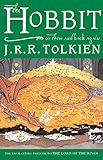
Compared to many other book-to-film adaptations, The Hobbit stands out as one of the more heavily expanded transformations in movie history — not because the book was rewritten, but because so much was added around it. Whole sequences, character arcs, and connective tissue linking the story to the broader Lord of the Rings mythology were built out for the screen, meaning the films function almost as an expansion pack to Tolkien's original rather than a straightforward retelling. For readers who want to revisit exactly what Tolkien actually wrote before all that embellishment, the 75th Anniversary Edition offers a faithful, nicely presented way to reread the book on its own terms and see just how much the films chose to add.