Movie Adaptations That Changed the Book Ending
As an Amazon Associate we earn from qualifying purchases.
Stephen King's novel and Stanley Kubrick's 1980 film share a title, a haunted hotel, and a family falling apart under supernatural pressure—but beyond that setup, they diverge so sharply that they almost function as two separate stories wearing the same coat of paint. King wrote a hot, emotional book about alcoholism, rage, and a father who is genuinely trying (and failing) to save his family. Kubrick made a cold, clinical film about a man who seems broken from the very first scene. If you've read the book and then watched the movie, or vice versa, the gap between them is jarring enough that it's become one of the most-discussed adaptation debates in horror history—right up there with King's own famous public criticism of Kubrick's version.
The ending is where the two versions part ways most dramatically. In King's novel, the Overlook Hotel's boiler is central to the climax—Jack Torrance, in a final flash of paternal clarity, remembers the boiler needs venting and the hotel explodes, destroying the Overlook (and Jack) completely. It's an ending that lets the hotel be destroyed and gives Jack a redemptive, sacrificial final act, however small. Kubrick's film throws all of that out. There's no boiler, no explosion, no redemption arc for Jack. Instead, Jack Nicholson's Jack freezes to death lost in the hotel's hedge maze—a set piece that doesn't even exist in the book, where the topiary animals (not a maze) are the hedge-based menace. The film's final shot, a slow zoom into an old photograph showing Jack at a 1921 hotel party, adds an ambiguous, cyclical horror that the book never suggests, implying Jack was always somehow part of the Overlook. King's ending closes the book with destruction and release; Kubrick's ending opens the story back up into mystery.
Biggest Differences in Book to Film
Beyond the ending, the tonal and structural differences are extensive. Jack Torrance in the novel is a sympathetic, deeply flawed man battling real alcoholism and barely-contained anger, with visible backstory about his temper and his love for his family—Kubrick's Jack is dry, sardonic, and off-kilter almost from minute one, giving audiences less far to fall. Wendy Torrance is rewritten too: King's Wendy is more assertive and resourceful, while Shelley Duvall's film Wendy is often read as more fragile and reactive. The hotel itself behaves differently—King's Overlook is aggressively, physically alive (topiary animals move, the boiler is a ticking clock), while Kubrick's Overlook menaces through atmosphere, geometry, and dread rather than overt supernatural set pieces. Danny's psychic "shining" is explored more thoroughly in the book, with more interior access to his visions, whereas the film keeps him more opaque. Even small details, like the hotel's room number (217 in the book, changed to 237 for the film), reflect Kubrick's willingness to alter specifics freely.
What Books Changed Most in Movie Version
Among Stephen King adaptations, The Shining is frequently cited as one of the most heavily altered—which is exactly why King publicly disliked Kubrick's film for years, and later helped produce a 1997 TV miniseries closer to the book. The core change isn't just plot details; it's the entire emotional architecture. King's book is ultimately about addiction and a family trying to survive it, with a genuinely tragic father figure. Kubrick's film strips out much of that psychological throughline in favor of dread, ambiguity, and visual horror. That's a large part of why so many readers search out the differences—the two versions can feel like they're making opposite arguments about the same man.
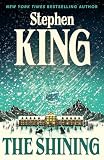
If you want to compare them yourself, the original novel is available in both a paperback edition and a Kindle edition, and Kubrick's film holds up remarkably well in the 4K Ultra HD + Blu-ray release, which is a solid way to catch the visual details—like the hedge maze and that final photograph—that make the film's ending so different from King's.