Why Cloud Atlas Is a Good Book-to-Movie Adaptation
As an Amazon Associate we earn from qualifying purchases.
David Mitchell's 2004 novel "Cloud Atlas" was built like a Russian nesting doll: six narratives, six eras, each one interrupted mid-sentence and resumed only after the story had leapt forward centuries, then folded back on itself in reverse order. It's a structure that works beautifully on the page precisely because prose can pause, backtrack, and let a reader hold multiple timelines in their head at once. Handing that to a film crew looks, on paper, like a suicide mission. And yet the 2012 adaptation directed by Lana and Andy Wachowski and Tom Tykwer didn't just survive the source material — it found a genuinely new way to tell the same story, which is why it keeps coming up whenever people talk about adapting "unfilmable" books.
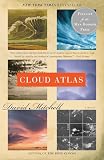
The film's biggest structural gamble was abandoning Mitchell's nested, chronological-then-reverse-chronological order and instead cross-cutting between all six timelines simultaneously. That sounds like a betrayal of the text, but it actually solves a problem the book doesn't have to worry about: a movie can't ask an audience to wait two hours before finding out how the first story ends. By intercutting a 19th-century sea voyage, a 1930s composer's letters, a 1970s nuclear conspiracy, present-day farce, near-future Neo-Seoul, and a post-apocalyptic future, the filmmakers let the novel's real subject — the way souls, choices, and courage echo across generations — become visible in real time rather than in retrospect. The other bold choice was casting: Tom Hanks, Halle Berry, Hugo Weaving, and others play multiple characters across every era, sometimes across race and gender, using heavy prosthetic makeup. It's a literal, visual answer to the book's thematic argument that identity is porous and recurring. If you want to see how Mitchell built that architecture in the first place, Cloud Atlas: A Novel is the place to start before watching how the filmmakers dismantled and rebuilt it.
Difficult Books to Adapt to Film
Cloud Atlas belongs to a specific club of novels considered nearly impossible to translate to screen because their power comes from something distinctly literary — unreliable narration, fragmented chronology, dense interiority, or invented language. Think of "Infinite Jest," with its footnotes and hundreds of characters; "Gravity's Rainbow," whose paranoid digressions resist any linear plot; "House of Leaves," which uses the physical typography of the page as part of its horror; or "One Hundred Years of Solitude," which Gabriel García Márquez himself long resisted selling to Hollywood because magical realism depends so heavily on narrative voice. What links all of these to Cloud Atlas is that the "unfilmable" label usually isn't about content — it's about form. The challenge is finding a cinematic equivalent for a literary trick, not just filming the events.
Unfilmable Novels Successfully Adapted
Cloud Atlas sits alongside a handful of adaptations that proved the "unfilmable" label wrong by translating structure rather than transcribing it. Ang Lee's "Life of Pi" solved a first-person, philosophically dense survival story with visual spectacle and framing devices. Denis Villeneuve's "Dune" broke a dense, jargon-heavy epic into two deliberately paced films rather than compressing it. David Cronenberg's "Naked Lunch" gave up on literal adaptation entirely and dramatized the act of writing the book instead. Cloud Atlas's own solution — parallel editing instead of nested chapters — belongs in that same lineage of filmmakers who treated structure, not plot, as the thing that actually needed adapting.
For the full effect, watching how six eras collide on screen is best appreciated in a format that does justice to the makeup, scope, and cross-cutting — the Collector's Edition 4K Ultra HD + Blu-ray is built for exactly that kind of close, repeat viewing, and the standard Cloud Atlas release is a solid, more affordable way to see the whole ambitious experiment for yourself.