Difficult Books to Adapt to Film
As an Amazon Associate we earn from qualifying purchases.
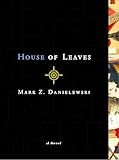
Mark Z. Danielewski's House of Leaves has spent two decades sitting near the top of every "unfilmable novel" list, and unlike a lot of books that earn that label just for being weird, this one earns it structurally. The novel isn't hard to adapt because its plot is strange — plenty of strange plots have become movies. It's hard to adapt because the book's terror lives in its typography: sideways text, footnotes that spiral into other footnotes, pages with a single word crawling toward the margin, color-coded appearances of the word "house." Strip that away and put the story on a screen, and you're left with a fairly conventional found-footage haunted-house tale about a family named Navidson exploring a home that is architecturally impossible — larger inside than out. The dread readers remember doesn't come from the hallway. It comes from what the page itself is doing to your eyes while you read about the hallway. If you've never experienced that firsthand, the standard paperback edition is the way to see exactly what a camera simply cannot replicate.
House of Leaves belongs to a specific category of "difficult" novels: ones where the medium of the book — not just the story inside it — is doing narrative work. Compare it to something like Infinite Jest, where the difficulty is scale and digression, or Naked Lunch, where the difficulty is a lack of linear plot at all. Danielewski's difficulty is typographic and architectural. The novel is a document within a document within a document: a manuscript called The Navidson Record, annotated by a paranoid narrator named Johnny Truant, edited by unnamed "editors," footnoted with fake academic citations. A film has to pick one layer to actually show us, and every layer it drops is a layer of dread lost. That's the same core problem faced by other notoriously difficult adaptations — the unreliable, fragmented structure of Pale Fire, or the second-person disorientation of Bright Lights, Big City — where the book's form is inseparable from its meaning.
Unfilmable Novels Successfully Adapted
The word "unfilmable" gets applied often and then quietly disproven — Naked Lunch became a Cronenberg film by abandoning plot fidelity entirely and adapting its fever instead of its pages. Life of Pi was called unfilmable for its interiority and CGI-tiger problem, then won an Oscar for visual effects. Cloud Atlas and Trainspotting both found ways to translate structural chaos into cinematic language through editing and voiceover rather than direct transcription. What these successes share is that the filmmakers didn't try to photograph the book — they found a cinematic equivalent for the book's core trick. That's the open question hanging over House of Leaves: no adaptation has cracked it yet, because no one has found the screen-language version of a page that makes you turn the book upside down. Until someone does, the book remains the only version of itself. For readers who want the full physical experience — including a sturdier option for repeat re-reads or classroom use — the library binding edition holds up to exactly the kind of obsessive, dog-eared rereading this novel invites.