Fan Reviews of Dune Adaptations
As an Amazon Associate we earn from qualifying purchases.
Frank Herbert's Dune has spent decades generating exactly the kind of passionate, occasionally heated fan debate that keeps forums, comment sections, and Reddit threads alive years after a book's original release. With multiple film adaptations, a divisive 1984 cult classic, and Denis Villeneuve's more recent two-part epic, plus expanding television efforts set in the same universe, fans have no shortage of material to argue over. This page rounds up how readers and viewers talk about these adaptations, and where the conversation tends to land.
Ask longtime readers what they think of the various Dune films and you'll get a spectrum of opinions rather than a single consensus. A recurring theme in fan reviews is admiration for how faithfully the newer films capture Arrakis visually — the scale of the sandworms, the oppressive heat of the desert, the austere production design — paired with frustration over how much of Herbert's dense internal monologue and political maneuvering necessarily gets compressed or cut for runtime. Fans of the prose consistently point out that Herbert's novel spends enormous energy inside Paul Atreides's head, tracking his prescient visions and the slow dread of his transformation, in a way that's inherently hard to translate to screen no matter how skilled the director.
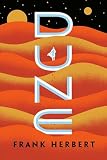
Older fans who grew up with the 1984 Lynch version often defend it as a flawed but sincere attempt, praising its strange, dreamlike atmosphere even while acknowledging its narrative confusion for newcomers. Meanwhile, fans discovering the story through Villeneuve's films frequently report going back to read the source material afterward, curious how much of what they saw on screen was invented versus lifted almost verbatim from the page — a good excuse to actually sit with Dune itself and see Herbert's original pacing and world-building firsthand.
Fan Discussions: Dune TV Series vs Books
Beyond the feature films, fan conversation has increasingly turned to television efforts expanding the Dune universe, and how those adaptations handle material that stretches beyond the first novel. These discussions tend to center on a specific tension: television has more room to breathe than a two-hour film, but that extra room also means more opportunity to stray from Herbert's plotting, introduce new subplots, or reorder events for pacing reasons. Fans who've read deeper into the saga — Dune Messiah, Children of Dune, and beyond — are often the most vocal in these threads, comparing character motivations and political intrigue in the show against what the books actually establish about the Bene Gesserit, the Atreides legacy, and the long game being played across generations.
For readers who want to follow along with these discussions from an informed position, going beyond the first book helps enormously. The Frank Herbert's Dune Saga 3-Book Boxed Set covers Dune, Dune Messiah, and Children of Dune, which is usually enough to follow most of the debates around Paul's arc and its consequences. Fans who want the full picture — including the later, stranger entries that inform some of the extended-universe material shows draw from — tend to reach for the complete Frank Herbert's Dune Saga 6-Book Boxed Set, which carries the story all the way through Chapterhouse: Dune.
What unites almost every fan discussion, whether it's about a blockbuster film or a streaming series, is a shared starting point: everyone is measuring the adaptation against Herbert's original text. That's ultimately why the books remain the most-referenced source in these debates — they're the fixed point every screen version gets compared to.