Fan Reviews of The Lord of the Rings Adaptations
As an Amazon Associate we earn from qualifying purchases.
Few book series inspire the kind of passionate, decades-long debate that J.R.R. Tolkien's Middle-earth saga does. Since Peter Jackson's film trilogy brought Frodo, Aragorn, and the Fellowship to the big screen, and more recently since Amazon's "The Rings of Power" expanded the world for television, fans have been comparing notes—line by line, scene by scene—on what the adaptations got right, what they changed, and whether those changes honored the spirit of the books. Below is a look at how fans are actually talking about these adaptations, and where you can go to revisit the source material for yourself.
Fan reviews of the LOTR screen adaptations tend to split into a few recurring camps. There's the group that treats Peter Jackson's trilogy as close to sacred—praising the practical effects, the New Zealand locations, and performances like Ian McKellen's Gandalf and Sean Bean's Boromir as definitive interpretations that actually deepened their appreciation of the books. Then there's the more skeptical camp, often made up of longtime readers, who point to specific narrative compressions and character shifts (Faramir's arc is a frequent talking point) as evidence that the films prioritized pacing and spectacle over some of Tolkien's quieter, more deliberate storytelling choices.
With "The Rings of Power," the fan review landscape has been even more divided, largely because the show operates in the Second Age, a period Tolkien sketched in far less detail in the main narrative than the Third Age covered by the original trilogy. Reviewers who come to the show as fans of the films first tend to judge it on spectacle and world-building; those who come to it as devoted readers of the appendices and supplementary material are quicker to flag where the show has taken creative liberties to fill in gaps Tolkien left intentionally vague.
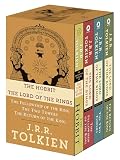
What almost every fan review agrees on, regardless of camp, is that revisiting the books afterward changes the conversation. Many fans describe rereading the trilogy after watching an adaptation and noticing details—Tolkien's descriptions of landscape, his pacing around the Shire, the weight he gives to songs and poetry—that simply don't translate to screen. For readers who want to make that comparison themselves, the J.R.R. Tolkien 4-Book Boxed Set is a natural starting point, collecting The Hobbit alongside the full trilogy in one set.
Fan Discussions: The Lord of the Rings TV Series vs Books
Online discussions comparing "The Rings of Power" to Tolkien's written work have become their own subculture of fandom. Much of the debate centers on how faithfully the show can adapt material that, unlike the original trilogy, was never written as a complete, continuous narrative—Tolkien's notes on the Second Age exist mostly in appendices, letters, and posthumously published material assembled by his son Christopher Tolkien. This gives showrunners more room to invent, and it gives fans plenty to argue about regarding what counts as "canon."
Threads on fan forums frequently break down into close textual comparisons: viewers cross-referencing a scene against the appendices of The Return of the King, or debating whether a character's condensed timeline in the show contradicts details from the books. Other discussions are less about accuracy and more about tone—whether the show captures the sense of deep time and looming tragedy that runs through Tolkien's legendarium, or whether it feels more like a conventional fantasy series wearing Middle-earth's aesthetic.
For fans who want to dig into these debates with the actual text in hand, a compact reference copy is genuinely useful. The Deluxe Pocket Boxed Set is easy to keep nearby while watching, and readers who want to sit with Tolkien's prose and Alan Lee's artwork in a more immersive format often turn to The Lord of the Rings Illustrated edition for that purpose. Whichever side of the book-versus-adaptation debate you land on, having the source material on your shelf tends to make the discussion a lot more interesting.