The Chronicles of Narnia Book vs Movie Changes
As an Amazon Associate we earn from qualifying purchases.
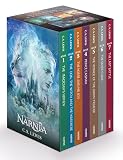
C.S. Lewis wrote seven Narnia books, but only three ever made it to the big screen: The Lion, the Witch and the Wardrobe (2005), Prince Caspian (2008), and The Voyage of the Dawn Treader (2010). That mismatch alone tells you a lot about how the adaptations handled the source material — the filmmakers weren't just trimming chapters, they were deciding which parts of Lewis's world could survive translation to a modern fantasy blockbuster, and which parts had to be reshaped, expanded, or quietly dropped. If you want to read the full saga in order before comparing it to what ended up on screen, the Chronicles of Narnia Box Set ($37.99) collects all seven novels in Lewis's preferred reading order.
The 2005 Lion, Witch and the Wardrobe film stays fairly faithful in structure but adds material Lewis never wrote: an opening London Blitz sequence dramatizing why the Pevensie children are evacuated in the first place, and an expanded final battle between Aslan's army and the White Witch's forces that's barely sketched in the book. Edmund's betrayal and redemption arc gets more screen time and psychological nuance than the novel's brisker narration allows.
Prince Caspian (2008) changes even more. The film invents a Narnian raid on the Telmarine castle that doesn't exist in the book, restructures the timeline so events unfold in a different order, and adds a romantic subplot between Susan and Caspian that Lewis never included. The Voyage of the Dawn Treader (2010) goes furthest of the three, inventing a "green mist" antagonist and a quest to collect seven magical swords to serve as a plot engine — mechanics entirely absent from Lewis's more episodic, island-hopping original, which reads more like a sea voyage anthology than a single quest narrative.
What Was Left Out of The Chronicles of Narnia Movies
Beyond scene-level changes, entire chunks of Lewis's Narnia never reached film at all. The Magician's Nephew, The Horse and His Boy, The Silver Chair, and The Last Battle — four of the seven books — were never adapted, meaning most of Narnia's creation myth, the Calormen storylines, and the series' apocalyptic finale simply don't exist for movie-only audiences. Within the three films that were made, Lewis's frequent authorial asides and moral commentary (a hallmark of his voice) were cut for pacing, and the religious allegory, while still present visually, is considerably softened in dialogue. Quieter character beats — particularly Susan and Lucy's individual arcs and some of the Pevensies' internal reflection on growing up and returning to England — were trimmed to make room for action set pieces.
The Chronicles of Narnia Book to Screen Comparison
Taken together, the films shift Narnia's tone from a gentle, allegorical children's story with occasional bursts of danger into a more conventional action-fantasy franchise, competing visually with Lord of the Rings and Harry Potter adaptations of the same era. Battles are longer, villains are more visually elaborate, and plots gain external threats (the green mist, the seven swords) that give films a clearer three-act structure than Lewis's more meandering, chapter-by-chapter storytelling. For readers who want to see just how much the books diverge — and to experience the four stories that never made it to theaters — the 7-Book Box Set with Trivia Book ($39.99) is a solid way to read the complete series alongside a companion trivia guide, while the 7 Books Collection Box Set ($36.90) offers the same full set at a slightly lower price for readers who just want the novels themselves.