The Hunger Games Book vs Movie Changes
As an Amazon Associate we earn from qualifying purchases.
Suzanne Collins's dystopian saga made an unusually smooth jump from page to screen, largely because Collins herself co-wrote several of the screenplays. That collaboration didn't mean the films are carbon copies of the novels, though — the shift from Katniss Everdeen's first-person narration to a third-person camera forced filmmakers to invent entirely new scenes, cut interior monologue, and restructure how information reaches the audience. Below is a breakdown of what actually changed, what got left behind, and how the two versions of the story stack up against each other.
The single biggest structural change across the adaptations is point of view. The books are told entirely through Katniss's internal voice, so readers are constantly inside her suspicion, fear, and calculation. The films can't replicate that, so they compensate by cutting away to the Capitol — showing Gamemakers, President Snow, and control-room technicians manipulating the arena in real time. This is most noticeable in the first film, where scenes of Seneca Crane adjusting the environment don't exist in the novel at all but give moviegoers context Katniss herself never has.
Character relationships shift too. Peeta Mellark's arc feels more compressed on screen, with less of the slow-burn ambiguity about his motives that the book affords through Katniss's constant second-guessing. Haymitch Abernathy's mentorship and drinking are present in both, but the films trim down just how sustained his manipulation of sponsors and public perception actually is in the source material. The romantic triangle with Gale Hawthorne is similarly flattened, since the movies have far less real estate to build his relationship with Katniss before the Games begin.
What Was Left Out of The Hunger Games Movies
Several smaller but meaningful details didn't survive the transition. Katniss's extended reflections on hunger, poverty, and life in the Seam — the sensory groundwork Collins lays before the Games ever begin — are heavily condensed in the films, since a two-hour runtime can't dwell on the day-to-day desperation of District 12 the way a novel can. Backstory involving her father's death in the mine explosion and her family's near-starvation before Katniss started hunting is referenced rather than dramatized.
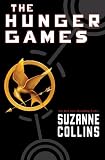
The books also spend considerably more time inside the arena on Katniss's tactical thinking — how she reads terrain, rations supplies, and second-guesses alliances — much of which is externalized in the films through visual shorthand or simply trimmed for pacing. Readers who want that fuller psychological texture will notice the gap most acutely in the first book, The Hunger Games (Book 1), where entire chapters of internal strategy get reduced to a few tense minutes on screen.
The Hunger Games Book to Screen Comparison
Taken as a whole, the film series functions as a faithful but streamlined companion to the novels rather than a replacement for them. The broad strokes — Katniss's volunteering for Prim, the arena survival, the political awakening across Catching Fire and Mockingjay — all land intact. What's lost is the density of interior detail that makes the books feel claustrophobic and paranoid in a way the films, however well-cast and well-shot, can only gesture toward.
For readers coming to this either for the first time or wanting the full arc including the prequel material, the Hunger Games 4-Book Paperback Box Set covers the original trilogy plus The Ballad of Songbirds and Snakes, while fans wanting to go deeper into the series' expanding history should look at Sunrise on the Reaping, which continues Collins's practice of using prose to fill in political and emotional context the films simply don't have room for.