The Lord of the Rings Book vs Movie Changes
As an Amazon Associate we earn from qualifying purchases.
Peter Jackson's film trilogy is widely regarded as one of the most faithful big-budget adaptations of a beloved fantasy epic ever made, but "faithful" doesn't mean "identical." J.R.R. Tolkien's novels are dense, digressive, and packed with songs, lineages, and side journeys that simply don't translate to a three-hour runtime. Anyone who has read the books and then rewatched the films inevitably starts noticing the gaps — characters who vanish, subplots that never appear, and moments that were rewritten for pacing or drama. Below is a breakdown of what actually changed, what got cut, and how the two versions stack up against each other.
Several of the films' biggest changes were about compressing Tolkien's sprawling narrative into something cinematic. Arwen's role was significantly expanded in the movies — in the books she's a much more distant, background presence, while the films give her an active part in Frodo's escape to Rivendell that was originally handled by the elf-lord Glorfindel. Faramir's characterization was also altered: book-Faramir never seriously considers taking the Ring to Gondor, while movie-Faramir is initially tempted before relenting, adding tension that didn't exist on the page. The timeline of events was compressed too, with the geography and pacing of journeys like the Fellowship's trek from Rivendell to Moria tightened for narrative momentum. Sam and Frodo's relationship, and the darker toll the Ring takes on Frodo, were also emphasized more visually and dramatically in the films than the prose conveys directly.
What Was Left Out of The Lord of the Rings Movies
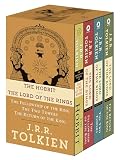
The most commonly cited omission is Tom Bombadil, the eccentric, song-loving figure who hosts Frodo and company in the Old Forest in "The Fellowship of the Ring." His entire sequence, along with the Barrow-downs episode that follows it, was cut from the films for pacing reasons, despite being a fan-favorite curiosity in the book. The Scouring of the Shire — the final confrontation back home, where the hobbits return to find the Shire industrialized and oppressed under Saruman's lackey Sharkey — was also left out entirely, ending the films' story arc earlier than the books do. Many secondary characters and subplots were trimmed or merged, including reduced roles for figures like Glorfindel and various extended council and genealogical passages that Tolkien includes but that add little to on-screen momentum. Readers who want every one of these digressions intact should go straight to the source material — the J.R.R. Tolkien 4-Book Boxed Set, which pairs "The Hobbit" with the full trilogy, is the most complete way to experience everything the films had to leave behind.
The Lord of the Rings Book to Screen Comparison
Overall, the films succeed by translating tone and emotional stakes rather than chasing line-by-line accuracy. Jackson's team clearly prioritized visual spectacle and forward momentum over Tolkien's slower, more meditative pacing, which is why entire chapters were condensed or removed while the core hero's journey remained intact. For readers who want to compare the two side by side, an edition with rich visual detail helps bridge that gap — The Lord of the Rings Illustrated pairs Tolkien's original text with artwork that echoes the atmosphere the films later brought to life on screen. For those wanting a more portable way to revisit the source material chapter by chapter, the Deluxe Pocket Boxed Set makes an easy on-the-go comparison companion.