The Story in Brief
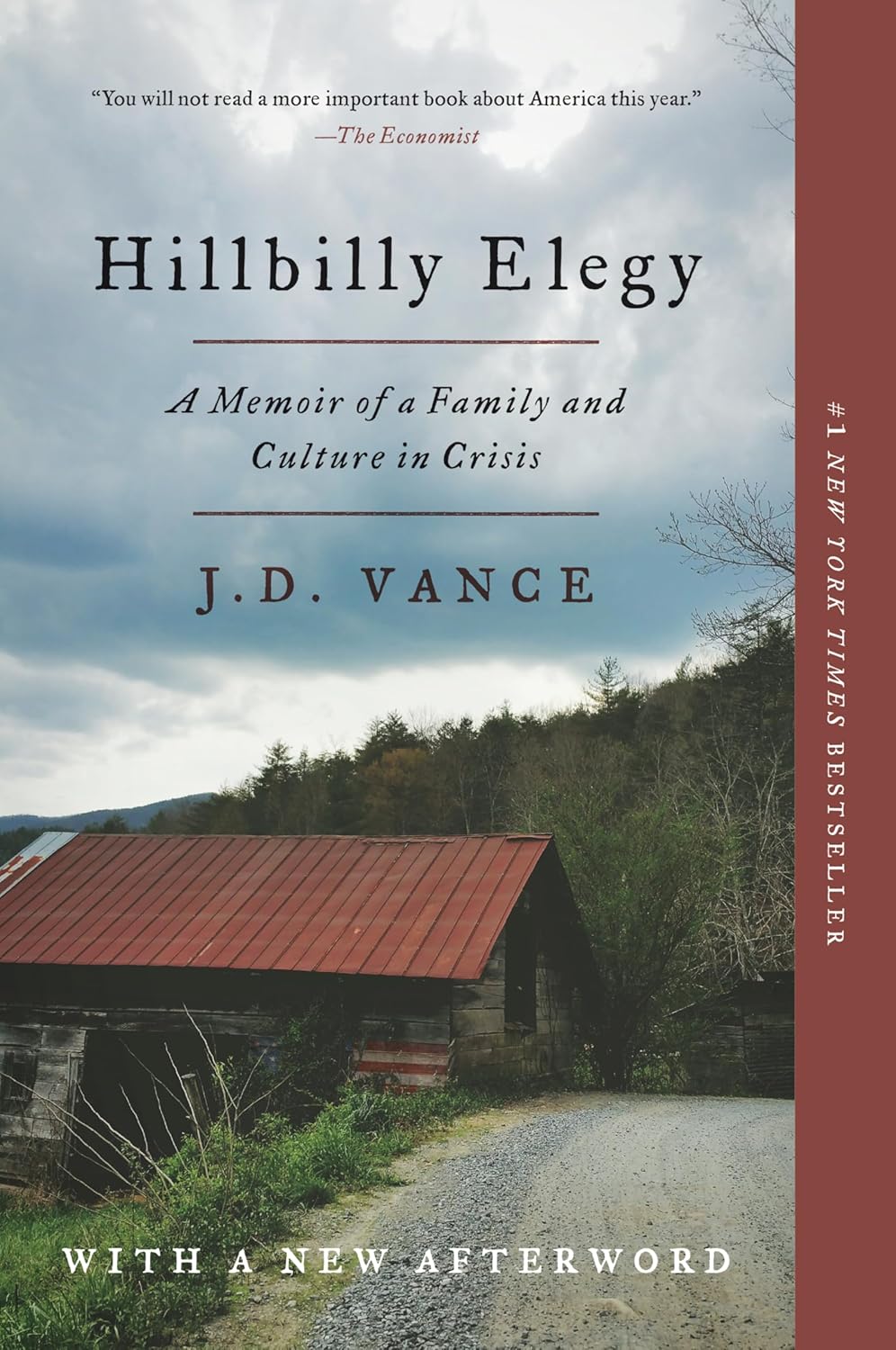
J.D. Vance's memoir traces his journey from a chaotic childhood in Middletown, Ohio, and Jackson, Kentucky, to Yale Law School, shaped primarily by his volatile mother Beverly and his fierce grandmother Bonnie "Mamaw" Vance. The book alternates between Vance's present-day law school experience and memories of growing up amid addiction, domestic violence, and economic decline in Appalachia's Rust Belt diaspora. Ron Howard's 2020 Netflix adaptation condenses this into a dual-timeline structure, intercutting young J.D.'s turbulent adolescence with adult J.D. (Gabriel Basso) rushing home from Yale to manage his mother's latest overdose crisis.
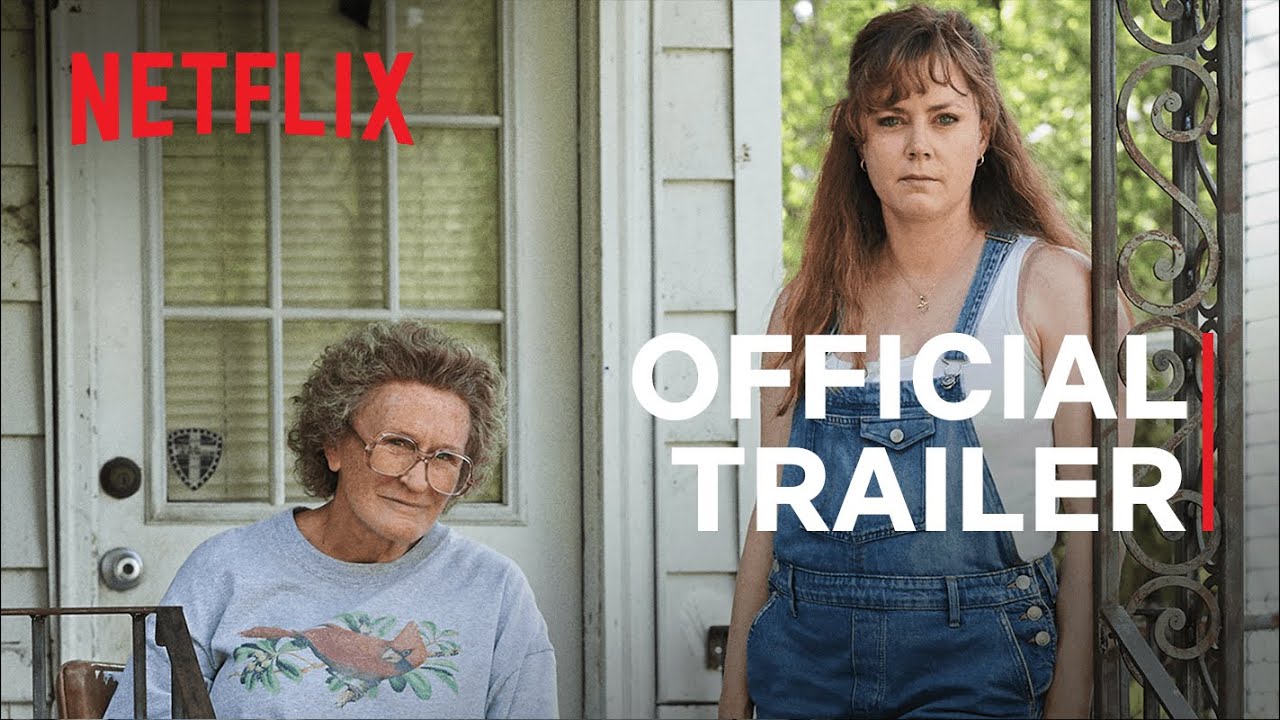
The film arrived during a contentious cultural moment, with Amy Adams and Glenn Close earning Oscar buzz for their performances as Beverly and Mamaw respectively. Critics divided sharply—some praised the acting while questioning the narrative's politics; others felt Howard's earnest direction couldn't reconcile the memoir's bootstraps ideology with its depiction of systemic poverty. The book had already become a flashpoint in debates about white working-class America after the 2016 election, and the film inherited that controversy, earning a 25% Rotten Tomatoes score despite its high-profile cast.
Both versions center on Vance's argument that Appalachian culture—with its pride, fatalism, and distrust of outsiders—both sustains and traps its people, a thesis that remains polarizing regardless of medium.
| Character | In the Book | In the The Movie |
|---|---|---|
| J.D. Vance Gabriel Basso (adult), Owen Asztalos (teen) |
A reflective narrator analyzing his own escape from poverty through the lens of sociology and personal responsibility, balancing gratitude with critique. | A more passive protagonist reacting to family crises, with less interior life and sociological commentary—the film prioritizes his role as witness over analyst. |
| Beverly "Bev" Vance Amy Adams |
Portrayed with painful complexity—a nurse whose intelligence and ambition are destroyed by addiction, abusive relationships, and untreated mental illness across decades. | Adams emphasizes the volatility and desperation, delivering explosive confrontations (the car scene, the hospital) that feel more theatrical than the book's measured recounting. |
| Bonnie "Mamaw" Vance Glenn Close |
A contradictory figure—loving but violent, who once set her husband on fire, yet provided the only stable home J.D. knew, teaching him resilience and self-reliance. | Close softens Mamaw's edges into a profane but ultimately heroic matriarch, downplaying the character's capacity for cruelty that Vance documents unflinchingly. |
| Papaw (Jim Vance) Bo Hopkins |
Mamaw's husband, a former alcoholic who achieved sobriety and became a gentle presence, representing the possibility of change within the family's cycle of dysfunction. | A quieter, more peripheral figure whose redemption arc receives less attention, serving mainly as Mamaw's foil rather than a fully developed character. |
| Usha (J.D.'s girlfriend/wife) Freida Pinto |
An Indian-American Yale classmate who represents the unfamiliar world of elite institutions and becomes J.D.'s partner, though her perspective is limited by the memoir's first-person focus. | Pinto's Usha functions primarily as a supportive presence during the crisis timeline, with minimal development beyond encouraging J.D. to return home and confront his family obligations. |
Key Differences
The Film Strips Out Vance's Sociological Analysis
The memoir's power lies in Vance's dual role as participant and analyst—he doesn't just recount his childhood but interrogates what it means. He cites social science research on adverse childhood experiences, discusses the collapse of manufacturing jobs in Middletown's Armco steel plant, and examines how Appalachian migration patterns created isolated communities in Rust Belt cities. Entire chapters explore learned helplessness, the psychology of poverty, and why his neighbors seemed to sabotage their own opportunities.
Howard's film jettisons nearly all of this. We see J.D. studying at Yale, but not his specific observations about feeling like an anthropologist among the elite—the confusion over multiple forks at a recruiter dinner, the revelation that successful people have parents who help them. The movie becomes a family melodrama about addiction and resilience, losing the memoir's uncomfortable questions about personal responsibility versus structural failure. Without Vance's voice-over analysis, the film can't reconcile showing systemic poverty while arguing that culture and choice matter more than economics.
Mamaw's Violence Becomes Folksy Toughness
The book's Mamaw is terrifying. Vance describes her pouring gasoline on her drunk husband and setting him on fire (he survived with serious burns). She threatened to kill J.D.'s mother's abusive boyfriends and meant it. Her love was real but her methods were brutal, shaped by a Kentucky childhood where violence was currency. Vance credits her with saving him while acknowledging she was also a product of the dysfunction she fought against.
Glenn Close's Oscar-nominated performance softens this into Appalachian grit. She's profane and tough, sure—telling young J.D. that "we're not running from nothing" and threatening to "gut" anyone who hurts him. But the film omits the gasoline incident entirely and downplays her capacity for actual violence. Close plays Mamaw as a wisecracking guardian angel rather than the complicated, sometimes frightening figure of the memoir. It's a more palatable character, but it loses the book's honest reckoning with how trauma perpetuates itself even through love.
Beverly's Addiction Gets the Hollywood Treatment
Vance's mother appears throughout the memoir in fragments—different boyfriends, different crises, stretching across years. The book's structure mirrors the exhausting unpredictability of loving an addict: she's stable for months, then disappears into chaos. Vance describes her intelligence (she was a nurse), her genuine love for her children, and the impossibility of helping someone who won't help themselves. The memoir's Beverly is a slow-motion tragedy, not a series of dramatic peaks.
Yale Becomes a Backdrop Instead of a Culture Shock
In the memoir, Yale Law School represents Vance's most profound dislocation. He devotes substantial pages to feeling like an imposter, to learning that his classmates had parents who were lawyers and professors, to the revelation that "social capital" was a real, measurable advantage he'd never possessed. The famous dinner scene—where he doesn't know which fork to use or that white wine pairs with fish—crystallizes his sense of being an anthropologist in an alien culture. Yale isn't just where he studied; it's where he realized how different his life had been.
The Film Invents a Tidy Resolution the Book Refuses
Hillbilly Elegy the memoir ends without resolution. Vance has graduated, married Usha, and found professional success, but his mother's addiction continues. His sister Lindsay is stable but wary. Mamaw has died. The book's final pages acknowledge that he got out but many didn't, and that his own children will grow up in a different world—one he's still figuring out how to navigate. It's honest about what was saved and what remains broken.
Howard's film adds a coda where adult J.D. visits his mother in rehab, and they share a tentative, hopeful conversation. The movie ends with J.D. returning to Yale, having made peace with his past and ready to move forward. It's emotionally satisfying in the way Hollywood endings are, but it betrays the memoir's refusal to promise that love and willpower can fix everything. The book argues that Vance escaped through a combination of luck, Mamaw's intervention, and his own choices—but it doesn't pretend his family's story has a happy ending. The film does, and that false note undermines everything that came before. Should You Read First? Read the book first if you want to understand why Hillbilly Elegy became culturally significant beyond its family drama. The memoir is a thesis about class, culture, and the limits of policy solutions—Vance argues that Appalachian fatalism and distrust of institutions trap people as much as economic decline does. You can disagree with his conclusions (many do), but you can't engage with them through the film, which strips out the argument and leaves only the anecdotes. The book also provides context the movie assumes: why Middletown mattered as a Rust Belt city, what Mamaw's Kentucky childhood was like, how Vance's Marine Corps service shaped him (barely mentioned in the film).
The film works as a showcase for Adams and Close, both delivering committed performances in a story that doesn't quite know what it wants to say. If you watch first, you'll get the emotional beats—addiction is destructive, grandmothers can be heroes, escaping poverty is hard—but you'll miss the uncomfortable questions Vance asks about why some people escape and others don't. The memoir forces you to sit with those questions; the movie offers catharsis instead. That's not necessarily wrong, but it's a fundamentally different experience, and the book's version is the one that sparked a national conversation.
Should You Read First?
Read the book first if you want to understand why Hillbilly Elegy became culturally significant beyond its family drama. The memoir is a thesis about class, culture, and the limits of policy solutions—Vance argues that Appalachian fatalism and distrust of institutions trap people as much as economic decline does. You can disagree with his conclusions (many do), but you can't engage with them through the film, which strips out the argument and leaves only the anecdotes. The book also provides context the movie assumes: why Middletown mattered as a Rust Belt city, what Mamaw's Kentucky childhood was like, how Vance's Marine Corps service shaped him (barely mentioned in the film).
The film works as a showcase for Adams and Close, both delivering committed performances in a story that doesn't quite know what it wants to say. If you watch first, you'll get the emotional beats—addiction is destructive, grandmothers can be heroes, escaping poverty is hard—but you'll miss the uncomfortable questions Vance asks about why some people escape and others don't. The memoir forces you to sit with those questions; the movie offers catharsis instead. That's not necessarily wrong, but it's a fundamentally different experience, and the book's version is the one that sparked a national conversation.
The book is an argument disguised as a memoir—provocative, specific, and willing to implicate its own community in its struggles. The film is a prestige drama that wants to honor Appalachia without interrogating it, leaving Adams and Close to carry a script that can't decide if it's about addiction, class, or the American Dream. Read Vance's version for the ideas; watch Howard's for the acting, but know you're getting the Cliffs Notes with the hard parts removed.