The Story in Brief
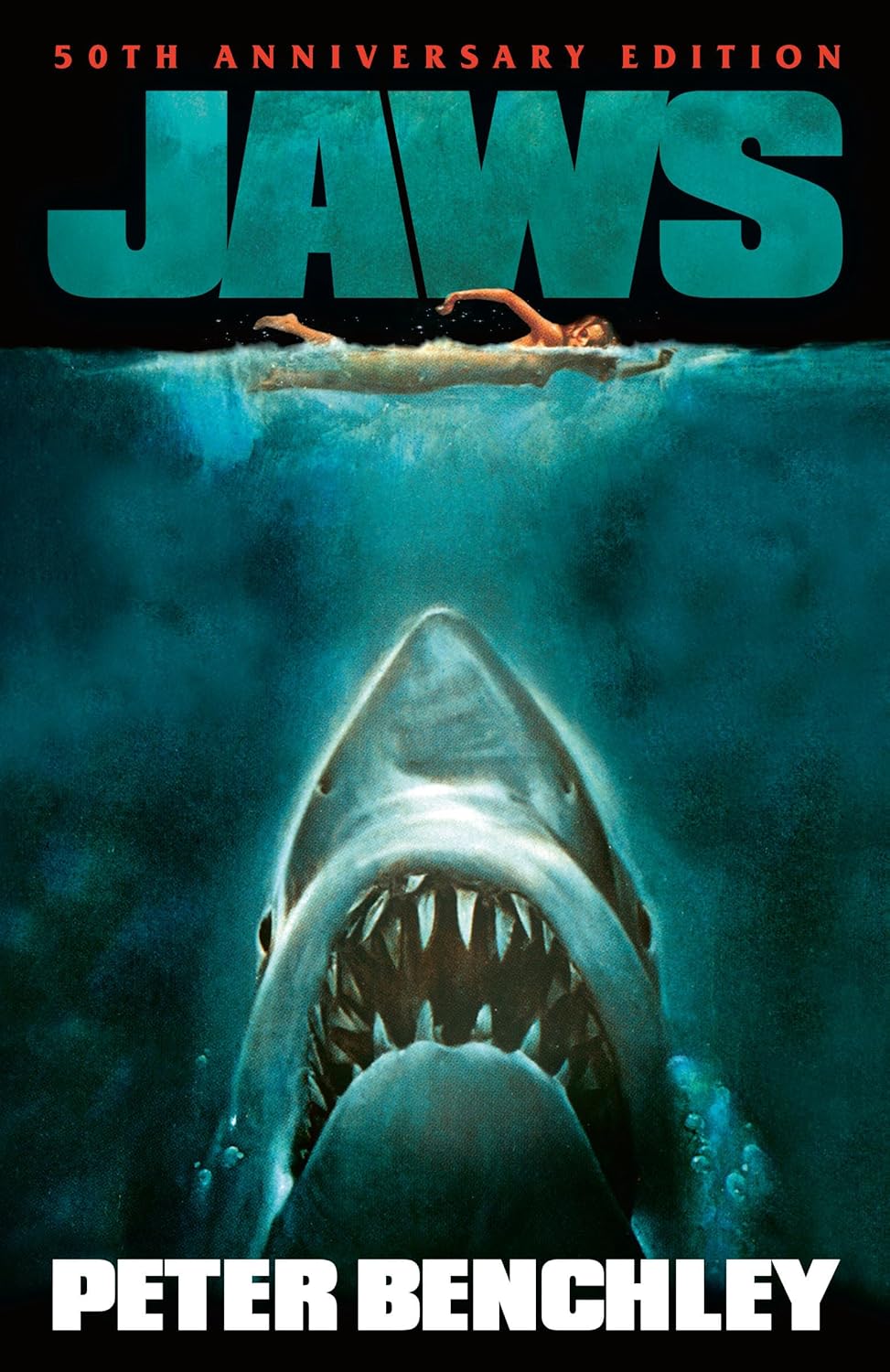
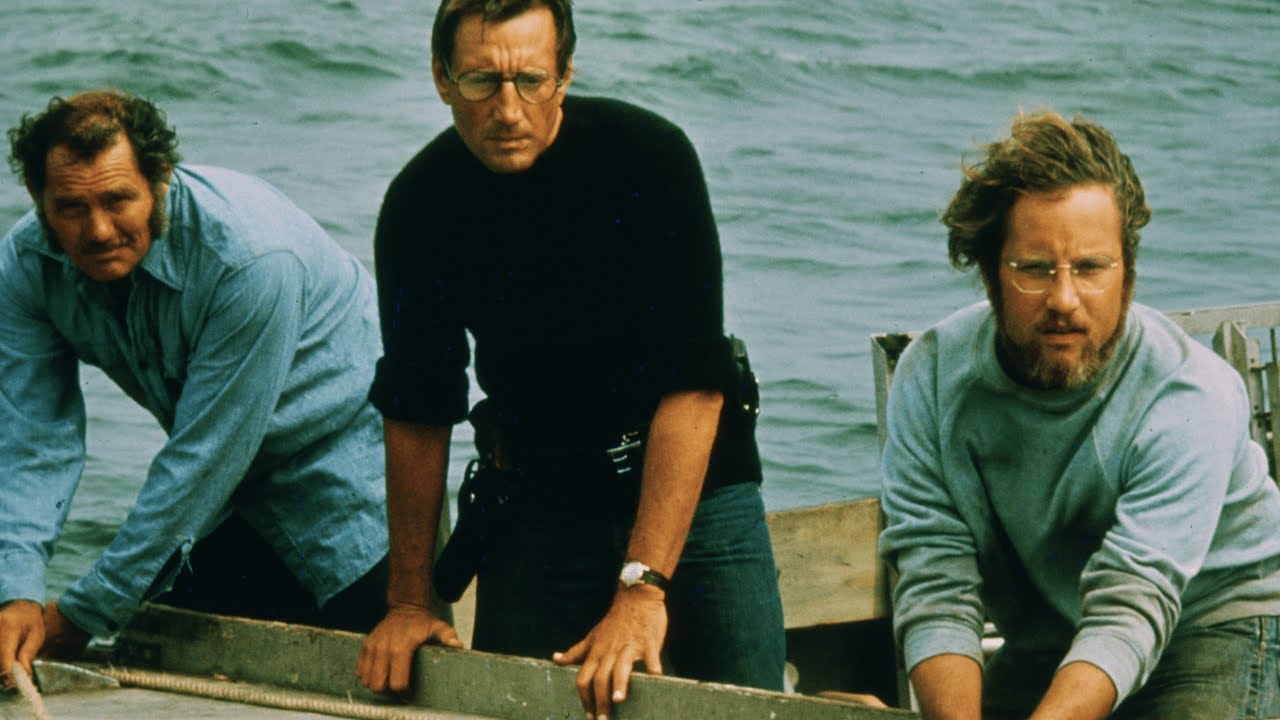
Peter Benchley's 1974 novel is a sprawling, pulpy thriller about a great white shark terrorizing the resort town of Amity Island. The book dwells in the murky depths of human corruption—real estate fraud, infidelity, political cowardice—using the shark as a catalyst for exposing the town's moral rot. Steven Spielberg's 1975 film strips away most of this social commentary and delivers something far more primal: a lean, propulsive thriller about three men in a boat hunting an unknowable predator.
This is the adaptation that fundamentally changed Hollywood. Jaws proved that a summer release could be a cultural event, that suspense could be built through absence rather than gore, and that a director's vision could transform pulp source material into art. The comparison between book and film is essential because it reveals how constraint breeds creativity—Spielberg's mechanical shark failures forced him to invent the grammar of modern thriller filmmaking.
| Character | In the Book | In the The Film |
|---|---|---|
| Martin Brody Roy Scheider |
Brody is a neurotic, sexually inadequate police chief paralyzed by self-doubt and his wife's contempt. Benchley uses him as a vehicle for exploring masculine failure and the humiliation of being an outsider in a wealthy beach town. His fear of the ocean is pathological, rooted in childhood trauma. | Scheider's Brody is a man of quiet competence learning to overcome genuine fear. The film strips away the sexual dysfunction and focuses on his evolution from cautious bureaucrat to reluctant hero. His vulnerability reads as strength rather than weakness. |
| Quint Robert Shaw |
A grizzled, taciturn shark hunter defined by his profession. Benchley gives him little interiority; he exists mainly as exposition and local color. His past is mentioned but never explored with depth. | Shaw transforms Quint into a Shakespearean figure—a man haunted by the USS Indianapolis, carrying trauma that the shark represents. The monologue about the Indianapolis is entirely Spielberg's invention, yet it feels like the emotional core of the entire story. |
| Matt Hooper Richard Dreyfuss |
A young marine biologist who functions as the novel's voice of reason and scientific authority. He has an affair with Brody's wife, adding another layer of small-town sexual tension. He's competent but somewhat bland. | Dreyfuss plays Hooper as an enthusiast—almost boyish in his fascination with the shark. The affair is excised entirely. His role becomes about intellectual curiosity and the clash between scientific knowledge and primal terror. He's the audience surrogate. |
| Ellen Brody Lorraine Gary |
A bitter, contemptuous woman who despises her husband's weakness and carries on an affair with Hooper. She's a vehicle for Benchley's anxieties about female sexuality and marital resentment. Her character arc involves her own moral compromises. | Ellen appears briefly and sympathetically. The affair is gone. She's a worried wife, nothing more. Spielberg's film has no interest in the domestic dysfunction that preoccupies the novel. |
| Mayor Larry Vaughn Murray Hamilton |
A corrupt politician willing to sacrifice lives for tourism revenue. Benchley uses him to explore institutional failure and the complicity of power. He's a fully realized antagonist—almost as dangerous as the shark. | Hamilton's mayor is still corrupt, but his villainy is simpler and more comedic. He's an obstacle rather than a complex moral failure. The film reduces him to a one-dimensional foil. |
Key Differences
The book is about corruption; the film is about survival
Benchley's novel uses the shark as a MacGuffin for exploring Amity Island's social pathology—real estate fraud, sexual infidelity, political cowardice, class resentment. The shark is almost secondary to the human drama. Every major character is compromised: Brody is emasculated, Ellen is unfaithful, Hooper is a seducer, the mayor is a criminal. The town itself is the real antagonist.
Spielberg jettisons nearly all of this. His film is a pure survival narrative with no interest in social critique. The mayor's corruption is played for laughs. Ellen's affair vanishes. The focus narrows to three men and one shark—a mythic confrontation stripped of sociological baggage. This is not a weakness; it's a clarifying choice that makes the film timeless rather than period-bound.
Benchley's prose is baroque; Spielberg's direction is minimalist
The novel is thick with description, internal monologue, and digression. Benchley lingers on the mundane details of small-town life, the mechanics of the shark hunt, the texture of fear. There are entire chapters devoted to the shark's biology and hunting patterns. The narrative voice is omniscient and intrusive, constantly explaining motivation and emotion.
Spielberg trusts silence and absence. The famous mechanical shark failures forced him to shoot around the creature, building terror through implication. The film's greatest scenes—the Indianapolis monologue, the barrels being dragged, the final confrontation—work because of what's unseen. Where Benchley tells, Spielberg shows. Where Benchley explains, Spielberg suggests.
The book's ending is cynical; the film's is redemptive
In Benchley's novel, Brody kills the shark, but the victory feels hollow. He's still a failure, still despised by his wife, still an outsider. The shark's death doesn't resolve anything—it just ends the immediate crisis. The town will move on, corruption will continue, and Brody will remain fundamentally unchanged. There's a bitter, naturalistic quality to the ending.
Spielberg's ending is cathartic. Brody's kill shot is a triumph of will over terror. He swims back to shore, to his wife and son, reborn. The film suggests that confronting the shark has transformed him—that he's earned his place in Amity Island through courage. It's a classical hero's journey, complete with redemption. This is not faithfulness to the source; it's a fundamental reimagining of what the story means.
Benchley explores masculine anxiety; Spielberg explores masculine courage
The novel is saturated with Benchley's anxieties about male inadequacy. Brody's impotence, his fear of the ocean, his humiliation by his wife and the town—these are the emotional core. The shark becomes a projection of masculine failure. Even Quint and Hooper are defined by their competence in ways that make Brody's incompetence more acute.
Spielberg's film reframes masculinity entirely. Brody's fear is not pathological; it's rational. His courage is not about proving himself to his wife; it's about doing what must be done. Quint's competence is shadowed by trauma, not superiority. Hooper's youth is tempered by respect for danger. The film suggests that real masculinity is about confronting fear, not denying it. This is a fundamentally more mature vision than Benchley's neurotic hand-wringing.
The book is a thriller; the film is a myth
Benchley wrote a page-turner—a commercial thriller designed to sell copies and provoke anxiety about sharks. It's effective pulp, but it's rooted in the specific anxieties of 1974: real estate speculation, sexual liberation, small-town corruption. These details date it.
Spielberg created something archetypal. By stripping away the social specificity and focusing on the primal confrontation between man and nature, he made a film that transcends its era. The Orca, the three men, the hunt—these become mythic elements that resonate across decades. This is why Jaws endures while the novel is largely forgotten. Spielberg understood that constraint and simplification are the path to universality.
Should You Read First?
Read the book first if you want to understand how pulp thrillers were written in the 1970s—Benchley's novel is a masterclass in commercial plotting and escalating tension. But understand that you're reading a period piece, a snapshot of pre-blockbuster Hollywood anxiety. The book is entertaining but dated, preoccupied with sexual politics and small-town corruption that feel quaint now.
Then watch the film and experience the moment cinema changed. Spielberg didn't just adapt Benchley; he transcended him. The film is leaner, meaner, and infinitely more powerful. It's the rare case where the adaptation is so superior that it makes the source material feel like a rough draft. If you only have time for one, the film is non-negotiable.
This is the definitive example of an adaptation that surpasses its source through radical simplification. Spielberg took Benchley's sprawling, neurotic thriller and distilled it into pure cinema—a mythic confrontation between men and nature stripped of social commentary and sexual dysfunction. The mechanical shark failures forced Spielberg to invent the grammar of modern suspense filmmaking, proving that what you don't show is more terrifying than what you do. Jaws is not just a better film than the novel; it's a different work entirely, one that has aged infinitely better because it transcends the specific anxieties of its era. The book is a solid thriller; the film is a masterpiece.