
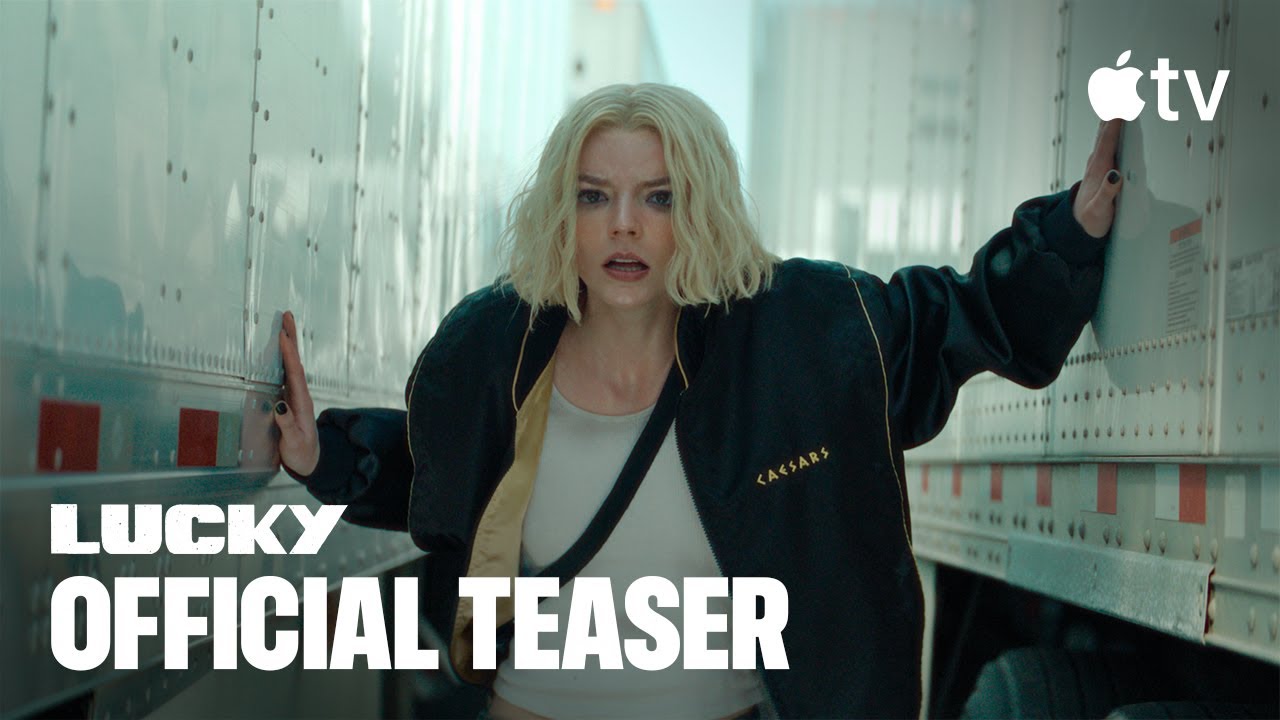
The Story in Brief
Marissa Stapley's Lucky follows a woman raised by con artists who attempts to escape her criminal upbringing and build a legitimate life. The novel is a propulsive thriller that refuses easy moral judgments, constantly shifting the reader's sympathies between characters who are simultaneously victims and perpetrators of elaborate schemes. This 2026 film adaptation arrives at a moment when audiences have grown sophisticated about antiheroes and morally ambiguous protagonists — the question is whether cinema can capture the novel's relentless moral uncertainty or whether it will simplify Stapley's deliberately knotty psychology into a more conventional redemption arc.
The book-to-film comparison matters here because Lucky's power derives almost entirely from narrative unreliability and the reader's gradual realization that they've been complicit in the protagonist's deceptions. Film, which shows rather than tells, faces a genuine structural challenge in translating this psychological manipulation. The adaptation will reveal whether the filmmakers understand that this story isn't about whether the protagonist can go straight — it's about whether anyone raised in this world can ever truly escape it.
| Character | In the Book | In the The Film |
|---|---|---|
| The Protagonist TBD |
A woman whose entire identity has been constructed by her con-artist family, she narrates her own story with calculated charm and strategic omissions. Stapley makes her simultaneously sympathetic and deeply untrustworthy, leaving readers uncertain whether her desire for legitimacy is genuine or simply the most elaborate con of all. | The film must embody this contradiction visually — every gesture and expression becomes suspect. The casting choice will determine whether audiences see a victim trying to escape or a predator perfecting her craft. |
| The Family TBD |
Depicted through fragmented memories and unreliable recollections, they function as both nurturers and architects of the protagonist's criminal education. The novel keeps them deliberately shadowy, forcing readers to question whether they're monsters or simply people doing what they know. | Film requires faces and voices. The adaptation must decide whether to make them sympathetic figures trapped in cycles of crime or predatory manipulators — a choice that will fundamentally alter the story's moral center. |
| The Mark/Love Interest TBD |
Introduced as a potential escape route, this character becomes increasingly complicated as the narrative progresses. The reader's trust in their relationship mirrors the protagonist's own uncertainty about whether genuine connection is possible for someone raised to exploit others. | On screen, this character risks becoming either a simple romantic interest or a plot device. The film's success depends on whether it can maintain the novel's ambiguity about whether this relationship is real or the protagonist's most convincing performance. |
| The Antagonist TBD |
Deliberately ambiguous — it's unclear whether the true antagonist is an external threat, the protagonist's family, or the protagonist herself. This structural choice forces readers to confront their own biases about who deserves punishment. | Cinema typically requires a clear antagonist. The adaptation's critical test is whether it can resist the urge to clarify this ambiguity or whether it will sacrifice the novel's moral complexity for narrative clarity. |
Key Differences
The Novel's Unreliable Narration Cannot Survive Literal Visualization
Stapley's greatest weapon is the first-person narrative voice — a voice that charms, manipulates, and gradually reveals itself as fundamentally untrustworthy. The reader experiences the story through the protagonist's carefully curated perspective, discovering too late that crucial information has been withheld or distorted. This technique is nearly impossible to replicate in film without resorting to voice-over, which typically flattens rather than deepens psychological complexity.
The film will likely compensate by using visual techniques — editing, performance, cinematography — to create doubt. But these tools work differently than prose. Where the book can hide information through omission and misdirection, film must show something, even if it's ambiguous. This fundamental difference means the adaptation cannot achieve the novel's specific form of moral vertigo.
The Book Dwells in Psychological Interiority; Film Must Externalize Everything
Lucky's power comes from extended passages where the protagonist rationalizes her choices, reframes her trauma, and constructs justifications for her actions. Stapley gives readers direct access to the mechanisms of self-deception. The novel is essentially a masterclass in how people convince themselves that harmful behavior is necessary or even virtuous. This interiority is the book's true subject — not the plot, but the psychology of rationalization.
Film cannot show thoughts; it can only show behavior and its consequences. An adaptation must translate internal conflict into external action, which inevitably simplifies it. The film version of Lucky will necessarily be more plot-driven and action-oriented than the book, which means it will lose some of the novel's claustrophobic examination of how the mind justifies the unjustifiable.
The Novel's Moral Ambiguity Demands Reader Complicity; Film Invites Passive Judgment
Reading Lucky is an active moral experience. Stapley forces readers to make choices about whom to believe and what to forgive. By the time readers realize they've been manipulated by the narrative, they've already made emotional investments in characters and situations that may not be what they seemed. This creates genuine cognitive dissonance — the reader becomes complicit in the protagonist's deceptions, which is precisely Stapley's point.
Film audiences are typically positioned as observers rather than participants. Even sophisticated viewers tend to watch rather than actively construct meaning. The film adaptation will likely position viewers as witnesses to events rather than as participants in a moral con. This shift from complicity to observation fundamentally changes the story's relationship to its audience.
The Book's Fragmented Timeline Serves Psychological Purpose; Film Requires Linearity
Stapley's narrative structure — jumping between past and present, withholding context, revealing information out of chronological order — isn't merely stylistic. The fragmentation mirrors how trauma and deception actually work in the human mind. Information emerges when it's psychologically necessary, not when it's chronologically logical. This structure forces readers to experience the protagonist's reality: disorienting, incomplete, constantly shifting.
Film typically requires clearer temporal organization. While some contemporary films experiment with non-linear storytelling, most audiences and most filmmakers find linear or clearly marked flashback structures more comprehensible. An adaptation of Lucky will likely impose greater chronological clarity than the novel provides, which will make the story feel more conventional and less psychologically destabilizing.
The Novel Ends in Ambiguity; Film Will Likely Demand Resolution
Stapley's conclusion refuses to answer the central question: Has the protagonist genuinely changed, or has she simply evolved her con? The novel ends with the reader uncertain, which is the entire point. This ambiguity is not a flaw or an oversight — it's the logical conclusion of a story about someone raised to deceive. The reader must live with uncertainty, which mirrors the protagonist's own inability to trust her own motivations.
Film audiences have been conditioned to expect resolution. Even art films typically provide some form of closure, even if it's ambiguous. The 2026 adaptation will face pressure to clarify whether the protagonist's redemption is real or illusory. Any choice the filmmakers make — toward hope or toward cynicism — will be a departure from the novel's refusal to choose. This may make the film more satisfying as a narrative experience, but it will necessarily diminish the novel's most distinctive and challenging quality.
Should You Read First?
Read the novel first. Stapley's prose creates a specific form of psychological manipulation that depends on the reader's active participation in the narrative. The book's power comes from gradually realizing you've been complicit in the protagonist's deceptions — a realization that loses its force if you already know the story's major revelations from the film. The novel is also relatively brief and propulsive; you can finish it in a weekend and then approach the film adaptation with full knowledge of what was gained or lost in translation.
The book also establishes the moral baseline against which the film should be judged. If you watch the film first, you may find it perfectly entertaining — a solid thriller with a compelling protagonist. But you'll miss the opportunity to experience Stapley's specific form of narrative manipulation, which is the novel's greatest achievement. The film will likely be more straightforward and less morally vertiginous than the book, so reading first ensures you experience the story at its most complex and challenging.
Lucky presents a genuine test case for adaptation: Can cinema capture a novel whose power derives almost entirely from unreliable first-person narration and the reader's gradual realization of complicity in the protagonist's deceptions? The answer is probably no — not because the filmmakers will be incompetent, but because prose and film are fundamentally different tools for creating psychological uncertainty. The novel's greatest strength — its ability to manipulate readers through narrative misdirection and withheld information — cannot be directly translated to the screen. The film will likely be a competent thriller, possibly even an excellent one, but it will necessarily sacrifice the book's most distinctive quality: the reader's active participation in the moral con. This isn't a failure of adaptation so much as an acknowledgment that some stories are intrinsically tied to their medium.