Books Made into Both Movie and TV Show
As an Amazon Associate we earn from qualifying purchases.
Margaret Atwood's The Handmaid's Tale is one of the rare novels that has been adapted not once but twice for the screen — first as a feature film in the late 1980s and later as the acclaimed, long-running Hulu television series that introduced Offred and Gilead to a new generation. Because the story exists in three distinct forms — the original novel, the movie, and the TV show — it's a perfect case study for anyone curious about how the same source material can be reshaped depending on the format, the era, and the storytelling ambitions of the people adapting it.
The Handmaid's Tale belongs to a select group of novels that have been given both a standalone film treatment and a serialized television adaptation, and the gap between those two adaptations tells you a lot about how differently Hollywood approaches literary source material depending on the decade and the medium. A two-hour film has to compress Atwood's dense, first-person narrative into a tight runtime, which inevitably means trimming interior monologue, backstory, and the slow-building dread that defines the book's tone. A television series, on the other hand, has the luxury of time. Multiple seasons allow for deeper world-building of Gilead, more attention to side characters like Moira, Serena Joy, and the Commander, and room to explore what happens after the point where the novel itself ends — something a single film simply cannot do.
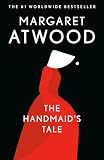
If you want to revisit the source material before comparing it to either screen version, starting with the novel itself is the obvious move. The Handmaid's Tale: A Novel is Atwood's original text, and rereading it with both adaptations fresh in your mind makes it much easier to spot exactly where each one diverges from her prose, her pacing, and her ambiguous ending.
Same Book Movie vs TV Version
When people search for how the movie and TV versions of the same book differ, they're usually trying to figure out which one is more faithful, and which one is worth watching first. Broadly speaking, adaptations made as single films tend to prioritize atmosphere and a condensed emotional arc — hitting the major beats of the story while sacrificing nuance for runtime. Series adaptations, by contrast, tend to slow down, lean into character psychology, and often extend the narrative well past where the book concludes, which is exactly what happened with the Hulu series once it moved beyond Atwood's original ending.
That divergence is part of why Atwood eventually wrote a direct sequel, The Testaments, continuing the story in prose rather than leaving expansion entirely to the show. Readers who want the fuller literary picture — both the original dystopia and its follow-up — often find it easiest to pick up The Handmaid's Tale and The Testaments Box Set, which pairs the two novels together.
For a different way into the story altogether, the officially adapted Handmaid's Tale Graphic Novel offers a visual interpretation that sits somewhere between the page and the screen — useful for readers who want to see Gilead illustrated without committing to either the film or the series.