Books Made into Both Movie and TV Show
As an Amazon Associate we earn from qualifying purchases.
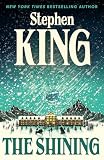
Stephen King's 1977 novel "The Shining" has had an unusually rich afterlife on screen. Stanley Kubrick's 1980 feature film turned it into a landmark of psychological horror, while a 1997 TV miniseries — with King himself credited as writer and producer — took a very different approach, aiming to be a more faithful page-to-screen translation. That split legacy is exactly why "The Shining" is one of the go-to case studies for anyone comparing a book against multiple adaptations: it's a rare instance where the same source material spawned two wildly different screen versions, plus the novel that started it all.
If you want to actually judge these differences for yourself, starting with the source text matters. You can pick up the mass-market paperback of The Shining for $9.62, or grab the Kindle edition for $7.99 if you'd rather read it before (or after) watching either adaptation.
"The Shining" belongs to a small but notable club of novels that got both a theatrical movie treatment and a separate small-screen version, and it's instructive to think about why that happens at all. Usually it's because the first adaptation took heavy creative liberties, leaving room — and audience appetite — for a version that hews closer to the book. That's essentially the story here: Kubrick's film is famously loose with King's text, reshaping character motivations, tone, and even the fate of certain characters, which reportedly left King unsatisfied enough that he championed the later miniseries as a corrective. The result is a book-to-screen lineage with three distinct entry points — novel, film, miniseries — each aimed at a different kind of audience. Horror-movie fans tend to gravitate toward Kubrick's atmospheric, ambiguous take, while readers who loved King's interior, character-driven prose often prefer the miniseries or, more often, the book itself. If you're building out a personal collection to compare all of it, the Stephen King Three Classic Novels Box Set ($30.80) bundles "The Shining" alongside "Carrie" and "'Salem's Lot," which is a solid way to see how King's early novels read side by side before checking them against their various adaptations.
Same Book Movie vs TV Version
When people search for how the movie and TV miniseries of "The Shining" differ, they're usually trying to understand why two adaptations of the same book can feel so unlike each other. The core distinction comes down to intent: Kubrick's film leans into dread, isolation, and visual symbolism, often prioritizing mood over strict plot fidelity to King's novel. The miniseries, by contrast, was made with King's direct involvement and generally tracks closer to the book's structure and character beats, giving Jack Torrance's descent and the Overlook Hotel's history more room to breathe across its longer runtime. Neither version is a strict substitute for the other, and neither is a substitute for the novel — each format has space to develop different things, with the book offering interior monologue and backstory that neither screen version can fully replicate. For readers trying to decide where to start, going straight to the source material first is usually the most reliable way to then appreciate what each adaptation chose to keep, cut, or reinterpret.