The Story in Brief
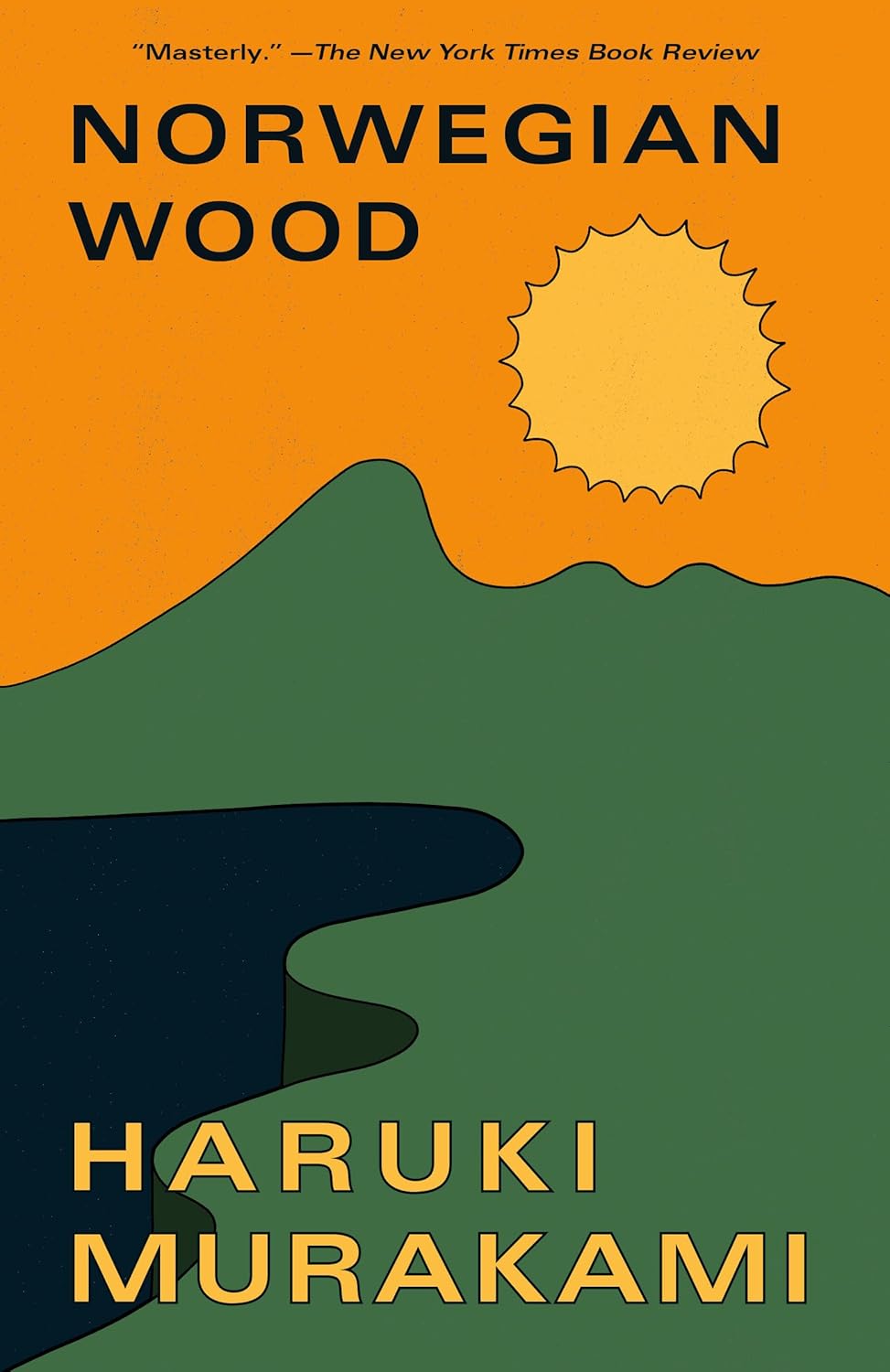
Haruki Murakami's Norwegian Wood (1987) is a deceptively quiet novel about Toru Okada, a 37-year-old man who receives a mysterious phone call from a woman he hasn't heard from in decades, triggering a cascade of memories about his life, his lost loves, and the weight of unresolved grief. The story unfolds across multiple timelines, weaving between his present-day isolation and his university years in 1960s Tokyo, where he navigates a complex emotional triangle with Naoko, the widow of his best friend, and Midori, a vibrant woman who forces him to confront life itself. Tran Anh Hung's 2010 film adaptation strips away much of Murakami's narrative complexity to focus on the sensory and emotional core of the story—the textures of memory, the ache of longing, and the impossibility of returning to the past.
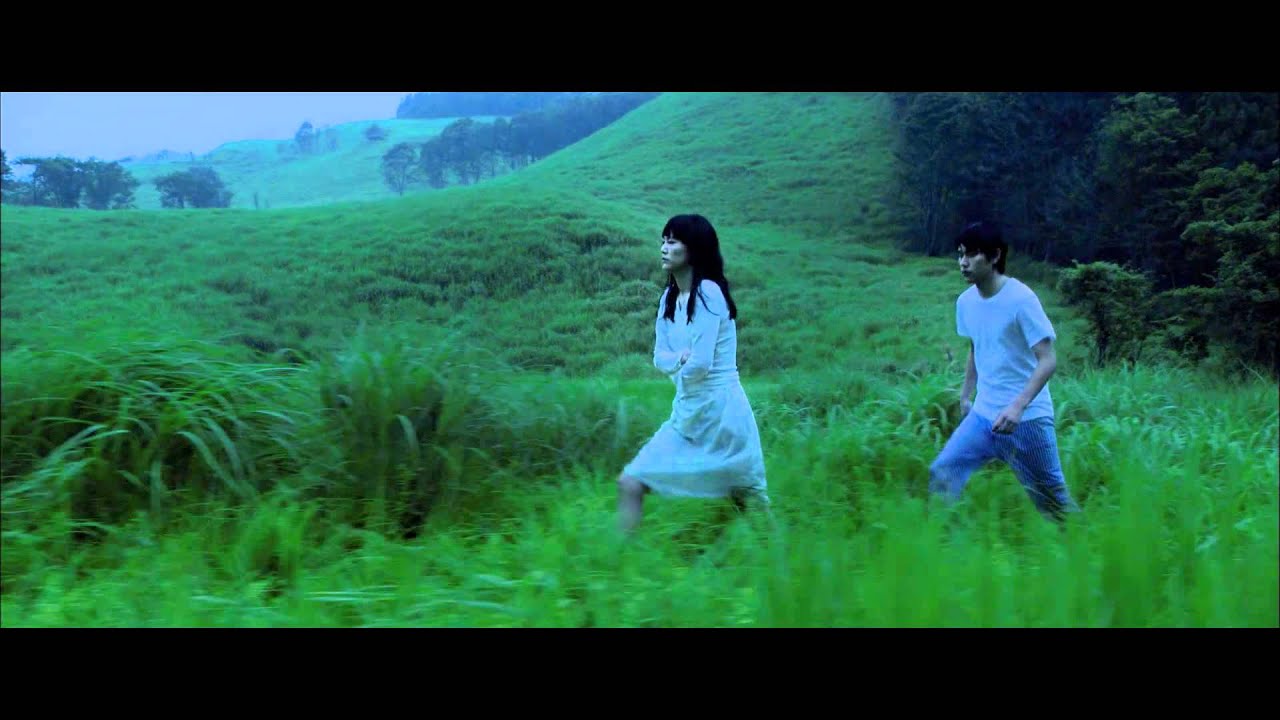
This comparison matters because Norwegian Wood represents a particular challenge for adaptation: it is a novel built almost entirely on interiority, digression, and the accumulation of small, seemingly insignificant moments that together form a portrait of emotional paralysis. The book's power lies in Murakami's ability to make loneliness feel like a physical presence, to render the mundane as profound. Hung's film, shot in muted colors and deliberate pacing, attempts something radical—to translate that interiority into pure visual and sonic language, abandoning plot momentum in favor of mood and atmosphere. The result is a study in what is gained and lost when a novel of ideas becomes a film of images.
| Character | In the Book | In the The Film |
|---|---|---|
| Toru Okada Matsumoto Kiyoshiro |
A 37-year-old man adrift in his own life, defined by passivity and emotional numbness. Murakami renders his consciousness in exhaustive detail—his thoughts spiral, digress, and circle back on themselves. He is simultaneously the novel's narrator and its greatest mystery; we know everything about how he thinks and almost nothing about who he actually is. | A visual cipher—Matsumoto's performance is almost entirely composed of glances, silences, and the subtle shifts of his face as he moves through carefully composed frames. Hung strips away Okada's interior monologue, forcing the actor to communicate longing and paralysis through presence alone, making him less a character and more a vessel for the film's meditation on memory. |
| Naoko Kiko Mizuhara |
The widow of Okada's best friend Kizuki, who died by suicide years earlier. She is fragile, haunted, and locked in a cycle of grief that mirrors Okada's own emotional stasis. Murakami explores her psychology with clinical precision—her depression is not romanticized but rendered as a genuine illness that isolates her further from connection. | A figure of melancholic beauty, shot often in soft focus and muted light. Hung emphasizes her visual fragility over her psychological complexity; she becomes a symbol of the past's hold on Okada rather than a fully realized character with her own interior life. The film's Naoko is more ghost than woman. |
| Midori Rinko Kikuchi |
A vivacious, sexually confident woman who represents life, appetite, and the possibility of moving forward. She pursues Okada relentlessly, offering him an escape from his emotional paralysis through humor, sex, and genuine affection. She is the novel's most dynamic character, a force of nature against Okada's inertia. | Reduced to a supporting role, Midori functions primarily as a contrast to Naoko's sadness. While Kikuchi brings energy to the role, Hung's film marginalizes her narrative arc, making her less a character in her own right and more a thematic counterpoint—the road not taken, the life Okada refuses to live. |
| Kizuki Appears only in flashbacks |
Okada's best friend from childhood, whose suicide by hanging sets the novel's emotional tone. Though dead before the novel begins, Kizuki haunts every page—his absence is more present than most characters' presence. Murakami explores the mystery of suicide without sentimentalizing it, asking unanswerable questions about why people choose death. | A ghostly presence, appearing only in brief, dreamlike flashback sequences. Hung uses these moments to establish the visual and emotional palette of the film—muted colors, soft focus, a sense of time already lost. His suicide is treated as a historical fact rather than a psychological mystery. |
| Reiko Appears in limited scenes |
The dorm counselor and a woman with her own tragic past, who becomes Okada's confidante and occasional lover. She represents a kind of wisdom born from suffering, offering Okada perspective on his own paralysis while remaining trapped in her own cycle of grief and isolation. | A minor figure in Hung's adaptation, present mainly to provide exposition and to anchor certain scenes. The film does not explore her backstory or her relationship with Okada in any depth, treating her as a supporting player rather than a character with her own thematic weight. |
Key Differences
The novel's digressive structure becomes the film's visual meditation
Murakami's Norwegian Wood is built on tangents—long passages about the history of jazz, detailed descriptions of meals, philosophical musings on the nature of loneliness. These digressions are not obstacles to plot; they are the plot. They accumulate into a portrait of a mind that cannot stop thinking, analyzing, and retreating into memory. The novel's power comes from its refusal to move forward, from its insistence that the small, seemingly insignificant details of daily life contain profound truths.
Hung's film abandons this narrative strategy entirely, replacing Murakami's verbal digression with visual digression. Where the novel lingers on Okada's thoughts, the film lingers on images—a hand touching a wall, rain on a window, the texture of fabric. Hung is not being unfaithful to the source material; he is translating its essence into cinematic language. The film's digressions are visual and sonic rather than intellectual, but they serve the same function: they slow down time, they force the viewer to sit with discomfort, they suggest that meaning lies in the accumulation of small moments rather than in plot resolution.
The book's interior monologue is replaced by the film's use of silence and sound design
One of the novel's defining features is Okada's constant internal commentary—his thoughts are often contradictory, self-aware, and deeply neurotic. We hear him analyzing his own paralysis, questioning his own motivations, spiraling into philosophical tangents. This interior monologue is the novel's primary vehicle for meaning; without it, we would have almost no access to Okada's emotional life. Murakami uses Okada's voice to create intimacy and complicity with the reader—we are inside his head, trapped with him in his own consciousness.
Hung's film has almost no dialogue and no voice-over narration. Instead, it relies on sound design—the ambient noise of Tokyo, the sound of rain, the silence between characters—to create emotional resonance. The film trusts the viewer to read Okada's emotional state from his face, his posture, his movement through space. This is a fundamentally different approach to storytelling, one that requires the viewer to do more interpretive work. Where the novel tells us what Okada is thinking, the film shows us what he is feeling, and asks us to fill in the gaps ourselves.
The film compresses the novel's multiple timelines into a more linear narrative
Murakami's novel moves fluidly between Okada's present-day life and his memories of his university years, with the past gradually bleeding into the present until the distinction between the two becomes almost meaningless. The novel's structure mirrors its thematic preoccupation with memory—the past is not something that happened; it is something that continues to happen, that shapes every moment of the present. The novel's temporal complexity is inseparable from its meaning; it is a formal expression of how trauma and grief distort our experience of time.
Hung's film, while still moving between past and present, does so more clearly and linearly. The flashbacks are marked as flashbacks; the present is marked as present. The film is more conventional in its temporal structure, which makes it more accessible but also somewhat diminishes the novel's central insight about the way memory colonizes the present. By making the temporal structure clearer, Hung sacrifices some of the novel's formal innovation, but he gains clarity and emotional directness.
The novel's ambiguous ending becomes the film's moment of visual resolution
The novel ends with Okada on a train, having just hung up the phone with Naoko, not knowing whether she is alive or dead, not knowing what he will do next. The ending is radically open—it refuses to resolve the central tensions of the narrative, instead leaving the reader suspended in uncertainty. This ambiguity is not a flaw; it is the point. The novel suggests that some questions cannot be answered, that some losses cannot be recovered, and that we must learn to live with that uncertainty.
Hung's film, while maintaining some of this ambiguity, provides more visual and emotional closure. The final images are more clearly composed, more aesthetically resolved. The film does not answer the questions the novel leaves open, but it frames them differently—it suggests that beauty and meaning can be found in the act of looking back, even if we cannot change what we see. The film's ending is less about uncertainty and more about acceptance, a subtle but significant shift in tone.
The book's exploration of suicide is replaced by the film's focus on melancholy
Murakami's novel is fundamentally about suicide—not just Kizuki's suicide, but the broader question of why people choose death, why some people seem to be drawn toward oblivion. The novel does not shy away from this darkness; it explores it with unflinching honesty. Okada himself is not suicidal, but he is drawn to people who are, and the novel suggests that there is something in him that understands the appeal of non-existence. This is not sentimentalized; it is rendered as a genuine psychological and philosophical problem.
Hung's film is less interested in the question of suicide and more interested in the aesthetics of melancholy. Where the novel asks why people die, the film asks what it feels like to be sad. This is not a criticism—melancholy is a legitimate subject for cinema, and Hung captures it beautifully. But the shift represents a significant change in the work's thematic center. The film is more concerned with mood and atmosphere than with the novel's darker philosophical questions. It is a film about sadness rather than a film about death.
Should You Read First?
Read the book first if you want to understand the full complexity of Okada's interior life and Murakami's philosophical preoccupations. The novel's digressions, its tangential meditations on loneliness and memory, and its refusal to provide easy answers are central to its power. Reading the book will give you access to a richness of thought and feeling that the film, by necessity, cannot capture. However, the film is not a diminishment of the novel; it is a translation of it into a different medium.
Watch the film second, and approach it not as an adaptation but as a companion piece—a visual and sonic interpretation of the novel's emotional core. Hung's film is most powerful when viewed as a meditation on the novel rather than a dramatization of it. The film will deepen your appreciation of the book by showing you how its themes can be expressed through image and sound, and it will offer you a different kind of beauty—one that is visual and atmospheric rather than intellectual and introspective.
Norwegian Wood presents a genuine case of two works of art that are equally powerful but in completely different ways. The novel is a masterpiece of interior monologue and philosophical digression; the film is a masterpiece of visual composition and sound design. Neither is superior to the other—they are simply different expressions of the same emotional truth. If you value interiority and complexity of thought, the book wins. If you value visual beauty and emotional directness, the film wins. If you value both equally, then you must accept that this is one of those rare cases where the adaptation is not a replacement for the original but a genuine alternative.