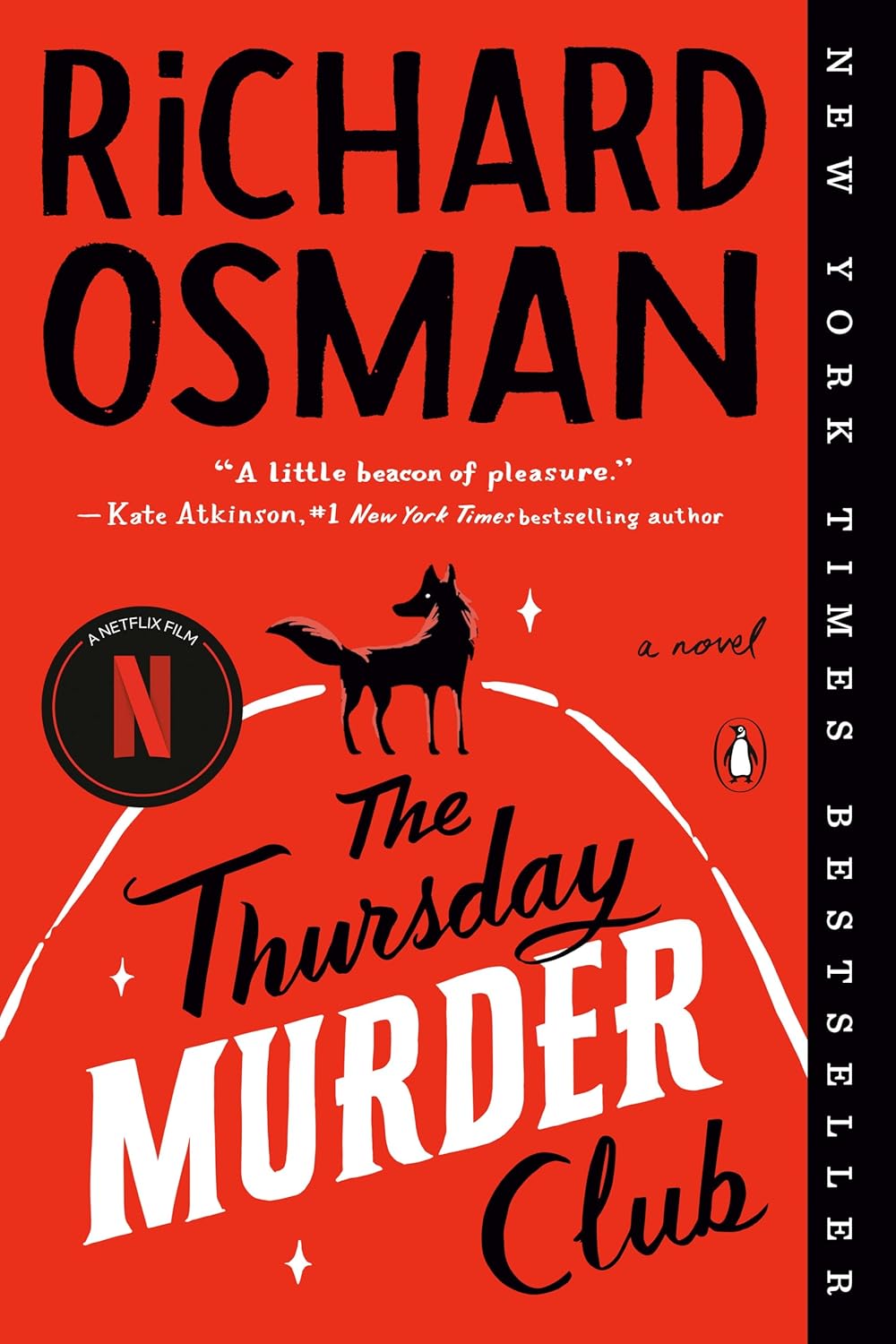
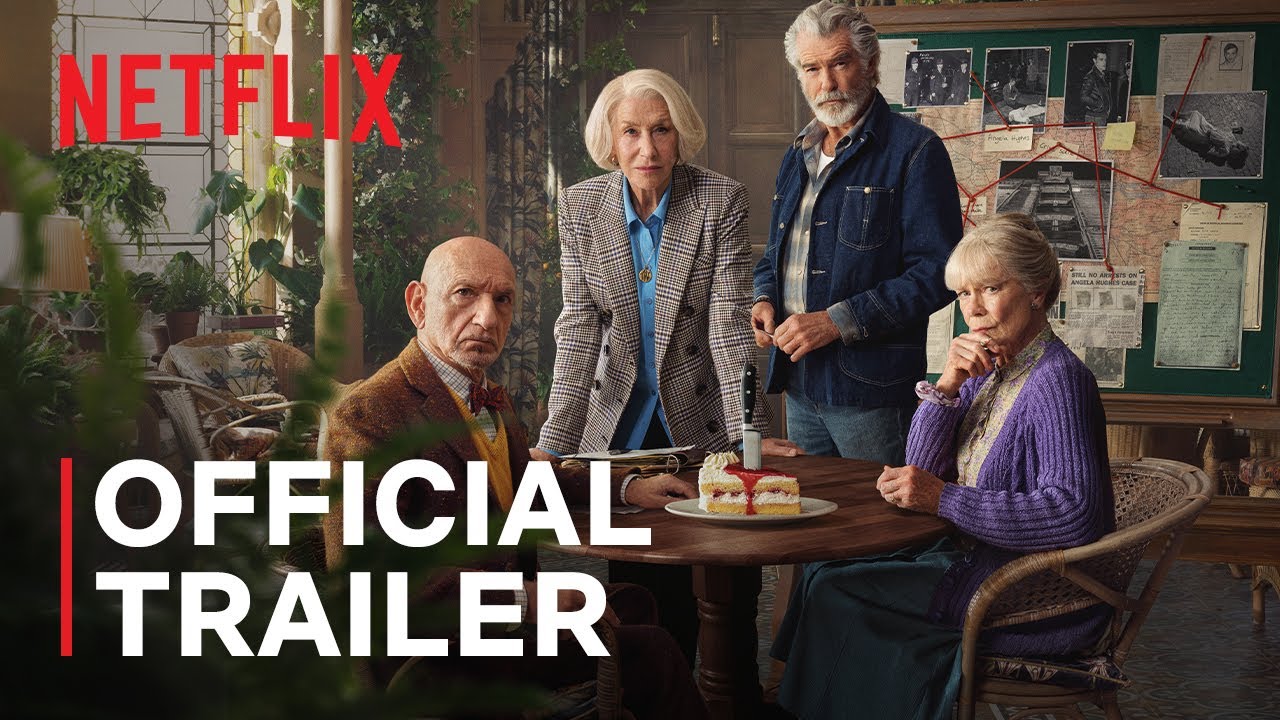
The Story in Brief
Four retirees at Coopers Chase, a luxury retirement village in the English countryside, meet every Thursday to investigate cold cases over tea and biscuits. Elizabeth Best, a former MI5 operative with secrets she'll never fully reveal, leads the group. Joyce Meadowcroft chronicles their adventures in her diary with cheerful observations about murderers and custard creams. Ibrahim Arif, a retired psychiatrist, brings methodical analysis and an encyclopedic memory. Ron Ritchie, an ex-union organizer, provides working-class skepticism and a network of dodgy contacts.
When Tony Curran, a crooked property developer threatening to build on their beloved village grounds, is murdered, the club pivots from cold cases to hot pursuit. They're aided—and occasionally hindered—by DCI Chris Hudson and PC Donna De Freitas, local police who find themselves outmaneuvered by pensioners with more free time and fewer scruples about breaking and entering. The investigation spirals through financial fraud, buried secrets from Elizabeth's intelligence days, and a second murder that raises the stakes considerably.
Richard Osman's 2020 debut became an instant bestseller in the UK, selling over a million copies in its first year and spawning three sequels. The 2026 film adaptation, while boasting a stellar cast including Viola Davis and Emma Stone, struggles to translate Osman's distinctive voice—equal parts cozy mystery and sharp social observation—to the screen.
| Character | In the Book | In the The Movie |
|---|---|---|
| Elizabeth Best Viola Davis |
A former MI5 agent whose past remains deliberately opaque; she manipulates situations with surgical precision while maintaining plausible deniability. | The film makes her spy background more explicit and action-oriented, losing the book's ambiguity about what she actually did in intelligence work. |
| Joyce Meadowcroft Emma Stone |
A retired nurse whose diary entries provide the book's warmest humor; she's kind but not naive, observant about human nature beneath her cheerful exterior. | Stone plays Joyce as more overtly comedic, emphasizing physical humor and malapropisms that aren't present in Osman's more subtle characterization. |
| Ibrahim Arif Character actor TBD |
A psychiatrist who analyzes everyone around him with clinical detachment while struggling with his own loneliness and strained relationship with his son. | The film reduces Ibrahim's subplot with his son to a single reconciliation scene, losing the book's exploration of immigrant family dynamics. |
| Ron Ritchie Character actor TBD |
A former union man with socialist principles and criminal connections; his romance with DCI Hudson's mother provides unexpected tenderness. | Ron becomes comic relief, with his political convictions downplayed and his relationship with Pauline rushed through montage rather than developed. |
| Donna De Freitas Character actor TBD |
A young constable who becomes the club's police liaison; her friendship with Joyce develops gradually as she learns to value the retirees' insights. | Donna's character arc is compressed, and her growing confidence as an investigator—central to the book—becomes a brief subplot. |
Key Differences
Elizabeth's Spy Past Gets Hollywood Treatment
The book keeps Elizabeth's MI5 career deliberately vague—we know she was important, possibly ruthless, but Osman never confirms exactly what she did. This ambiguity is essential to her character; she might be bluffing about half her capabilities, or she might be more dangerous than anyone suspects.
The film can't resist making her a proper action hero. We get flashbacks to Elizabeth in Cold War Berlin, a scene where she disarms an intruder with tradecraft that seems imported from a Bond film, and explicit confirmation that she killed people in the line of duty. Davis plays these moments with appropriate gravitas, but they undermine the book's central joke: these are pensioners who might be harmless eccentrics or might be genuinely formidable, and you're never quite sure which.
The novel's Elizabeth manipulates people through conversation and carefully deployed information. The film's Elizabeth picks a lock in under ten seconds and knows exactly how to dispose of a body. One is intriguing; the other is merely competent spy-thriller stuff we've seen before.
The Murder Plot Loses Its Layering
Osman's mystery works because it's actually three intertwined plots: Tony Curran's murder, the cold case the club was already investigating, and the secrets from Elizabeth's past that connect them both. The revelation that Ian Ventham, the retirement village owner, has his own connection to Elizabeth's intelligence work arrives as a genuine surprise that recontextualizes everything.
The film simplifies this to a single murder investigation with a straightforward motive: financial fraud. The cold case becomes a brief prologue rather than a parallel investigation, and Elizabeth's past connects to the present crime through coincidence rather than the book's more intricate web of cause and effect. When the killer is revealed, it lands with less impact because we haven't been juggling multiple timelines and mysteries.
The book's second murder—of Ian Ventham himself—happens at the midpoint and completely upends the investigation. The film moves it to the third act, turning it into a climactic event rather than a complication that forces everyone to reconsider their assumptions. This restructuring makes narrative sense for a two-hour film but sacrifices the book's more complex plotting.
Joyce's Diary Becomes Voiceover, Loses Charm
Half the book's chapters are Joyce's diary entries, written in her distinctive voice—chatty, digressive, finding wonder in small details while casually mentioning that someone's been bludgeoned to death. Her observations about her friends are affectionate but clear-eyed; she knows Ron drinks too much and Ibrahim can be pompous, but she loves them anyway.
The film uses Joyce's voiceover narration to replace these entries, but voiceover can't capture the specific pleasure of reading her written voice. On the page, Joyce's digressions about her daughter's new kitchen or the quality of the village's fish pie create rhythm and texture. As voiceover, these same observations feel like they're slowing down the visual storytelling, so they're trimmed to plot-relevant commentary.
We lose Joyce's reflections on aging, loneliness, and the strange comfort of investigating murders with friends who understand that time is finite. The film's Joyce is delightful, but the book's Joyce is wise in ways the adaptation doesn't have room to explore.
The Class Commentary Gets Softened
Osman's novel is quietly scathing about British class divisions. Coopers Chase is expensive, exclusive, and built on land that working-class families can no longer afford. Ron's socialist principles clash with the village's genteel atmosphere, and his romance with Pauline—a cleaning supervisor—highlights how the wealthy residents barely notice the staff who maintain their comfort.
The film keeps Ron's working-class background but sands down his political edge. His complaints about inequality become grumpy-old-man shtick rather than genuine critique. The book's observation that the Thursday Murder Club can investigate crimes precisely because they're wealthy retirees with time and resources—poor pensioners couldn't afford this hobby—goes unmentioned.
Tony Curran, the murder victim, is more sympathetic in the film than in the book, where he's an unambiguous villain who made his fortune exploiting others. The adaptation gives him a tragic backstory that muddies the moral waters in ways that feel like Hollywood hedging rather than genuine complexity.
The Ending Chooses Sentiment Over Osman's Bittersweet Tone
The book's conclusion is satisfying but not triumphant. The club solves the murders, but people are still dead, and Elizabeth's manipulation of events—she knew more than she revealed and guided the investigation toward her preferred outcome—raises questions about whether justice was truly served or merely arranged. The final chapters acknowledge that these four friends won't have many more years together, making their current happiness precious and precarious.
The film opts for a more conventionally uplifting ending. The killer is caught through teamwork rather than Elizabeth's behind-the-scenes maneuvering, making the victory feel more earned and less morally ambiguous. The final scene shows the club celebrating with champagne, already discussing their next case, with no acknowledgment of mortality's shadow.
Osman's last line—Joyce writing in her diary that she's grateful for every Thursday they have left—carries weight because the book has been honest about aging throughout. The film's equivalent moment feels like obligatory sentiment rather than earned emotion, because it hasn't done the work of making us feel time's passage the way the novel does.
Read the book before watching the film, because Osman's voice is the story's secret weapon—and it doesn't survive adaptation. The pleasure of The Thursday Murder Club isn't just the mystery plot but the way it's told: Joyce's diary entries, the dry observations about retirement village politics, the running jokes about Ron's socialist principles clashing with the price of a decent bottle of wine. The film captures the plot and the characters' broad strokes but misses the texture that makes the book special.
If you watch first, you'll know whodunit, but the book's journey to that revelation is different enough—and rich enough in detail—that it won't feel redundant. You'll discover subplots the film omitted, character depths it couldn't explore, and Osman's particular gift for finding humor and pathos in the same moment. The film is pleasant enough, but the book is the version that explains why this became a phenomenon rather than just another cozy mystery.
Should You Read First?
Read the book before watching the film, because Osman's voice is the story's secret weapon—and it doesn't survive adaptation. The pleasure of The Thursday Murder Club isn't just the mystery plot but the way it's told: Joyce's diary entries, the dry observations about retirement village politics, the running jokes about Ron's socialist principles clashing with the price of a decent bottle of wine. The film captures the plot and the characters' broad strokes but misses the texture that makes the book special.
If you watch first, you'll know whodunit, but the book's journey to that revelation is different enough—and rich enough in detail—that it won't feel redundant. You'll discover subplots the film omitted, character depths it couldn't explore, and Osman's particular gift for finding humor and pathos in the same moment. The film is pleasant enough, but the book is the version that explains why this became a phenomenon rather than just another cozy mystery.
Richard Osman's novel wins decisively, delivering a mystery that's both cleverer and more emotionally resonant than its film adaptation. The book trusts its readers to appreciate complex plotting and ambiguous morality; the film simplifies both to fit Hollywood conventions. Read the book for Joyce's diary, Elizabeth's enigmatic past, and a story that's as much about friendship in old age as it is about murder—the film gives you a competent whodunit, but the novel gives you something worth rereading.