Movies That Didn't Do Justice to the Books
As an Amazon Associate we earn from qualifying purchases.
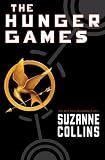
When people search "did The Hunger Games movie do justice to the book," they're usually chasing a specific memory — a scene, a line of Katniss's internal monologue, a moment of dread in the arena — that felt sharper on the page than it did on screen. The Hunger Games is one of the clearest modern examples of a franchise that got the broad strokes right in its films but lost the texture that made the original novel so unsettling to read. This page digs into where the adaptation succeeded, where it fell short, and how it stacks up against other notorious book-to-movie letdowns.
Suzanne Collins wrote The Hunger Games in first-person present tense, which means readers experience the Games entirely through Katniss's head — her hunger, her calculations, her paranoia about who's watching, her grief over Rue that curdles into rage at the Capitol. That interiority is the book's real engine, and it's the hardest thing for any film to translate. The movie gives us Jennifer Lawrence's face doing enormous amounts of work, but it can't fully replicate the constant, exhausting narration of a teenage girl deciding, moment to moment, whether a kindness is real or a performance for the cameras.
The films also had to soften plenty for a PG-13 rating. The book's violence — the tracker jacker hallucinations, the physical toll of the arena, the sheer bodily wreckage of the Games — reads as brutal and matter-of-fact in prose in a way the movie visually cuts around. District 12's poverty, the Seam's coal-dust grime, the specific hunger that defines Katniss and Gale's friendship before any of the Games politics kick in, all get compressed into a few establishing shots rather than the lived-in detail Collins spends chapters building. Readers who go back to the source material, including the newer prequel Sunrise on the Reaping, consistently note how much sharper the Capitol's propaganda machine and the psychological cost of survival feel when you're inside a character's head rather than watching from outside it.
Worst Book to Film Adaptations
The Hunger Games actually fares better than most on this list — it's a "didn't quite capture it" case rather than a full misfire. Compare it to adaptations frequently cited as genuinely botched: Eragon stripped its source novel of nearly all its worldbuilding and character motivation; Percy Jackson and the Olympians aged up its child protagonists and gutted the humor that made the books work; The Golden Compass diluted its source's most controversial and thematically important elements to the point of losing the plot's teeth. Against that backdrop, The Hunger Games films look like a solid B+ effort — faithful in structure, weaker in interiority.
That gap is exactly why the books hold up as a rereading experience even after multiple film rewatches. If you want the full arc — Katniss's unraveling psychology, the political dread building toward Mockingjay, and the added context Collins layers in through prequels — the 4-Book Paperback Box Set is the most complete way to experience the version that started it all before the screen adaptation smoothed its edges.