Worst Book to Movie Adaptations Ever
As an Amazon Associate we earn from qualifying purchases.
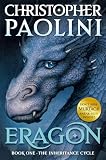
Christopher Paolini's Eragon was a phenomenon — a teenager's self-published fantasy epic about a farm boy, a dragon named Saphira, and a sprawling war against an evil king, turned into a bestseller and, eventually, a 2006 movie that fans still talk about for all the wrong reasons. The film had a real budget, a recognizable cast including Jeremy Irons, and a built-in fanbase hungry to see Alagaësia on screen. Instead, it became a textbook example of how a rushed, compressed, tonally flattened adaptation can take a beloved book and strip out everything that made readers love it in the first place. This page digs into why Eragon belongs on any list of adaptations that missed the point, and what it has in common with other book-to-movie disasters.
Eragon consistently shows up on "worst adaptations" lists because it didn't just disappoint — it actively confused people who hadn't read the book and infuriated people who had. The dragon-rider bond, which Paolini spends real time developing on the page, gets rushed through in minutes on screen. Side characters get merged, renamed, or cut outright. Dialogue that reads as earnest in prose comes across as stilted and flat in live action. The pacing problem is the biggest culprit: a nearly 500-page novel compressed into a barely 100-minute runtime meant something had to give, and what gave was almost everything that made the book work — the slow-building relationship between Eragon and Saphira, the political intrigue, the sense of scale.
Book Adaptations Fans Hated
Fans didn't hate Eragon the movie because it deviated from the book on small details — they hated it because it seemed to misunderstand why the book worked at all. Readers connected with Eragon's growth from farm boy to rider over hundreds of pages of training, doubt, and small victories. The movie treats that arc as a checklist to blow through. Longtime readers of the original novel noticed immediately that the emotional beats were compressed into montage-speed sequences, robbing the story of the earned payoff that made the book's ending satisfying.
Movies That Ruined the Book
For a segment of fans, the movie didn't just fail on its own terms — it colored their perception of the source material, or scared off potential new readers who assumed the book was as generic as the film looked. That's the real damage: a bad adaptation can act as a wall between a great book and new audiences. Paolini's original text still holds up as an ambitious, detailed fantasy world, and it's worth experiencing directly rather than judging by the film. The Illustrated Edition is a good way to rediscover the book on its own terms, with artwork that captures the scale the movie never managed.
Least Faithful Book Adaptations
Faithfulness isn't just about matching plot points — it's about tone, pacing, and character motivation, and Eragon fails on all three even when it technically hits familiar story beats. Names, locations, and relationships were altered or simplified, but the bigger betrayal is structural: the movie tries to tell a multi-book saga's opening chapter as a self-contained story, undercutting the sense that this is the start of something much larger. Readers who want the full, unrushed version of Eragon's journey are better served picking up the complete Inheritance Cycle boxed set, which lets the story breathe across all four books the way Paolini intended.
Why Did Eragon Movie Fail?
The short answer: it tried to cram a dense, slow-building fantasy novel into a short runtime while chasing a PG-rated, franchise-friendly tone that sanded down the book's darker edges and emotional stakes. The result satisfied almost no one — it moved too fast for readers who wanted depth, and felt too thin and derivative for moviegoers with no context, especially arriving in the wake of Lord of the Rings and Harry Potter comparisons it couldn't live up to. Weak character development, rushed pacing, and a screenplay that prioritized plot mechanics over the source book's atmosphere all compounded into the exact kind of adaptation failure that keeps fans debating it years later.