The Story in Brief
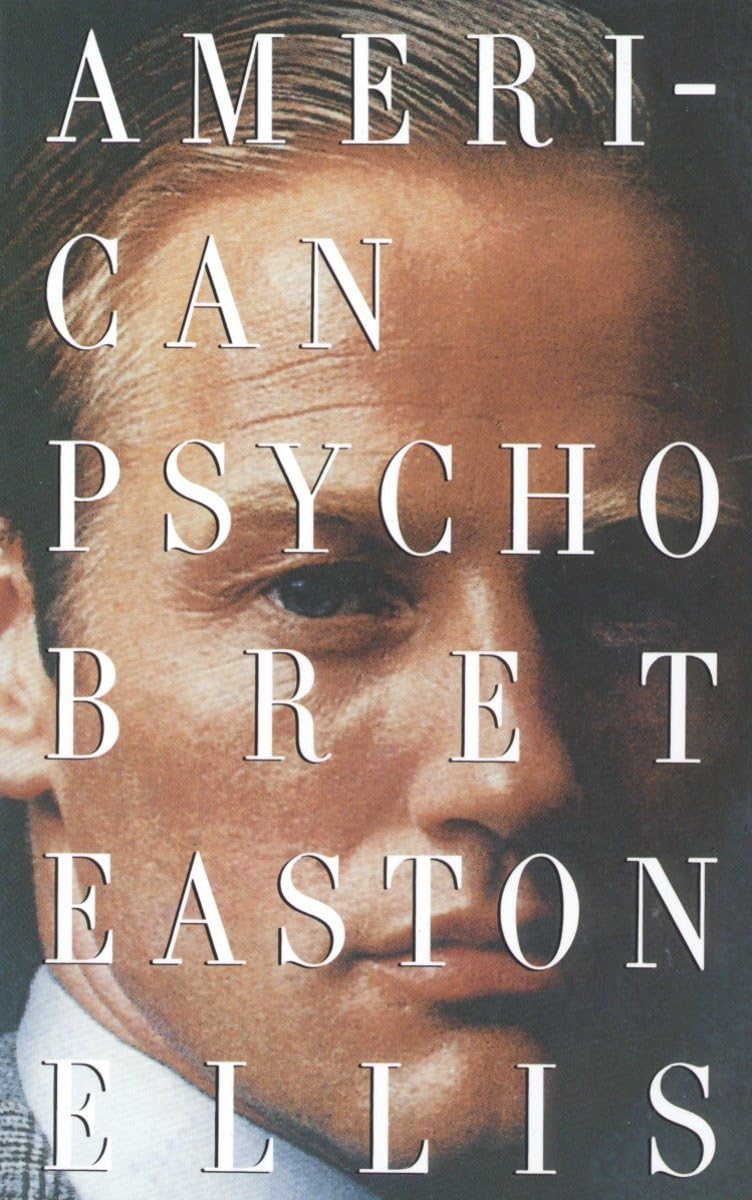
Patrick Bateman is a twenty-six-year-old vice president at Pierce & Pierce, a Manhattan investment bank. He lives in a luxury apartment on the Upper West Side, dines at Dorsia and Pastels, and obsesses over business cards, designer suits, and the correct brand of mineral water. He is also, possibly, a serial killer who tortures and murders women, homeless people, and colleagues with methodical brutality.
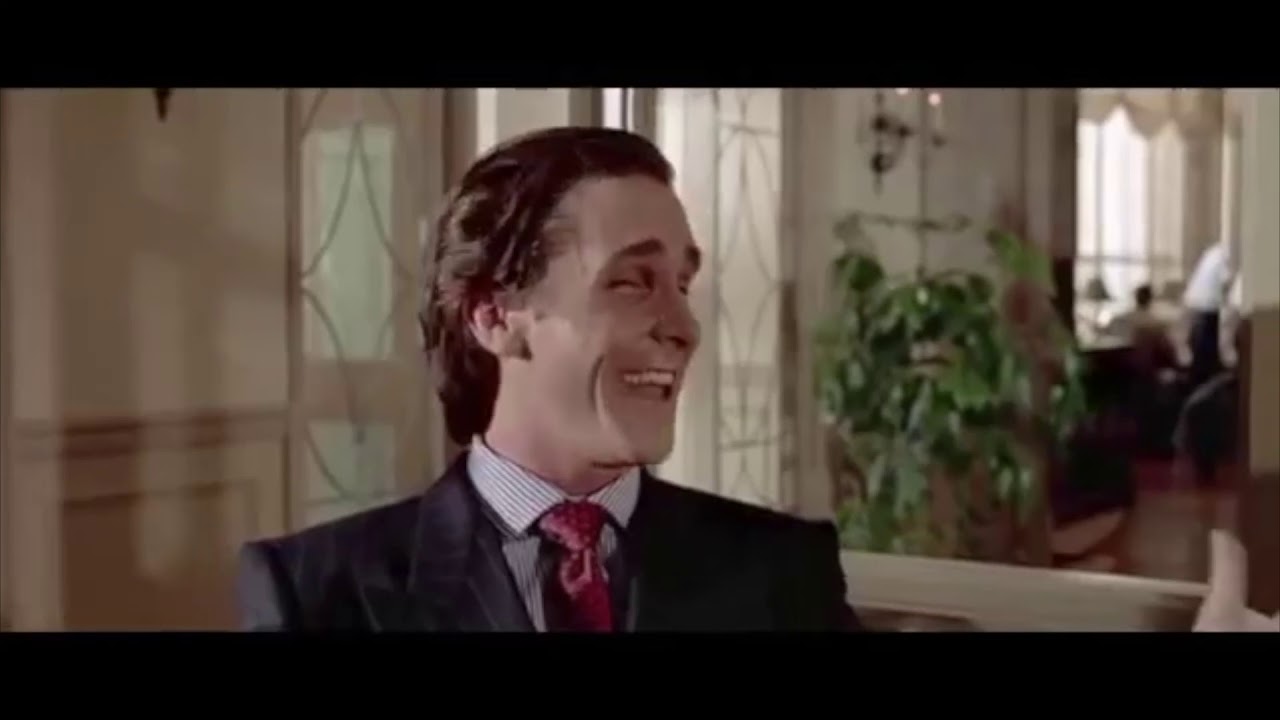
Bret Easton Ellis's 1991 novel is a sustained, excoriating satire of American consumer culture — the violence is real or imagined, but the emptiness is not in question. Mary Harron's 2000 film, with Christian Bale in one of his defining performances, makes the satire more accessible and considerably less disturbing. The film was a modest box office success but has since become a cult classic, quoted endlessly and studied as both horror and comedy.
The controversy that greeted the novel on publication — protests, death threats, Ellis's publisher dropping the book — has given way to something like canonical status. It is now taught in universities and recognized as a formally radical work of postmodern fiction.
| Character | In the Book | In the The Movie |
|---|---|---|
| Patrick Bateman Christian Bale |
A first-person narrator whose flat, detailed prose makes no distinction between describing a murder and describing a facial cleanser — the unreliability is total. | Bale plays him as a tightly wound physical comedian, all forced smiles and sweating panic, making the satire more accessible and darkly funny. |
| Evelyn Williams Reese Witherspoon |
Bateman's fiancée, vapid and interchangeable with every other woman in his social circle — Ellis gives her almost no interiority. | Witherspoon plays her as cheerfully oblivious, a perfect match for Bateman's emptiness, and gets some of the film's sharpest comic moments. |
| Jean Chloë Sevigny |
Bateman's secretary, one of the few characters he seems unable to harm — a brief moment of something like conscience. | Sevigny makes her sweetness and naivety heartbreaking, especially in the scene where Bateman nearly confesses to her. |
| Paul Allen Jared Leto |
A colleague Bateman envies and possibly murders — the novel leaves his fate ambiguous, with a lawyer later claiming to have seen him alive. | Leto plays him as smug and oblivious, and his murder (set to Huey Lewis and the News) is the film's most iconic scene. |
| Detective Donald Kimball Willem Dafoe |
Investigates Paul Allen's disappearance but seems unable to distinguish one Wall Street banker from another. | Dafoe shot each interrogation scene three ways — believing Bateman is guilty, innocent, and unsure — and Harron intercut them to create maximum ambiguity. |
Key Differences
The unreliable narrator becomes a visual question
Ellis's Bateman narrates his own murders with the same flat, detailed prose he uses to describe business cards and designer suits. The reader is never certain whether the murders are real or fantasy, and the uncertainty is the novel's central formal gambit. The final chapters suggest that nothing happened — Bateman's lawyer claims to have had dinner with Paul Allen in London, and the apartment where Bateman stored bodies is spotless and for sale.
Harron's film resolves this ambiguity somewhat. The murders feel real — we see blood, bodies, chainsaws. But the ending preserves enough doubt to keep the satire intact. The unreliability is present but secondary to Bale's performance and the visual comedy.
The consumer catalogue is compressed into montage
Ellis devotes pages to the precise description of restaurants, clothing, grooming products, and business cards — with a precision that is itself an argument about what Bateman values and what his world values. These passages are difficult to render on screen without stopping the film dead.
Harron compresses them into montage and costume. The morning routine — Bateman's voiceover describing his skincare regimen while we watch him apply masks and lotions — is the film's closest equivalent. The business card scene, where Bateman and his colleagues compare cards with escalating anxiety, is a perfect distillation of the novel's satirical method.
Christian Bale makes Bateman a comic creation
Bale's performance is one of cinema's great pieces of controlled physical comedy. The business card scene, the morning routine, the Phil Collins monologue before murdering Paul Allen — he found the absurdity inside the horror and played it with total commitment. His Bateman is sweating, panicked, desperate to fit in, and the comedy makes the satire sharper.
This is an area where the film has something the novel cannot. Ellis's Bateman is a voice on the page, affectless and unreachable. Bale's Bateman is a body in space, and the physicality — the forced smile, the stiff walk, the way he holds a knife — is its own argument about what this character is.
The violence is restrained for artistic reasons
The novel's violence is graphic in ways the film is not. Ellis uses extended, precise descriptions of torture and murder that are deliberately nauseating — a rat, a starving dog, a nail gun, acts too specific to summarize here. The point is to make the reader complicit and uncomfortable.
Harron understood that showing everything would overwhelm the satire. Her restraint is artistically correct. The chainsaw scene, for instance, is more suggested than shown. The film is disturbing but watchable; the book is designed to be almost unbearable. This means the film is more accessible but less challenging.
The satirical target is the same but the tone is warmer
Both versions satirise the emptiness of 1980s Wall Street culture with precision. The men are interchangeable — they mistake each other for other people constantly. The women are decorative. The restaurants and clubs are status markers with no other meaning. The novel's satire is more sustained and more nihilistic — there is no redemptive reading of what Bateman represents.
The film is slightly warmer, which is partly Bale and partly Harron's direction. Jean, Bateman's secretary, is given more screen time and more sympathy. The ending, with Bateman's voiceover confession, feels almost like a plea for understanding. The novel offers no such comfort.
Yes. The novel is the original experience and the film is a brilliant compression of it. Read Ellis first to encounter the unreliability in full, to sit with the pages of brand names and violence, to feel the formal experiment of a narrator who cannot be trusted about anything. The book is harder to get through but more ambitious.
Then watch Bale do something entirely his own with the material. The film is not a lesser version — it is a different argument, one that uses performance and visual comedy to make the satire accessible without softening it. Both are essential, but the book is the foundation.
Should You Read First?
Yes. The novel is the original experience and the film is a brilliant compression of it. Read Ellis first to encounter the unreliability in full, to sit with the pages of brand names and violence, to feel the formal experiment of a narrator who cannot be trusted about anything. The book is harder to get through but more ambitious.
Then watch Bale do something entirely his own with the material. The film is not a lesser version — it is a different argument, one that uses performance and visual comedy to make the satire accessible without softening it. Both are essential, but the book is the foundation.
Ellis wrote a work that is still controversial and still formally radical. Harron made one of the sharpest satires in American cinema. The novel is more ambitious and more disturbing. The film has Bale, which is its own complete argument. Read the book. Watch the film. Both are essential.