
The Story in Brief
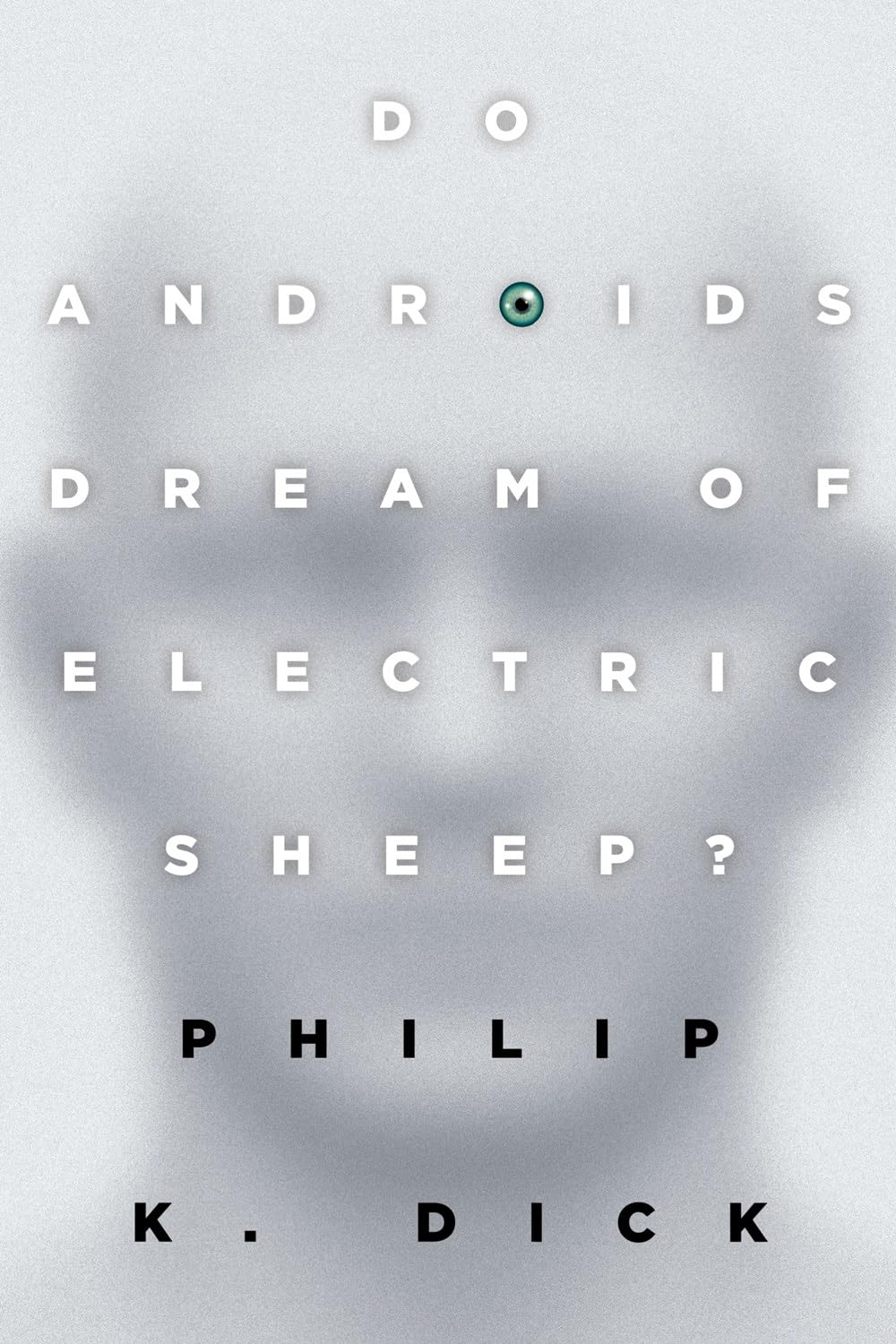
Philip K. Dick's 1968 novel follows Rick Deckard, a weary bounty hunter tasked with retiring rogue androids in a post-nuclear Los Angeles. The book is a philosophical puzzle box: a meditation on what separates human from artificial consciousness, filtered through the paranoia and moral exhaustion of a man who may not be entirely human himself. Dick's prose is deliberately flat, almost pulp-like, which paradoxically makes the existential dread cut deeper.
Ridley Scott's 1982 film adaptation, retitled Blade Runner, takes Dick's conceptual framework and transforms it into something visually and thematically more cohesive. Scott strips away the novel's subplot about Deckard's wife and the religious cult, and instead focuses laser-like on the hunter-hunted dynamic between Deckard and Roy Batty. The film adds the famous monologue—"I've seen things you people wouldn't believe"—which doesn't exist in the book but crystallizes the entire work's meditation on memory, mortality, and what it means to be alive.
This comparison matters because Blade Runner is one of cinema's rare instances where a film doesn't just adapt a book—it completes it. Scott understood what Dick was reaching for and had the visual language to deliver it.
| Character | In the Book | In the The Film |
|---|---|---|
| Rick Deckard Harrison Ford |
A burnt-out, morally compromised bounty hunter who questions his own humanity as he hunts androids. Dick portrays him as increasingly unreliable, possibly delusional, caught between his job and his empathy for the androids he's supposed to kill. His interior monologue reveals a man fragmenting under existential doubt. | Ford's Deckard is visually and emotionally exhausted, a film noir detective transplanted into a dystopian future. Scott emphasizes his isolation and the ambiguity of his own nature through cinematography and performance rather than internal monologue. The film leaves open the question of whether Deckard himself is an android—a possibility the book hints at but never fully commits to. |
| Roy Batty Rutger Hauer |
The leader of the android rebellion is a relatively straightforward antagonist—intelligent, dangerous, but ultimately a plot device to explore questions about artificial life. Dick doesn't grant him much interiority or philosophical weight beyond his function as a threat. | Hauer's Roy Batty becomes the film's tragic philosophical center—a being with only four years to live, desperately seeking his creator and grappling with mortality in ways that make him more human than the humans hunting him. His final monologue transforms him from villain to existential hero, and the film's entire moral framework pivots around his presence. |
| Rachael Rosen Sean Young |
A sophisticated android designed to seduce Deckard and compromise his mission. She's a tool of the Rosen Corporation, though Dick grants her some awareness of her own artificiality. Her relationship with Deckard is transactional and morally murky. | Young's Rachael is more vulnerable and tragic—a being who doesn't know she's an android, making her emotional connection to Deckard genuinely poignant rather than merely manipulative. Scott uses her as a mirror to Deckard's own uncertainty about his nature, deepening the film's central ambiguity. |
| Eldon Tyrell Joe Turkel |
The head of the Rosen Corporation appears briefly and is portrayed as a distant corporate figure, more bureaucratic than visionary. He's a plot function rather than a character. | Turkel's Tyrell is a godlike figure—a creator who has made beings superior to himself, operating from a penthouse that resembles a cathedral. Scott transforms him into a Promethean figure whose hubris drives the film's tragedy, making him far more thematically central than in the novel. |
| John Isidore Not in film |
A mentally disabled human who befriends the androids and represents Dick's interest in marginal consciousness. Through Isidore, Dick explores themes of empathy and connection across the human-artificial divide. He's central to the novel's moral architecture. | Completely absent. Scott's streamlined narrative has no room for Isidore's subplot, and the film doesn't suffer for it—instead, Scott transfers Isidore's empathetic function onto Deckard himself, making the protagonist's moral crisis more immediate and personal. |
Key Differences
The film abandons Dick's religious subplot for pure noir existentialism
Dick's novel is saturated with Mercerism, a quasi-religious movement centered on a figure called Wilbur Mercer. Deckard owns an empathy box that connects him to Mercer's suffering, and the religion functions as Dick's exploration of shared consciousness and artificial faith. It's philosophically ambitious but narratively diffuse, and it dilutes the book's focus on the android question itself.
Scott strips this entirely, replacing spiritual ambiguity with visual and moral ambiguity. The film's Los Angeles is secular, decaying, and noir—a world where the only transcendence comes through human connection and the confrontation with mortality. By removing Mercerism, Scott actually sharpens Dick's central question: what makes us human? The answer becomes not faith or empathy boxes, but the capacity to recognize consciousness in another being.
Scott makes the Deckard-android question central; Dick leaves it peripheral
In the novel, the possibility that Deckard might be an android is a late-game twist that Dick hints at but never fully explores. It's a clever idea that gets lost in the book's sprawling structure and multiple subplots. The reader is never quite sure if it's real or Deckard's paranoia.
Scott makes this ambiguity the film's entire foundation. Every scene is shot and performed in a way that makes Deckard's humanity questionable—his emotional flatness, his isolation, the way he moves through the world. The film's final scene, where Deckard and Rachael leave together, is rendered ambiguous by Scott's visual language in a way that the book never achieves. By making this the central mystery rather than a peripheral one, Scott creates a more unified and haunting work.
The film elevates Roy Batty from antagonist to tragic protagonist
In Dick's novel, Roy Batty is dangerous and intelligent, but he's fundamentally a plot obstacle—the android Deckard must hunt and kill. He has no inner life to speak of, and his motivations are functional rather than emotional. He's a threat, not a character.
Scott and Hauer transform Roy into the film's moral and philosophical center. His four-year lifespan becomes the film's meditation on mortality and meaning. His final monologue—about seeing things humans wouldn't believe, about memories dissolving like tears in rain—is not in the book, but it's the film's most profound moment. By making Roy sympathetic and eloquent, Scott forces the audience to question who the real villain is. Deckard becomes the hunter of a being more aware of existence's preciousness than Deckard himself.
Dick's paranoia is diffuse; Scott's paranoia is visual and concentrated
Dick's novel generates paranoia through Deckard's unreliable interior monologue and the constant uncertainty about what's real. The reader is trapped in Deckard's fragmenting consciousness, which is philosophically rich but narratively scattered. The paranoia is intellectual rather than visceral.
Scott creates paranoia through visual language—the perpetual rain, the oppressive architecture, the way characters are framed in shadows and isolation. The film's paranoia is environmental and emotional rather than philosophical. By concentrating the paranoia into a visual and emotional experience, Scott makes it more immediately affecting. The audience doesn't just think about uncertainty; they feel it in every frame.
The film's ending is ambiguous transcendence; the book's is ambiguous despair
Dick's novel ends with Deckard and his wife finding a live toad in the desert—a moment of grace in a dead world, though even this is undercut by uncertainty about whether the toad is real or artificial. It's a hopeful ending that Dick immediately complicates, leaving the reader in philosophical limbo.
Scott's ending—Deckard and Rachael leaving the city, the film suggesting they might escape—is visually transcendent but narratively ambiguous. Are they both androids? Is Deckard's newfound humanity real or programmed? The film doesn't answer, but it suggests that the question itself is less important than the connection they've made. Scott's ambiguity is more emotionally resonant because it's grounded in relationship rather than metaphysical puzzle-solving.
Should You Read First?
Read the book first if you want to understand Dick's philosophical ambitions; watch the film first if you want to experience the story as pure cinema. The novel is denser and more conceptually ambitious, but also more scattered—it will give you the full range of Dick's paranoid imagination, including the Mercerism subplot and the Isidore storyline that the film abandons. However, the film is so visually and thematically complete that it doesn't feel like an adaptation; it feels like its own work. If you watch the film first, you'll appreciate the novel's additional layers. If you read the novel first, you'll understand how Scott distilled Dick's sprawling ideas into visual poetry.
The ideal approach is to experience both, but not back-to-back. Let the film settle in your mind for a few weeks, then read the novel to see what Scott chose to keep and what he chose to transform. This sequence allows you to appreciate both works on their own terms rather than constantly comparing them.
Blade Runner is the rare adaptation that doesn't just honor its source material—it completes it. Scott understood that Dick's paranoid meditation on consciousness needed visual and emotional concentration, not literal fidelity. By stripping away the religious subplot, elevating Roy Batty to tragic protagonist, and making Deckard's own humanity the central question, Scott created a film that deepens rather than simplifies Dick's philosophical core. The novel is brilliant but diffuse; the film is brilliant and focused. Both are essential, but the film is the more perfect work.