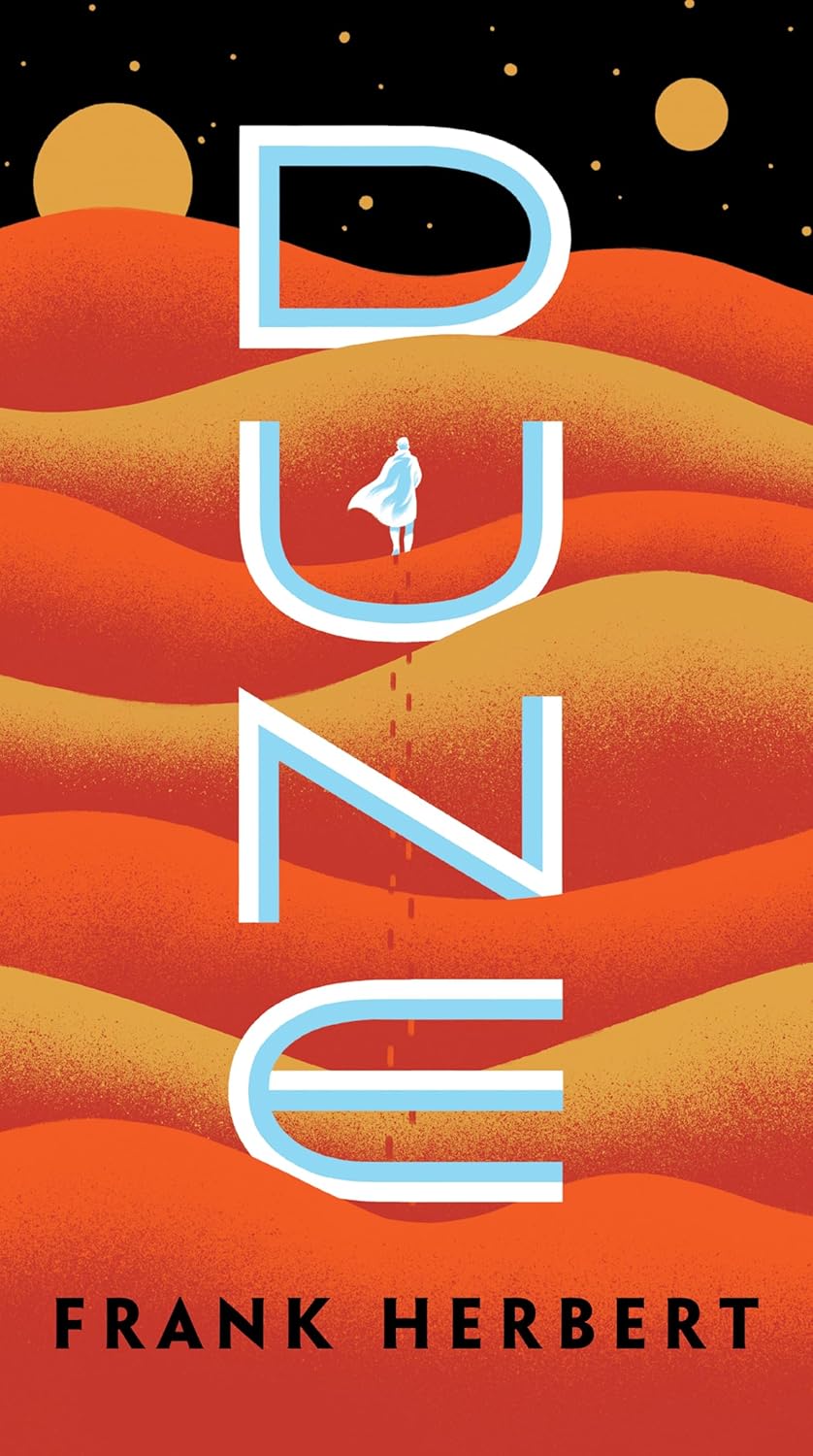
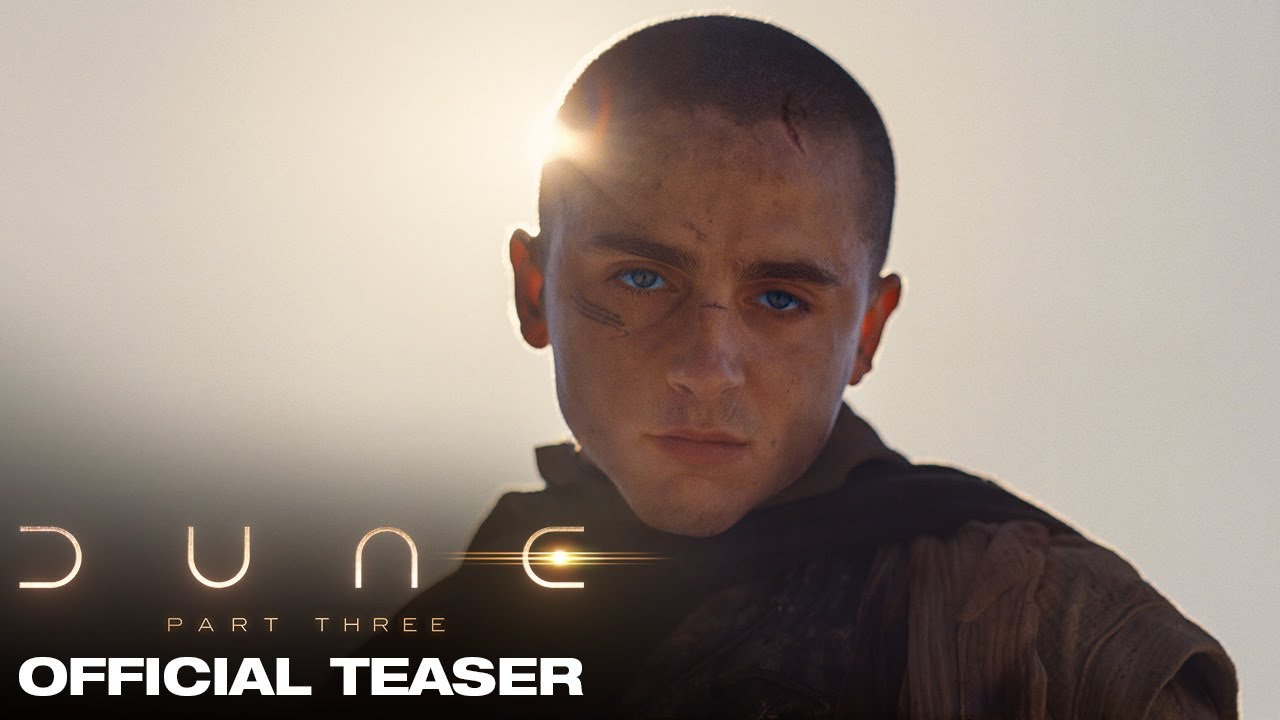
The Story in Brief
Paul Atreides is the son of Duke Leto, sent to govern Arrakis — a desert planet that produces melange, the spice that enables interstellar travel and extends human life. When House Harkonnen betrays and destroys the Atreides with the Emperor's tacit approval, Paul and his mother Jessica escape into the deep desert. They fall in with the Fremen, Arrakis's indigenous people, who have been waiting for a prophesied messiah.
What begins as a survival story becomes something stranger: a meditation on prophecy, ecological collapse, religious manipulation, and the danger of charismatic leaders. Herbert spent six years researching and writing it, drawing on studies of desert ecology, Islamic history, and the psychology of messianic movements. Villeneuve split the adaptation across two films released in 2021 and 2024, with Timothée Chalamet as Paul, Rebecca Ferguson as Jessica, and Zendaya as Chani.
Both films were critical and commercial successes. Part Two grossed over $700 million worldwide and won six Academy Awards. Herbert's novel won the Hugo and Nebula awards and is widely considered one of the most important works of science fiction ever published.
| Character | In the Book | In the The Movie |
|---|---|---|
| Paul Atreides Timothée Chalamet |
A calculating, prescient figure who sees the jihad he will unleash and chooses power anyway — Herbert makes his complicity explicit. | More passive and reactive; Chalamet plays Paul's transformation as ambiguous, leaving the audience uncertain whether he's a hero or a warning. |
| Lady Jessica Rebecca Ferguson |
A Bene Gesserit concubine who defied orders to bear a daughter and gave Leto a son instead — her guilt and ambition drive much of the plot. | Ferguson emphasizes Jessica's maternal desperation and her horror at what Paul becomes, making her more sympathetic than Herbert does. |
| Chani Zendaya |
Paul's devoted companion and the mother of his first son; she accepts his messianic role without question. | A skeptic who challenges the prophecy throughout both films, giving Zendaya a genuine dramatic arc and sharpening the critique of Paul. |
| Stilgar Javier Bardem |
The Fremen leader who becomes Paul's most fervent believer, interpreting every action as proof of the prophecy. | Bardem plays Stilgar's faith with warmth and humor, but the films underplay how dangerous his devotion becomes. |
| Baron Vladimir Harkonnen Stellan Skarsgård |
A grotesque, sadistic villain whose cruelty is described in visceral detail — Herbert makes him a monster. | Skarsgård's Baron is menacing and physically imposing, but the films tone down the novel's most disturbing elements. |
| Duncan Idaho Jason Momoa |
A loyal swordmaster who dies defending Paul and Jessica — his death is brief but significant. | Momoa brings charisma and warmth to the role, making Duncan's death more emotionally resonant than it is in the novel. |
Key Differences
Paul's interiority is the novel's engine; the films can only imply it
Herbert's novel lives inside Paul's head. You experience his prescient visions as he does — fragmented, overwhelming, inevitable. You watch him calculate how to manipulate the Fremen's messianic beliefs, and you feel his growing horror at what he's becoming. The book makes Paul's complicity explicit: he knows he will unleash a jihad that kills billions, and he chooses power anyway.
Chalamet plays Paul as more passive and reactive. The internal dread becomes visual ambiguity — Villeneuve uses dream sequences and Chalamet's haunted expressions to suggest Paul's conflict, but the films are deliberately unclear about whether Paul is a hero or a warning. The critique is present, but it's muted.
Chani becomes the moral conscience the book never gives her
In Herbert's novel, Chani is Paul's devoted companion. She's a skilled fighter and the mother of his first son, but her perspective on the Fremen prophecy is largely absent. She accepts Paul's destiny without resistance, and Herbert gives her no arc beyond loyalty.
Villeneuve makes her a skeptic. Zendaya's Chani pushes back on the messiah narrative throughout both films, challenging Paul's transformation and refusing to celebrate his rise to power. The final scene of Part Two — Chani walking away from Paul — is Villeneuve's invention, and it sharpens the story's critique considerably. She becomes the character who sees what Paul is doing and refuses to endorse it.
The Bene Gesserit's manipulation is background texture, not foreground argument
Herbert devotes significant space to the Bene Gesserit's centuries-long breeding program and their deliberate seeding of messianic myths across planets. The Missionaria Protectiva — the order's propaganda arm — planted the prophecy of the Lisan al-Gaib on Arrakis generations before Paul arrived. Their scheming is central to the novel's argument about manufactured religion and the danger of believing in chosen ones.
In the films, Charlotte Rampling is excellent as Reverend Mother Mohiam, and the Bene Gesserit's influence is present, but the full scope of their manipulation is background texture rather than foreground plot. The films gesture toward it but don't explore it with Herbert's rigor.
The ending defers Herbert's moral conclusion
Paul's victory over the Emperor is explicitly pyrrhic in the novel. He defeats Shaddam IV, claims the throne, and forces Princess Irulan into a political marriage — but he knows he has unleashed a holy war across the universe. Herbert's final pages make clear that Paul has become exactly what he feared: a tyrant whose followers will kill in his name. The book is not celebrating him.
Part Two ends on a more ambiguous note. The jihad is referenced — Paul tells the Great Houses that his Fremen will bring them to heel — but the full moral weight of Herbert's conclusion is deferred. Villeneuve leaves room for interpretation, and the film's final image is Chani's rejection, not Paul's horror. It's a powerful ending, but it's not Herbert's ending.
Mentats are present but underexplained
Mentats — humans trained to replace computers, which are banned under the Butlerian Jihad — are a key part of the political world Herbert builds. Thufir Hawat, the Atreides Mentat, and Piter De Vries, the Harkonnen Mentat, are major characters defined by this role. Their computational abilities shape the strategy and intrigue of the novel.
In the films, Mentats are present but their function is underexplained. Thufir appears briefly in Part One, and Piter is reduced to a background villain. The worldbuilding context that makes them significant — the Butlerian Jihad, the ban on thinking machines — is largely absent. Casual viewers may not even notice they're a distinct class of character.
Yes — but Dune is a genuinely demanding novel, and that's worth knowing going in. The first hundred pages require patience. Herbert withholds conventional narrative momentum in favor of world-construction: ecology, politics, religion, the mechanics of spice production. He uses epigraphs from fictional historical texts to build context before scenes even begin. Push through and the payoff is enormous, but the opening is deliberately slow.
The films are an excellent entry point that make the story immediately accessible. Villeneuve's visual world-building does in minutes what Herbert takes chapters to establish. But the films soften exactly the elements that make the book worth reading: the complicity, the manipulation, the warning buried in the adventure. Read it before Part Three arrives, and you'll understand what Villeneuve is trying to preserve and what he's chosen to leave out.
Should You Read First?
Yes — but Dune is a genuinely demanding novel, and that's worth knowing going in. The first hundred pages require patience. Herbert withholds conventional narrative momentum in favor of world-construction: ecology, politics, religion, the mechanics of spice production. He uses epigraphs from fictional historical texts to build context before scenes even begin. Push through and the payoff is enormous, but the opening is deliberately slow.
The films are an excellent entry point that make the story immediately accessible. Villeneuve's visual world-building does in minutes what Herbert takes chapters to establish. But the films soften exactly the elements that make the book worth reading: the complicity, the manipulation, the warning buried in the adventure. Read it before Part Three arrives, and you'll understand what Villeneuve is trying to preserve and what he's chosen to leave out.
Villeneuve's adaptation is one of the best science fiction films ever made — and it still can't do what Herbert does. The book is an argument about power and prophecy that the films can only gesture toward. See the films for the spectacle and the performances. Then read the novel and notice everything they had to leave out.