The Story in Brief
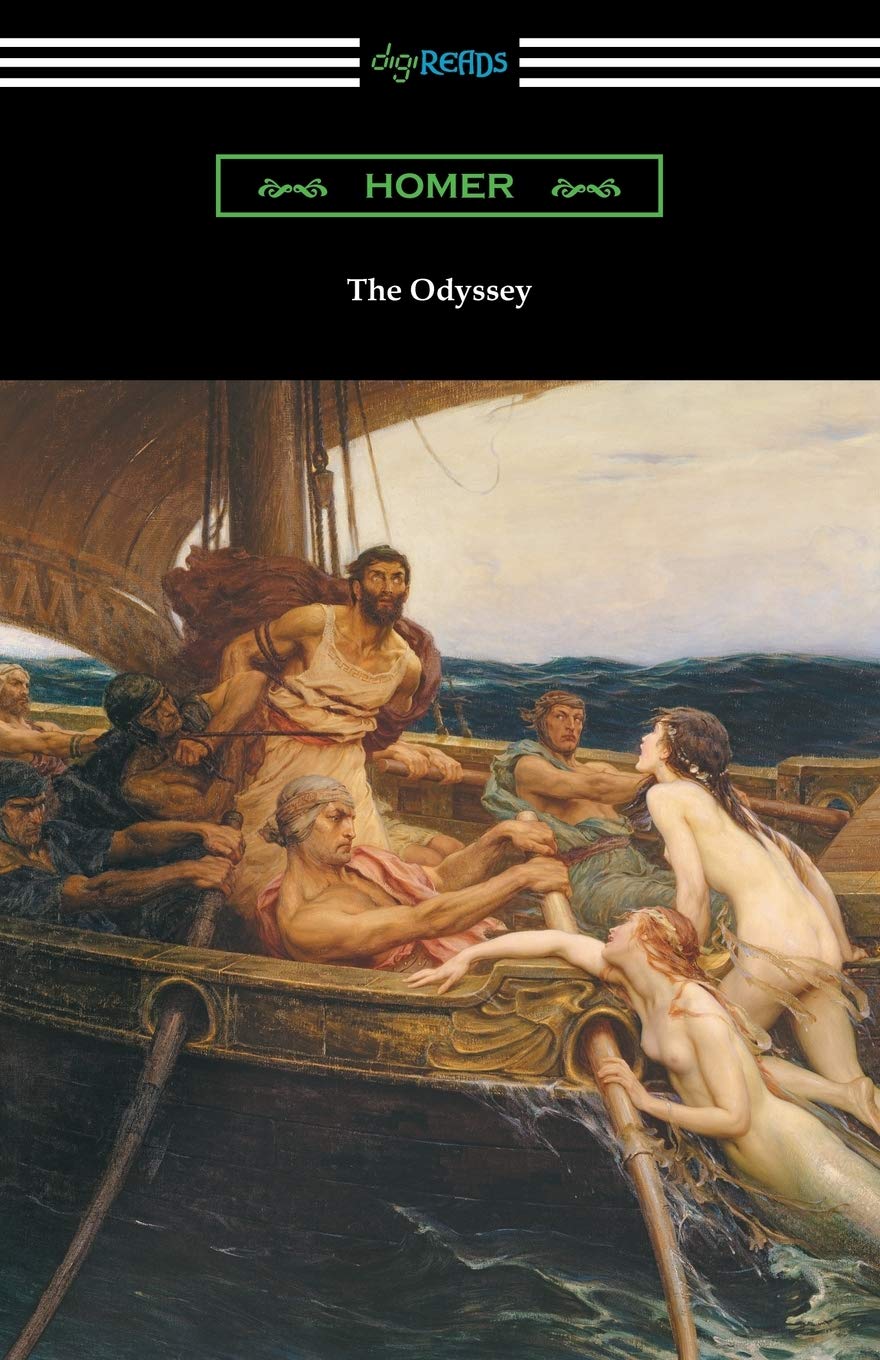
Odysseus, king of Ithaca and hero of the Trojan War, has been trying to get home for ten years. Gods obstruct him, monsters devour his crew, enchantresses delay him, and the sea keeps finding new ways to say no. Meanwhile, his wife Penelope holds off a houseful of suitors who have assumed he's dead and are competing to replace him, and his son Telemachus sets out to find news of a father he barely remembers.
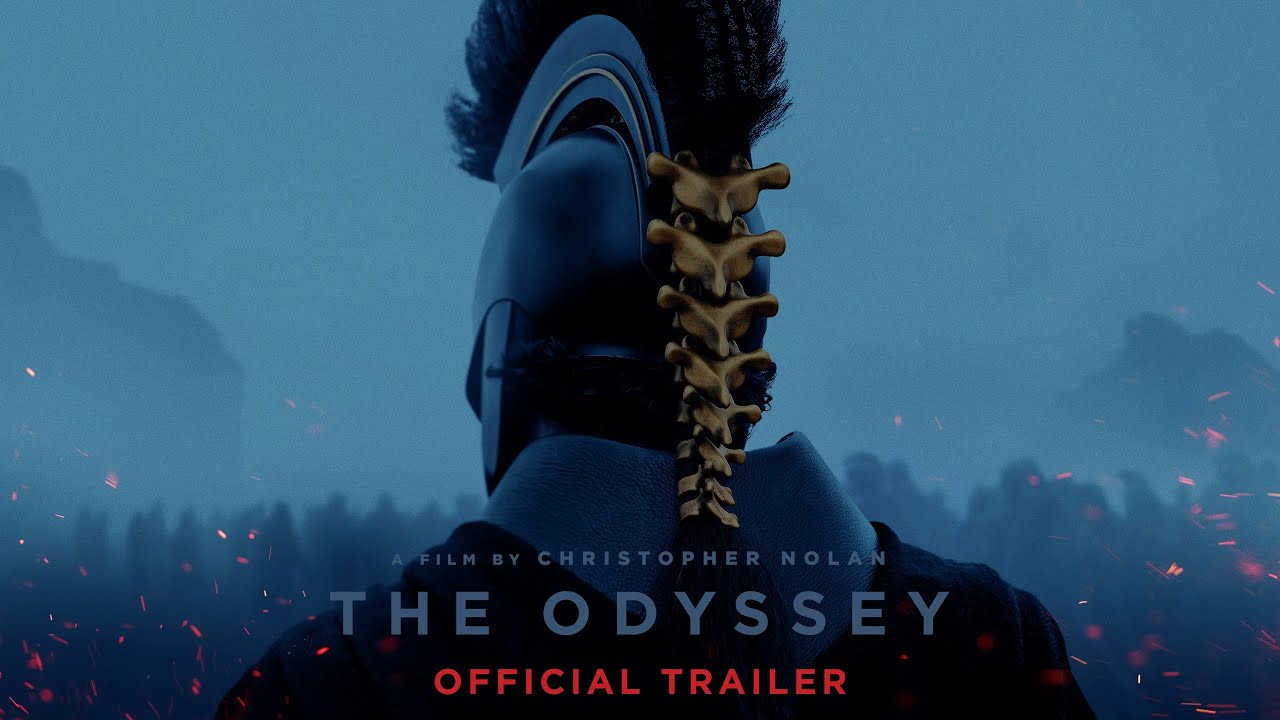
Homer's poem — composed around 800 BC and transmitted orally before being written down — is the foundational story of the journey home. It established narrative structures still in use: the in medias res opening, the flashback sequence, the recognition scene, the homecoming that requires violence to restore order. Christopher Nolan brings his full post-Oppenheimer ambition to it, with Matt Damon as Odysseus, Anne Hathaway as Penelope, Tom Holland as Telemachus, and Zendaya reportedly cast as Circe.
The film arrives with extraordinary anticipation — Nolan's first adaptation of classical material, shot on IMAX with practical effects for the sea voyages and a reported budget exceeding $200 million. It's the rare literary adaptation where the director's sensibility and the source material's structure appear genuinely aligned rather than in productive tension.
| Character | In the Book | In the The Film |
|---|---|---|
| Odysseus Matt Damon |
Cunning, resourceful, and morally complex — a hero defined by intelligence rather than strength, capable of both strategic brilliance and ruthless violence. | Damon reportedly plays him as psychologically damaged by war and wandering, emphasizing the trauma beneath the heroism in ways Homer implies but doesn't foreground. |
| Penelope Anne Hathaway |
Patient, cunning, and strategically brilliant — she delays the suitors for years through the weaving trick and maintains authority in a house full of hostile men. | Hathaway's role is significantly expanded, with Penelope given her own narrative arc parallel to Odysseus's journey, including scenes of political maneuvering not present in Homer. |
| Telemachus Tom Holland |
A young man coming of age in his father's absence, journeying to Pylos and Sparta to seek news of Odysseus and learning what it means to be a leader. | Holland brings vulnerability and determination to the role, with Nolan reportedly devoting substantial screen time to Telemachus's education in heroism and his relationship with Athena. |
| Athena Lupita Nyong'o |
Odysseus's divine patron — she advocates for him among the gods, disguises herself to guide Telemachus, and orchestrates the conditions for his homecoming. | Nyong'o's Athena appears in both divine and disguised forms, with Nolan leaving ambiguous whether she's supernatural or a projection of the characters' psychological needs. |
| Circe Zendaya |
An enchantress who transforms Odysseus's crew into pigs, then becomes his lover for a year after he resists her magic with Hermes's help. | Zendaya's casting suggests a more substantial role than Homer gives her, possibly expanding Circe's island episode into a meditation on temptation and the cost of delay. |
Key Differences
The epic similes are untranslatable to film
Homer's text is structured around long, digressive comparisons — moments of violence or beauty that pause the narrative to compare what's happening to something from ordinary life: a farmer cutting wheat, a lion dragging a calf, women weeping at a harbour. These similes are the heartbeat of the poem, creating a double vision where heroic action is constantly measured against domestic reality.
They exist entirely outside what cinema can do. Nolan will find visual equivalents — slow-motion sequences, intercutting between timelines, Hans Zimmer's score doing the work of metaphor — but the simile is a literary technology with no film equivalent. You lose the texture of Homer's voice, which is half the experience of reading the poem.
The non-linear structure is Nolan's natural territory
The Odyssey begins ten years into the journey, with Odysseus already stranded on Calypso's island. The famous wanderings — the Cyclops Polyphemus, the Sirens, Circe, the descent to the Underworld — are told in flashback by Odysseus himself at a dinner party hosted by King Alcinous of the Phaeacians. Homer invented the structure Nolan has made his signature.
This is the adaptation where Nolan's instincts and his source material are in genuine alignment rather than in tension. The trailer suggests he's leaning into the fractured chronology, intercutting Odysseus's wanderings with Penelope's resistance and Telemachus's coming-of-age journey. It's the rare case where a director's stylistic tics serve the source rather than competing with it.
Penelope's interiority is expanded significantly
Homer's Penelope is cunning and patient — she unravels her weaving each night to stall the suitors, and her final test of Odysseus with the unmovable bed is a masterpiece of strategic verification. But the poem is primarily Odysseus's story; her interiority is largely implied through action rather than explored directly.
Nolan is reportedly expanding Penelope significantly, giving Hathaway scenes of political negotiation with the suitors, moments of doubt about Odysseus's return, and a parallel arc of endurance that matches her husband's trials. It's the right call for a 2026 film and may actually deepen the story by making the homecoming a reunion of equals rather than a rescue.
The gods are treated with Nolan's characteristic ambiguity
Homer's gods are anthropomorphic, petty, and fully present — Athena disguises herself and walks among mortals, Poseidon nurses a grudge over his blinded son Polyphemus, Zeus adjudicates disputes on Olympus. They are characters with agency, not symbols. The poem's moral architecture depends on their reality.
Nolan handles divinity with more ambiguity, presenting divine intervention in ways that can be read as supernatural or psychological. Athena's guidance might be real or might be Telemachus's internalized sense of purpose. It's a defensible modern choice that changes the story's moral architecture from cosmic justice to human resilience, but it loses Homer's genuine belief in divine presence.
The Phaeacian episode is compressed
In the poem, Odysseus spends several books as the guest of the Phaeacians — a civilised, seafaring people who treat him with extraordinary hospitality while he tells them his story. It's the structural hinge of the whole poem, the moment where Odysseus transforms from suffering wanderer to storyteller, and where Homer meditates on what hospitality means and what stories are for.
Nolan compresses this significantly, reducing the Phaeacians to a framing device rather than a fully realized culture. It's an understandable choice for pacing, but it means losing some of the poem's meditation on the relationship between guest and host, and the way stories create obligations between strangers.
Yes — but start with a modern translation. Emily Wilson's 2017 version is the most readable and the most honest to Homer's actual register: direct, swift, occasionally brutal. She strips away Victorian ornamentation and restores the poem's clarity. Robert Fagles's 1996 translation is the stronger second choice if you want something more elevated in diction while remaining accessible. Either will give you the poem in a form that feels urgent rather than academic.
Nolan's film will inevitably interpret the myth in ways that close off some imaginative possibilities. His Cyclops will look a certain way, his Sirens will sound a certain way, his Ithaca will have a specific geography. Read Homer first and keep those visions intact. The poem is short enough to finish in a week of evening reading, and it's the foundation of so much Western storytelling that encountering it directly is worth the effort regardless of the film.
Should You Read First?
Yes — but start with a modern translation. Emily Wilson's 2017 version is the most readable and the most honest to Homer's actual register: direct, swift, occasionally brutal. She strips away Victorian ornamentation and restores the poem's clarity. Robert Fagles's 1996 translation is the stronger second choice if you want something more elevated in diction while remaining accessible. Either will give you the poem in a form that feels urgent rather than academic.
Nolan's film will inevitably interpret the myth in ways that close off some imaginative possibilities. His Cyclops will look a certain way, his Sirens will sound a certain way, his Ithaca will have a specific geography. Read Homer first and keep those visions intact. The poem is short enough to finish in a week of evening reading, and it's the foundation of so much Western storytelling that encountering it directly is worth the effort regardless of the film.
Two great works that illuminate each other without replacing each other. Homer's Odyssey is literature's oldest adventure story and remains irreplaceable — the epic similes, the oral texture, the genuine belief in divine presence can't be filmed. Nolan's adaptation is a worthy heir — ambitious, visually extraordinary, and genuinely moved by its source. The non-linear structure is a perfect match for his sensibility, and the expanded roles for Penelope and Telemachus may actually deepen the homecoming. Read the poem, see the film, and marvel that a story this old still works.