The Story in Brief
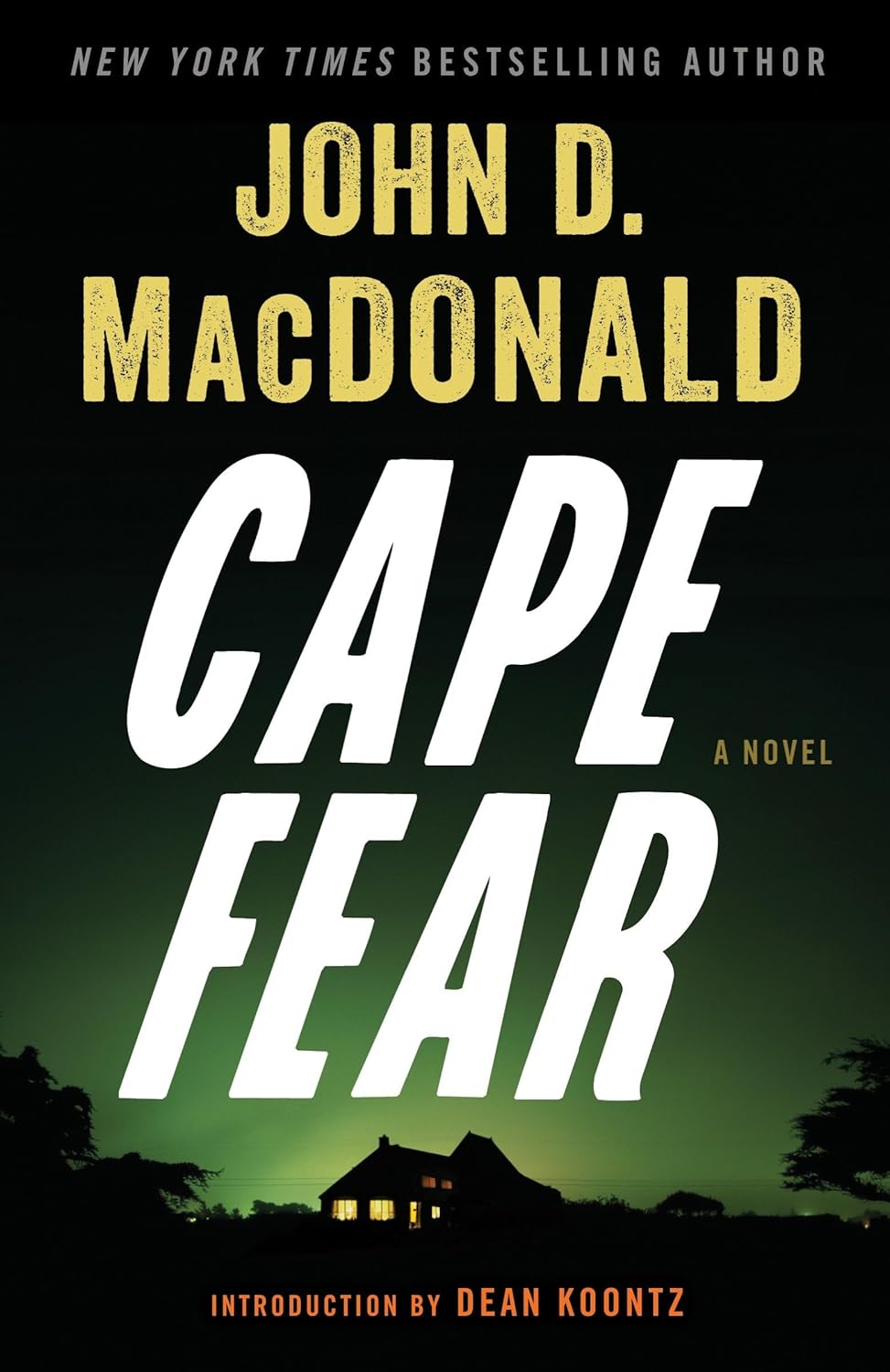
John D. MacDonald's 1957 novel The Executioners introduces Sam Bowden, a lawyer terrorized by Max Cady, a career criminal he testified against years earlier. Released from prison, Cady methodically stalks Bowden's family in a small Southern town, exploiting legal loopholes to torment them without crossing into prosecutable territory. The novel is a taut exercise in suburban paranoia — the nightmare of a respectable man discovering that the law cannot protect him from someone willing to operate in its shadows.
J. Lee Thompson's 1962 film adaptation transforms MacDonald's pulp thriller into something darker and more operatic. Gregory Peck's Bowden becomes a moral cipher, while Robert Mitchum's Cady emerges as one of cinema's most hypnotic villains — a force of nature so charismatic that the film's real tension comes not from plot mechanics but from watching Mitchum's barely contained menace radiate across every frame. The comparison matters because it reveals how casting and visual language can elevate genre material into genuine art.
This is the rare case where the film doesn't just adapt the book — it completes it. Scorsese's 1991 remake proved the concept's durability, but Thompson's original remains the definitive version, the one that proved a B-movie premise could sustain a masterpiece.
| Character | In the Book | In the The Film |
|---|---|---|
| Max Cady Robert Mitchum |
A cunning, methodical ex-convict driven by revenge. MacDonald's Cady is intelligent and patient, but ultimately a functional plot device — a threat that operates through legal technicalities and psychological warfare. He's dangerous because he's smart, not because he possesses any particular magnetism. | Mitchum transforms Cady into a Shakespearean villain — a man of genuine charisma and animal magnetism who radiates danger through every gesture. His Cady is educated, articulate, and seductive in a way that makes his menace almost irresistible. Mitchum's performance suggests a man who has transcended ordinary criminality into something almost supernatural. |
| Sam Bowden Gregory Peck |
A fundamentally decent lawyer whose testimony sent Cady to prison. MacDonald's Bowden is sympathetic but somewhat passive — he reacts to threats rather than driving the narrative. His moral authority is assumed rather than tested. | Peck's Bowden is more ambiguous and morally compromised. The film hints that Bowden's testimony may have been motivated by self-interest rather than pure justice. Peck plays him as a man whose veneer of respectability masks deeper uncertainties about his own character. |
| Peggy Bowden Polly Bergen |
Sam's wife, primarily defined by her role as a family member in danger. She exists mainly to heighten the stakes of Cady's harassment and to demonstrate the collateral damage of his revenge. | Bergen's Peggy becomes a more complex figure — a woman caught between her husband's paralysis and her own instinct for survival. The film gives her agency that the novel reserves for the male characters, making her a genuine participant in the family's defense rather than merely a victim. |
| Nancy Bowden Lori Martin |
The teenage daughter, a plot device whose vulnerability motivates her father's desperation. She remains largely underdeveloped as a character, serving primarily as bait. | Martin's Nancy is given genuine interiority. The film explores her adolescent confusion and attraction to Cady's dangerous charisma, making her a moral participant in the drama rather than a passive target. This complicates the family dynamic considerably. |
| Lieutenant Dutton Martin Balsam |
A sympathetic police officer who recognizes Cady's threat but is bound by legal constraints. He serves as a voice of institutional helplessness — the law's inability to prevent psychological terrorism. | Balsam's Dutton is more world-weary and cynical, embodying a cop's frustration with a legal system that protects the guilty. His scenes with Peck emphasize the film's central theme: that civilization's rules are inadequate against genuine evil. |
Key Differences
The film strips the novel's legal proceduralism to focus on pure psychological terror
MacDonald's novel is structured around the mechanics of how Cady exploits legal loopholes — he knows exactly which laws he can break without prosecution, and much of the tension derives from watching Bowden's lawyer mind grapple with this problem. The novel is fundamentally about the inadequacy of the legal system, but it argues this through plot and procedure.
Thompson's film abandons this procedural framework almost entirely. Instead, it creates a fever dream of escalating menace where Cady's threat is almost supernatural in its inevitability. The film trusts visual language and performance to convey what the novel explains through exposition. This is a radical simplification that paradoxically makes the material more powerful — the audience feels the terror rather than understanding it intellectually.
The film transforms Cady from antagonist into a kind of dark protagonist
In the novel, Cady is clearly the villain — his motivations are comprehensible but his actions are unambiguously wrong. MacDonald maintains moral clarity throughout. The reader never doubts that Bowden is the sympathetic character and Cady is the threat.
Thompson's film deliberately blurs this moral distinction. Mitchum's performance and the film's visual language make Cady almost seductive. The camera lingers on him with an admiration that the novel never permits. By the film's end, Cady has become a kind of dark mirror to Bowden — a man who has rejected the compromises of civilization in favor of pure will. The film doesn't endorse this choice, but it understands its appeal in a way the novel refuses to.
The novel emphasizes Bowden's moral authority; the film questions it
MacDonald's Bowden is presented as a man of principle who testified against Cady because it was the right thing to do. His subsequent suffering is tragic precisely because he acted with integrity. The novel's moral framework is essentially conservative — good men suffer because evil exists, not because they've done anything wrong.
Thompson's film introduces ambiguity about Bowden's motives that the novel never permits. The film suggests that Bowden's testimony may have been self-serving, that his respectability may be a mask for moral compromise. This transforms the narrative from a tragedy of innocence into a tragedy of complicity. Bowden's suffering becomes not just bad luck but a kind of cosmic justice.
The film uses visual and sexual menace where the novel relies on plot mechanics
MacDonald's novel generates tension through what Cady does — his specific actions and their legal implications. He makes phone calls, he appears at places, he exploits technicalities. The threat is concrete and procedural.
Thompson's film generates tension through what Cady is — his physical presence, his sexuality, his barely contained violence. Mitchum's performance is almost entirely about suggestion and implication. The camera photographs him in ways that make him seem larger than life, more dangerous than any specific action could convey. This is a fundamentally cinematic approach that the novel's literary framework cannot replicate.
The film's ending is ambiguous about whether Bowden has truly defeated Cady
MacDonald's novel ends with a clear victory — Cady is defeated, the family is safe, justice (of a sort) has been served. The ending is cathartic and conclusive. Evil has been stopped.
Thompson's film ends with Cady dead but the victory feels hollow and uncertain. The final image suggests that Cady has somehow won even in defeat — that he's infected Bowden and his family with his own darkness. The film's ambiguous final moments suggest that some threats cannot be truly defeated, only survived. This is a far more pessimistic vision than the novel permits.
Should You Read First?
The film is the superior experience, but reading the novel first provides valuable context for understanding how radically Thompson reimagined the material. MacDonald's novel is a competent thriller that moves quickly and maintains clear moral lines — it's the kind of book that's perfect for an airplane or beach. The film, however, is a work of genuine cinema that uses performance, composition, and editing to create effects that no novel could achieve.
If you're interested in understanding how great filmmakers adapt source material, read the novel first. You'll appreciate how Thompson took a serviceable pulp thriller and transformed it into something far more psychologically complex and morally ambiguous. If you just want the best version of this story, watch the film. Mitchum's performance alone justifies the decision.
The 1962 Cape Fear is one of the rare adaptations that improves upon its source material by understanding what cinema can do that literature cannot. MacDonald's novel is a solid thriller, but Thompson's film is a masterpiece of suspense that uses visual language, performance, and editing to create effects of menace and psychological terror that the novel's procedural framework cannot match. Mitchum's Cady is one of cinema's great villains precisely because he transcends the novel's conception of him — he becomes not just a threat but a kind of dark force of nature. The film's moral ambiguity and visual sophistication represent a quantum leap beyond MacDonald's straightforward revenge narrative.