The Story in Brief
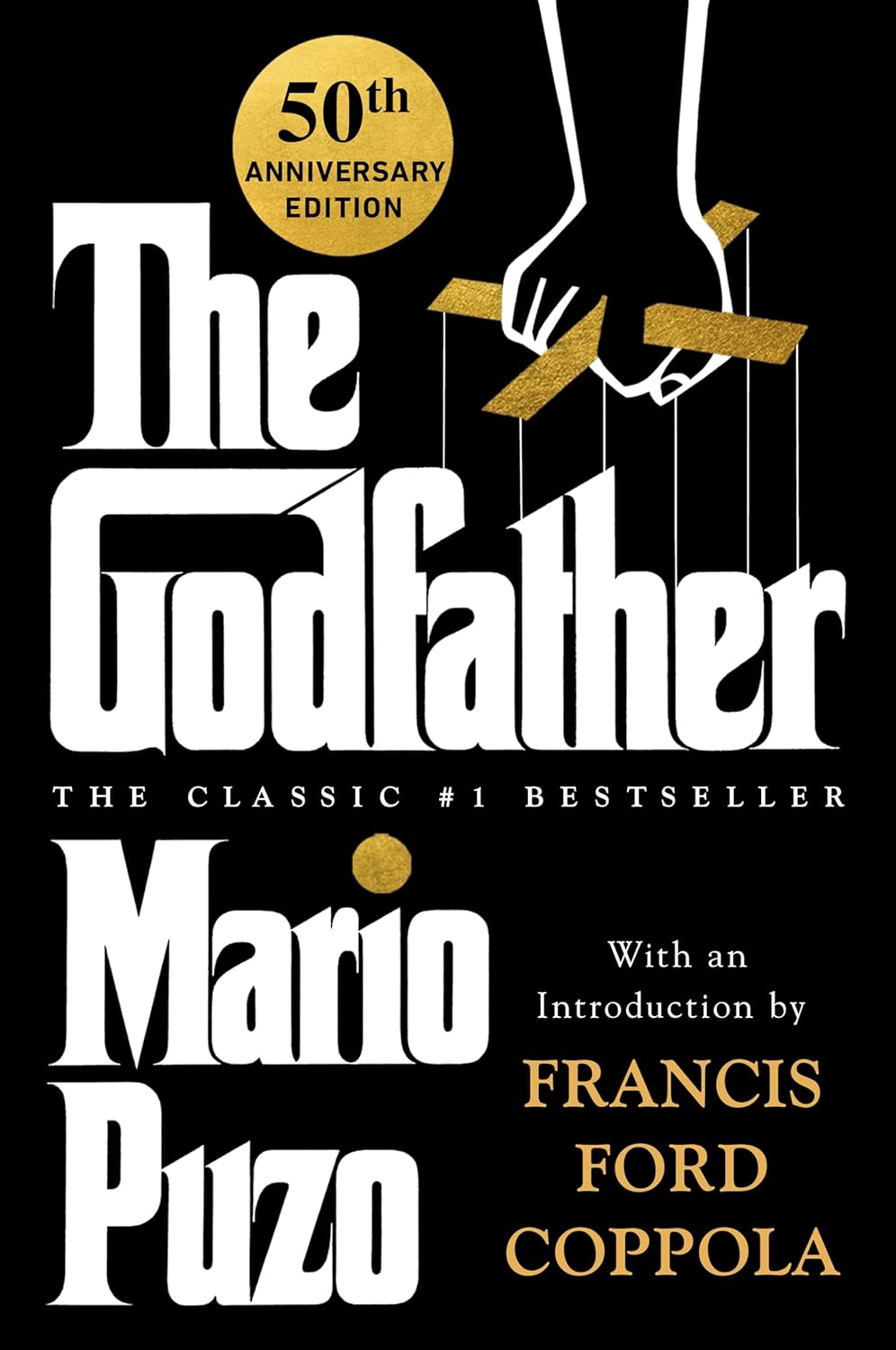
Mario Puzo's 1969 novel is a sprawling crime saga following the Corleone family's rise and consolidation of power in post-war America. The book traffics in pulp sensationalism — elaborate revenge plots, sexual intrigue, and operatic violence — while maintaining a surprisingly shrewd analysis of American capitalism and immigrant assimilation. Francis Ford Coppola's 1972 film adaptation strips away much of Puzo's lurid subplot material and reconceives the story as a Shakespearean tragedy about power, loyalty, and the corruption of the soul.
This comparison matters because it represents a watershed moment in American cinema: the moment a pulp bestseller was transformed into high art without condescension, and the moment Hollywood proved that commercial success and artistic integrity weren't mutually exclusive. The film didn't just adapt the book — it redefined what the book could be read as.
| Character | In the Book | In the The Film |
|---|---|---|
| Vito Corleone Marlon Brando |
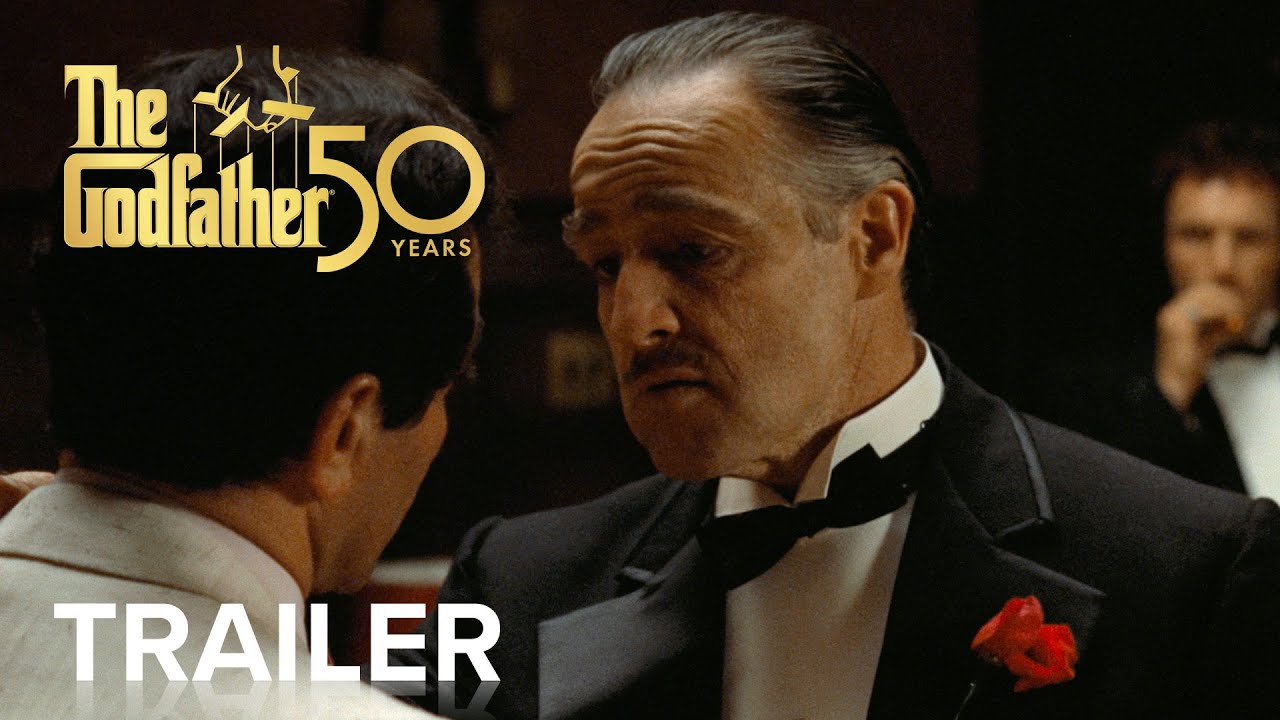
Vito is a ruthless businessman and patriarch, depicted with considerable detail about his rise from Sicilian immigrant to New York crime boss. Puzo emphasizes his sexual prowess, his manipulation of politicians and judges, and his capacity for calculated brutality. The novel presents him as a complex but fundamentally pragmatic operator. | Brando's Vito is a tragic figure — almost Shakespearean in his dignity and restraint. Coppola strips away the sexual subplot and emphasizes instead Vito's role as a man caught between two worlds, seeking respect and family security through the only means available to him. The performance transforms Vito into an icon of fatherhood and principle. |
| Michael Corleone Al Pacino |
Michael is a war hero and college-educated outsider to the family business who is gradually drawn into the organization through circumstance and family loyalty. Puzo's Michael is more conflicted and sexually active, with a subplot involving his infidelity that complicates his character arc. | Pacino's Michael is a classical tragic protagonist — the innocent who descends into darkness with surgical precision. Coppola focuses entirely on Michael's moral corruption, eliminating the sexual subplot and emphasizing instead the moment-by-moment choices that transform him from outsider to don. His final transformation is presented as inevitable and devastating. |
| Sonny Corleone James Caan |
Sonny is the hot-headed eldest son, impulsive and sexually aggressive, with an elaborate subplot involving his affair with Lucy Mancini that drives much of the novel's middle section. Puzo uses Sonny's character to explore themes of masculine pride and sexual jealousy. | Caan's Sonny is stripped of most of his sexual subplot but gains tragic dimension through his vulnerability and his role as the family's emotional center. His death becomes the film's turning point — not a consequence of sexual indiscretion but of family loyalty and protective rage. The character becomes more sympathetic and his fate more devastating. |
| Tom Hagen Robert Duvall |
Tom is the adopted consigliere, a lawyer and strategist who serves the family with quiet competence. Puzo presents him as capable but somewhat peripheral to the family's inner dynamics, always conscious of his outsider status. | Duvall elevates Tom into a figure of quiet moral authority and strategic brilliance. Coppola uses Tom as the audience's entry point into the family's world, making him essential rather than peripheral. His scenes become studies in manipulation and loyalty, and his character arc suggests a man choosing complicity over principle. |
| Kay Adams Diane Keaton |
Kay is Michael's American girlfriend, presented as naive and ultimately victimized by her involvement with the Corleone family. Puzo's treatment of her is relatively straightforward — she represents the normal world that Michael abandons. | Keaton's Kay becomes a tragic figure in her own right, the witness to Michael's transformation who gradually realizes she's married to a stranger. The final scene — where she watches Michael accept the ring-kissing of his capos while the door closes on her — is entirely Coppola's invention and transforms her from supporting character to tragic chorus. |
Key Differences
Coppola eliminates the Corleone women's subplot entirely, fundamentally changing the novel's gender politics
Puzo's novel devotes considerable narrative energy to the Corleone women — Vito's wife Carmela, Sonny's wife Sandra, and particularly the subplot involving Sonny's affair with Lucy Mancini and her subsequent involvement with a Hollywood producer. These subplots occupy dozens of pages and establish a pattern of sexual transgression and family betrayal that mirrors the men's business dealings.
Coppola excises nearly all of this material, keeping only Kay Adams as a female presence of any significance. The result is a film that operates almost entirely in the male world of business and power, making the Corleone family's rise feel like a purely masculine tragedy. This isn't a loss of complexity — it's a deliberate choice to focus the film's moral inquiry on the corruption of power rather than the corruption of desire. The film becomes more austere and more mythic as a result.
The film transforms the novel's pulp sensationalism into operatic tragedy through visual and sonic language
Puzo's novel is fundamentally a page-turner — it employs cliffhangers, explicit violence, sexual intrigue, and melodramatic confrontations to maintain momentum. The prose is direct and often crude, designed to move the reader forward rather than to linger on moral ambiguity. The violence is graphic and frequent, the sex scenes explicit, and the plotting deliberately sensational.
Coppola's film achieves its effects through restraint and suggestion. The famous horse-head scene is barely shown; the violence is often off-screen or implied; the emotional climaxes are achieved through performance and editing rather than plot mechanics. Nino Rota's score transforms the material from crime fiction into Shakespearean tragedy. The film's genius lies in its understanding that what you don't see is more powerful than what you do — a principle entirely foreign to Puzo's novelistic approach.
Coppola adds the baptism-and-murder sequence, creating a thematic architecture that doesn't exist in the novel
The novel's climax involves Michael consolidating power through a series of strategic killings, but these are presented as pragmatic business decisions rather than moral catastrophes. Puzo structures the ending around Michael's assumption of control and his marriage to Kay, treating it as a kind of victory — the outsider has become the don.
Coppola invents the parallel montage of Michael attending his nephew's baptism while his capos murder the heads of the Five Families. This sequence doesn't exist in the novel, but it becomes the film's thematic and moral center — the moment when Michael's soul is definitively lost, when he can participate in a sacred Christian ritual while orchestrating mass murder. This addition transforms the entire meaning of the film, making it not about the triumph of the Corleone family but about the spiritual death of Michael Corleone. It's a structural choice that elevates the material from crime saga to tragedy.
The novel's subplot about Hollywood and the film industry is entirely eliminated, narrowing the scope but deepening the focus
Puzo's novel includes an extended subplot involving a Hollywood producer named Jack Woltz and his involvement with Lucy Mancini and Sonny Corleone. This subplot allows Puzo to satirize the entertainment industry and to explore the Corleones' reach into legitimate business. It's a significant portion of the novel's middle section and establishes the family's power across multiple American institutions.
Coppola removes this subplot almost entirely, keeping only the famous scene where Woltz discovers a horse head in his bed — a scene that becomes purely about the Corleones' capacity for shocking violence rather than about Hollywood corruption. By eliminating the subplot, Coppola narrows the film's scope to focus almost exclusively on the family's internal dynamics and their relationship to organized crime. The film becomes more intimate and more mythic as a result, less interested in social satire and more interested in the tragedy of individual souls.
The film's ending is far more ambiguous and devastating than the novel's, suggesting Michael's damnation rather than his triumph
Puzo's novel ends with Michael having successfully consolidated power, married Kay, and established himself as the new don. The ending is presented as a kind of victory — Michael has survived, the family has prospered, and he has achieved his position through intelligence and ruthlessness. There's tragedy in Michael's transformation, but the novel treats it as an inevitable consequence of his circumstances rather than a moral catastrophe.
Coppola's ending is far darker. The final shot — Kay watching Michael accept the ring-kissing of his capos while the door closes on her — suggests not triumph but damnation. Michael has won the family business but lost his humanity. The film's final image is one of isolation and spiritual death, not victory. By changing the emotional register of the ending, Coppola transforms the entire meaning of the narrative. Where Puzo offers a crime saga with tragic elements, Coppola offers a tragedy about the corruption of the soul. It's the difference between a bestseller and a masterpiece.
Should You Read First?
Read the book first if you want to understand the source material's pulp sensationalism and its concern with sexual transgression and family scandal. But understand that you're reading a different work than the one Coppola filmed — Puzo's novel is a page-turner designed to entertain, while Coppola's film is a tragedy designed to devastate.
Alternatively, watch the film first and then read the novel to understand how much Coppola had to strip away and reinvent to create his masterpiece. The comparison will deepen your appreciation for both works — the novel as a brilliant piece of commercial fiction, the film as a work of genuine artistic vision that transcended its source material entirely.
The Godfather film is the rare adaptation that doesn't just improve on its source material — it redefines what the source material means. Coppola took Puzo's pulp crime saga and transformed it into Shakespearean tragedy through the sheer force of his visual imagination, his casting choices, and his willingness to eliminate entire subplots in service of a more austere and mythic vision. The film is superior not because it's more faithful but because it's more true — true to the moral and spiritual dimensions of the story that Puzo's novel only hints at. Marlon Brando's performance, the baptism-and-murder montage, the final shot of Kay watching the door close on her — these are Coppola's inventions, and they make the film an undeniable masterpiece.