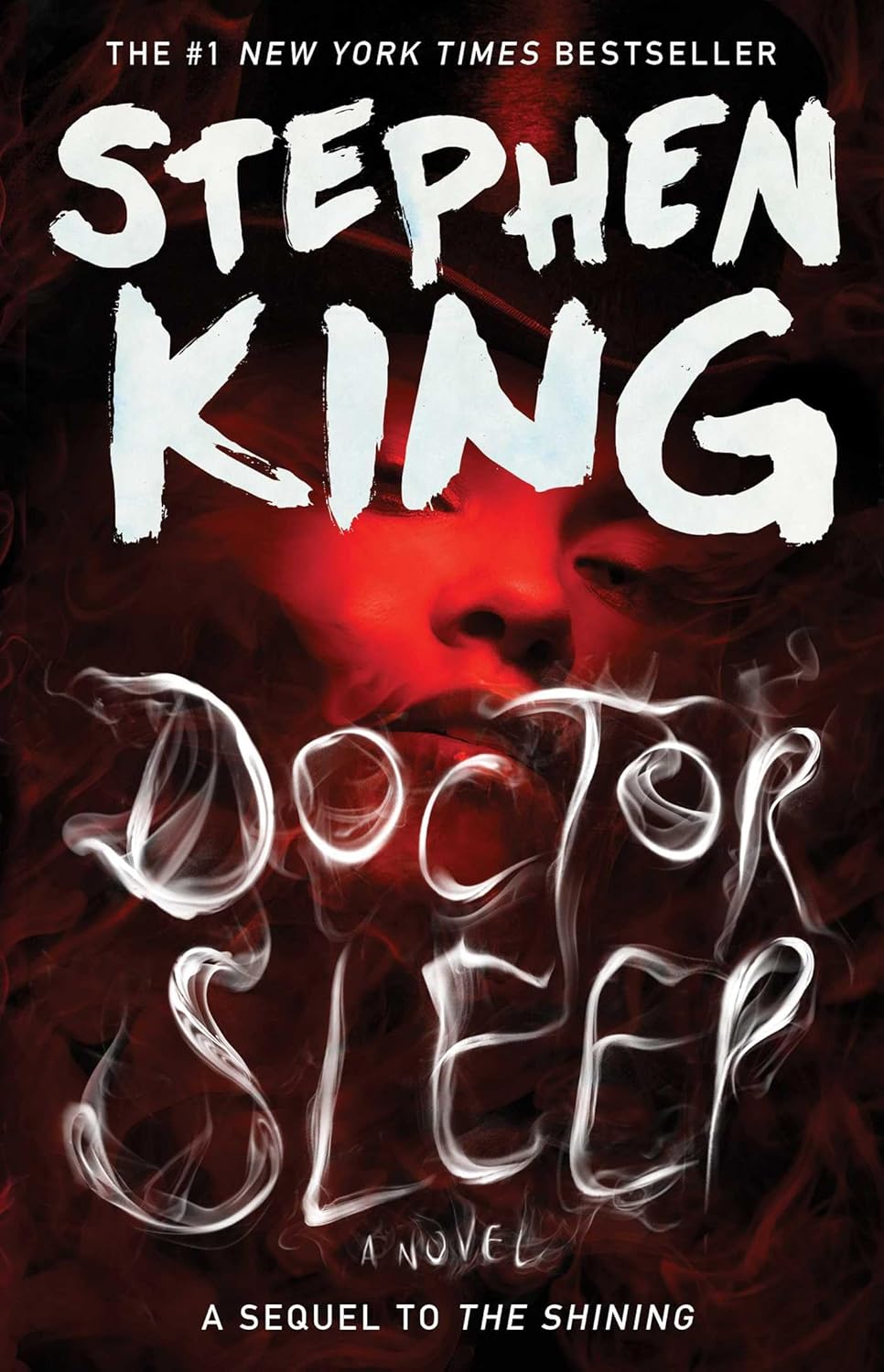
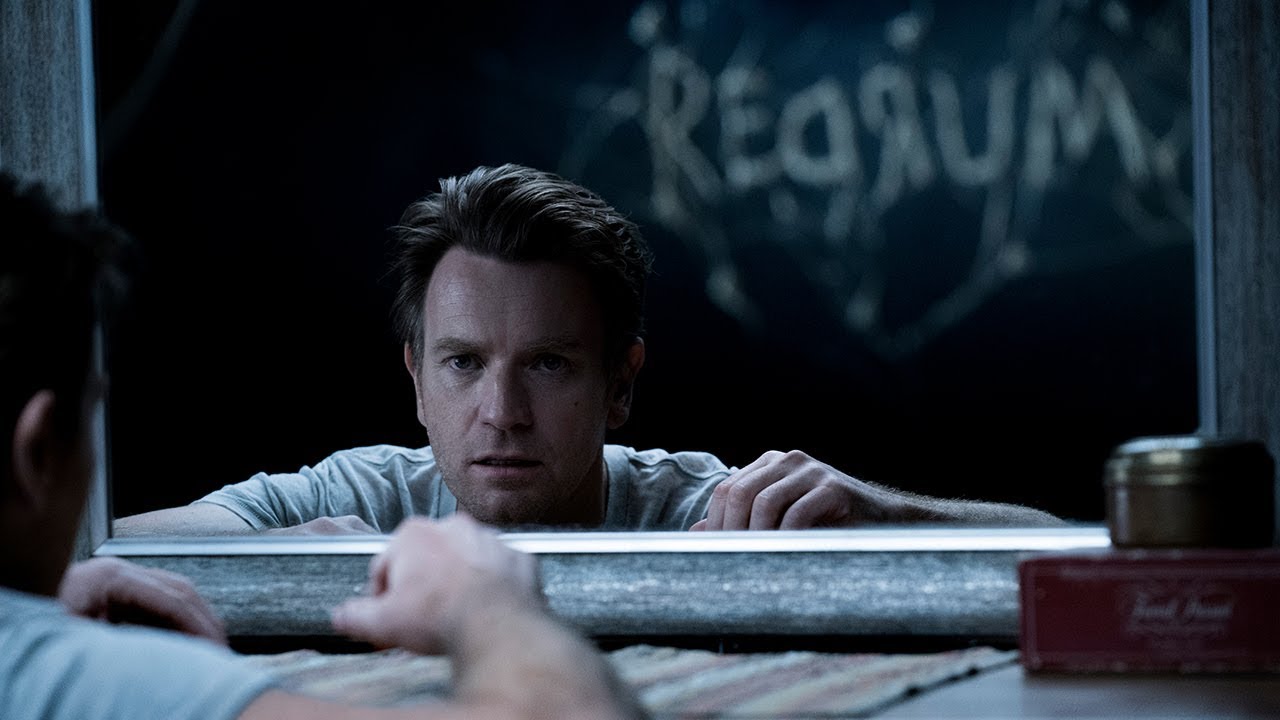
The Story in Brief
Danny Torrance survived the Overlook Hotel. He is now in his forties, an alcoholic drifting across America, using his shine to numb what he still sees. When he finds sobriety and a small New Hampshire town, he begins working in a hospice — using his gift to comfort the dying, earning the nickname Doctor Sleep — and connects psychically with Abra Stone, a teenage girl with an extraordinary shine. Abra has attracted the attention of the True Knot, a group of psychic predators who feed on the steam produced by children with the shine. King's 2013 sequel is a substantial, emotionally generous novel about recovery and the long aftermath of childhood trauma. Flanagan's 2019 film has the additional complication of being a sequel to Kubrick's The Shining rather than King's — navigating between King's novel and Kubrick's film in ways that required careful negotiation.
Key Differences
The two-masters problem
King's novel is a sequel to his own The Shining — which differs from Kubrick's film in significant ways, including the fate of the Overlook Hotel. Flanagan's film must serve both, using Kubrick's visual language and certain plot points from King's book while reconciling the versions' differences. He does this with genuine skill — the Overlook sequences in the film are the most Kubrick-faithful extended scenes in any King adaptation — but the reconciliation requires compromises that readers of the novel will notice. The book is a sequel to King's Shining; the film is a sequel to Kubrick's.
Danny's alcoholism
King has spoken openly about his own alcoholism and recovery, and the novel's treatment of Danny's drinking and eventual sobriety has an authenticity that reflects personal knowledge. The AA sections — the sponsor, the steps, the specific texture of recovery as a daily practice — give the novel a grounding in recovery culture that is unusual for horror fiction. The film handles this material but more briefly; the specificity of King's recovery narrative is one of the novel's most valuable dimensions, and the film can't fully carry it in two and a half hours.
Rebecca Ferguson as Rose the Hat
Ferguson's Rose the Hat is the film's finest performance and one of the best villain creations in recent King adaptations — magnetic, physically distinctive, genuinely threatening without sacrificing the character's seductive charisma. The novel's Rose is equally well-drawn, but Ferguson adds a physical presence and a specific quality of predatory beauty that makes her the screen version's most memorable element. This is one of the adaptation's genuine improvements on the source in terms of immediate impact.
Abra Stone
Kyliegh Curran plays Abra with a confidence that matches the character's extraordinary power — she is credible as someone whose shine dwarfs Danny's, and her fearlessness is both endearing and, given what she's facing, slightly alarming. The novel's Abra is similarly drawn, but the book has more space to develop her voice and her family, giving her context that the film compresses. Both versions make Abra immediately compelling; the novel makes her more fully realised.
The Overlook sequences
The film's return to the Overlook — rendered using Kubrick's original production design and visual language — is a gift to fans of the 1980 film and something the novel cannot provide. King's novel ends differently and involves a different fate for the Overlook; the film's ending is more visually spectacular and more directly connected to Kubrick's imagery. Readers of the novel will find the film's ending a departure; viewers who love Kubrick's Shining will find it a reunion.
Should You Read First?
Read King's The Shining first, then this novel, then watch Flanagan's films for both — the experience of all four texts in sequence is one of horror's richest multi-format journeys. Taken alone, read the novel first for Danny's recovery arc and the True Knot's full development; watch the film for Ferguson and the Overlook's return.
King's novel is a generous, emotionally grounded horror about recovery and the long shadow of childhood trauma — richer in its treatment of Danny's alcoholism and Abra's world than any film can be in two and a half hours. Flanagan's film is the most ambitious King adaptation on this site — simultaneously faithful to King's novel and respectful of Kubrick's film, anchored by Ferguson's extraordinary Rose. The book is the more complete experience. The film is the more spectacular one. Both are worth your time.