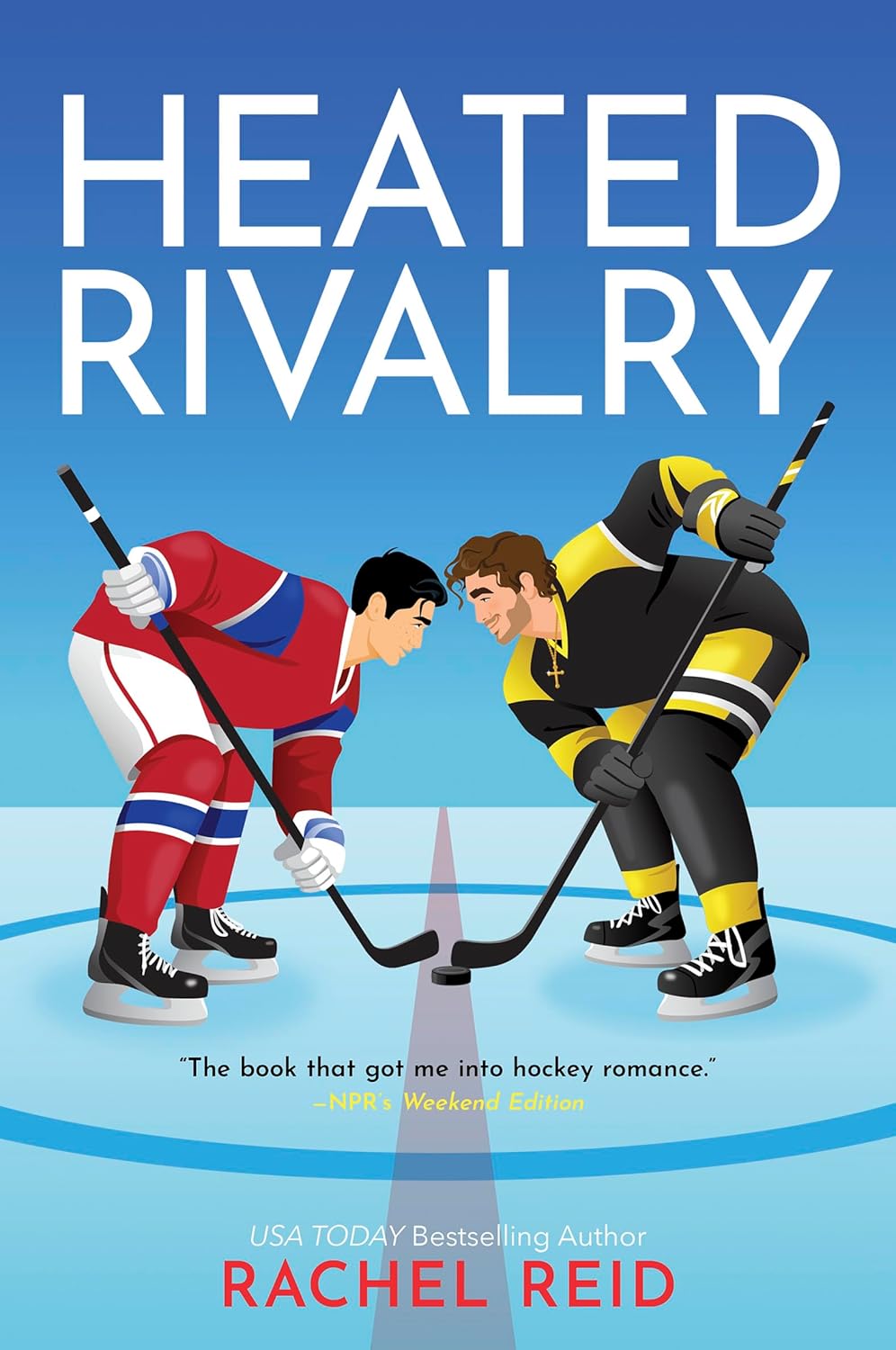

The Story in Brief
Shane Hollander and Ilya Rozanov are two of the best hockey players in the world — and bitter rivals on opposing teams who have been drawn to each other for years. What starts as a secret arrangement between two men who refuse to acknowledge what they feel becomes a years-long story of love, denial, ambition, and the cost of living in a sport that wasn't built for people like them.
Rachel Reid's 2019 novel is one of the most celebrated entries in her Game Changers series and among the most beloved hockey romances ever written. Jacob Tierney's 2025 HBO Max adaptation premiered to extraordinary reception — an 8.8 on IMDb, a cultural phenomenon, and a series that sent an entire new generation of viewers straight to Reid's backlist.
The show became one of the most-discussed series of early 2025, praised for Connor Storrie and Hudson Williams's chemistry, Tierney's direction, and its refusal to soften the emotional stakes of two men navigating love in a world that demands they stay hidden.
| Character | In the Book | In the The Show |
|---|---|---|
| Shane Hollander Connor Storrie |
Canadian team captain, disciplined and controlled, terrified of what wanting Ilya means for his carefully constructed life. | Storrie plays Shane with quiet intensity — every glance at Ilya loaded with longing he can't afford to name. |
| Ilya Rozanov Hudson Williams |
Russian star forward, charismatic and reckless on the surface, carrying the weight of what going public would cost him back home. | Williams brings warmth and vulnerability to Ilya, making his bravado feel like armor rather than arrogance. |
| Scott Hunter François Arnaud |
Shane's teammate and friend from the first Game Changers novel, one of the few people Shane trusts completely. | Arnaud's Scott is steady and perceptive, offering Shane the kind of friendship that doesn't demand explanations. |
| Hayden Pike Elliot Fletcher |
Ilya's teammate, a trans man navigating his own relationship with visibility in professional hockey. | Fletcher's performance is grounded and specific, giving Hayden scenes that feel lived-in rather than symbolic. |
Key Differences
Interior voice
The novel's central advantage is complete access to Shane and Ilya's internal lives — their denial, their rationalisation, their longing rendered with Reid's characteristic warmth and precision.
The show loses this by definition. Connor Storrie and Hudson Williams give performances of real sensitivity, but the subtext the novel makes text is sometimes harder to read on screen. What you feel watching them is real; what you know reading Reid is different and deeper.
The timeline
Reid's novel spans several years of Shane and Ilya's careers, with time jumps that give the romance genuine scope and weight.
The show compresses and restructures this for six episodes — which works better than you might expect. Tierney uses the compression to tighten the emotional arc rather than lose it, and some of the novel's slower middle section actually benefits from the edit. The show's Episode 4, which condenses two years of stolen moments into forty minutes, is one of the best-paced episodes of television in recent memory.
The hockey world
Reid is meticulous about the texture of professional hockey — the locker rooms, the road trips, the physical culture, the specific isolation of being an outsider inside the sport.
The show's production design and on-ice sequences are excellent, but the novel lives inside the sport in a way six episodes of television cannot fully replicate. Reid writes about hockey with the authority of someone who knows what a fourth-line grinder's career looks like versus a franchise player's, and that specificity accumulates across three hundred pages.
Ilya's Russian identity
Ilya's background — his Russian upbringing, his complicated relationship with home and language, what it means to be who he is in the context he came from — is more fully developed in the novel.
The show handles it thoughtfully but necessarily briefly. Hudson Williams brings considerable depth to scenes the novel gives many more pages, but the weight of what Ilya would lose by coming out — not just professionally but culturally, familially — is more fully explored in Reid's text.
The secondary characters
Reid's Game Changers world includes recurring characters whose histories add texture for readers who've come to the series in order.
The show introduces these characters freshly, which works on its own terms but lacks the accumulated affection novel readers bring to Scott Hunter, Kip Grady, and the broader cast. If you've read Tough Guy before Heated Rivalry, Scott's scenes with Shane carry extra weight the show can't replicate for first-time viewers.
Either order works genuinely well — this is one of the site's most comfortable either-order recommendations. The show is faithful enough that watching first loses relatively little. But reading first means every scene the show gives you arrives loaded with interior knowledge that performance can only approximate.
Our preference: read first. If you watched first and are now reading — welcome, and the book is even better than you're hoping.
Should You Read First?
Either order works genuinely well — this is one of the site's most comfortable either-order recommendations. The show is faithful enough that watching first loses relatively little. But reading first means every scene the show gives you arrives loaded with interior knowledge that performance can only approximate.
Our preference: read first. If you watched first and are now reading — welcome, and the book is even better than you're hoping.
Rachel Reid's novel is a slow-burn romance of real precision and warmth — one of the best in its genre. Jacob Tierney's adaptation is one of the best book-to-screen translations of recent years: visually confident, excellently cast, and faithful to the source's emotional core. Both versions are essential. Read the book. Watch the show. This is one of the closest calls on the site — and unlike most close calls, there is no wrong answer.