
The Story in Brief
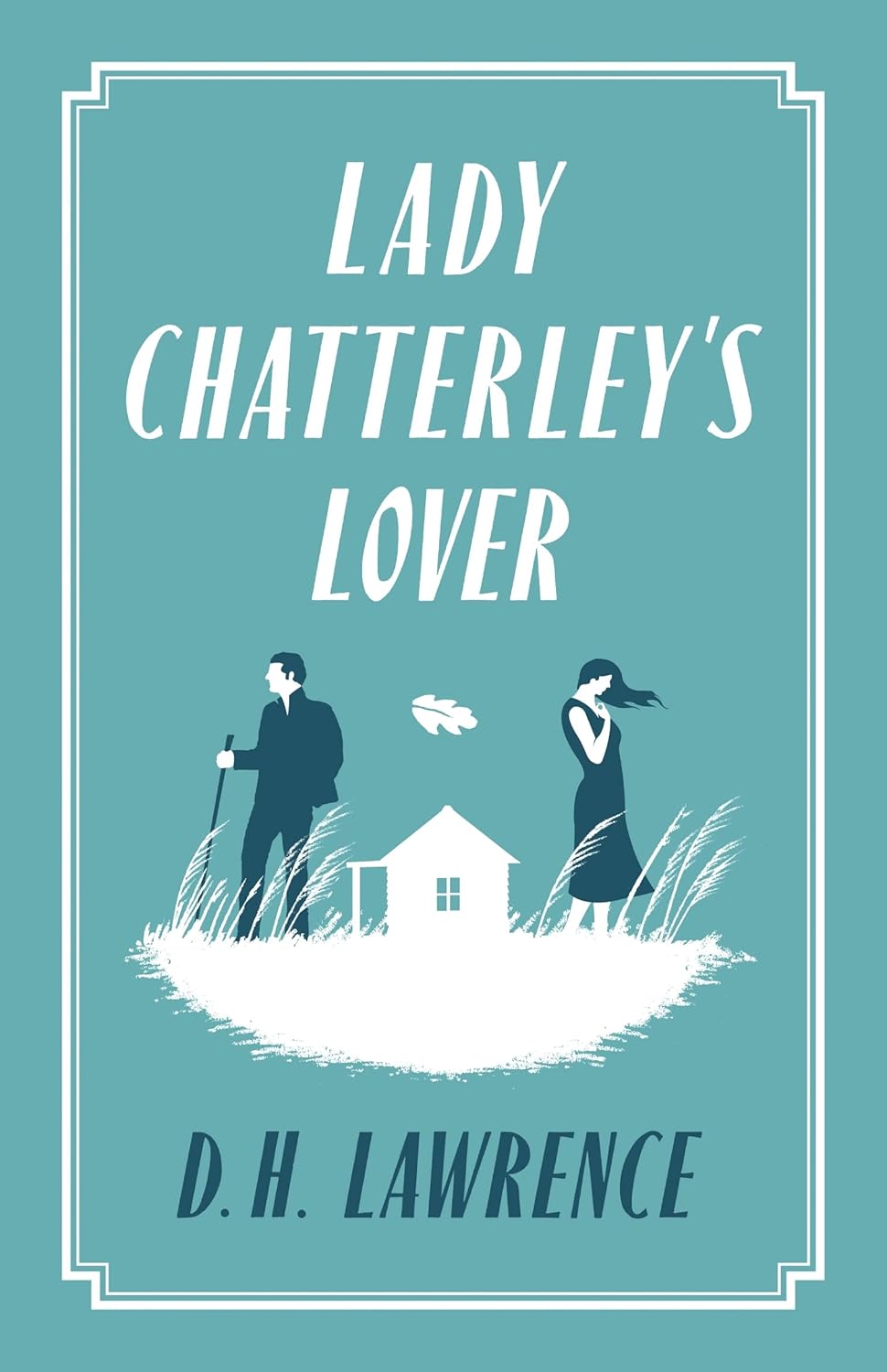
D.H. Lawrence's 1928 novel follows Constance Chatterley, a woman trapped in a loveless marriage to a paralyzed aristocrat, who finds sexual and emotional awakening with Oliver Mellors, the gamekeeper on her husband's estate. The book was banned for obscenity for decades, its explicit sexual passages and working-class protagonist shocking polite society. Lawrence's real subject, however, was the dehumanizing effect of industrial capitalism and the redemptive power of authentic physical connection—themes that have only grown more urgent.
The 2022 film adaptation by Laure de Clermont-Tonnerre arrives at a moment when the novel's sexual politics can finally be examined without the distraction of scandal. Rather than exploiting the book's famous passages, the film uses them to explore Constance's agency and desire as political acts. This comparison matters because it reveals how cinema, given nearly a century of cultural evolution, can honor Lawrence's radical vision while deepening its psychological and social dimensions.
| Character | In the Book | In the The Film |
|---|---|---|
| Constance Chatterley Emma Corrin |
Constance is initially passive and intellectually curious, trapped by duty and social expectation. Lawrence depicts her awakening through interior monologue—her thoughts are the novel's primary lens. She is conflicted between her aristocratic upbringing and her growing hunger for authentic connection, experiencing her sexuality as both liberation and transgression. | Emma Corrin portrays Constance with visible physical and emotional transformation. The film shows her stiffness in the early scenes—literally rigid in her corsets and manor—gradually melting into embodied presence. Corrin's performance emphasizes Constance's agency through gesture and gaze rather than narration, making her desire visible rather than merely described. |
| Oliver Mellors Jack O'Connell |
Mellors is Lawrence's idealized working-class man—educated, sensitive, yet grounded in physical reality and nature. He represents Lawrence's fantasy of authentic masculinity uncorrupted by industrial civilization. The novel uses him partly as a mouthpiece for Lawrence's own social critiques about class and modernity. | O'Connell's Mellors is more psychologically complex and less of a philosophical vessel. The film shows his wariness and trauma—he's not a noble savage but a damaged man learning to trust again. His class consciousness emerges through behavior and circumstance rather than Lawrence's didactic speeches. |
| Sir Clifford Chatterley Matthew Duckett |
Clifford is a paralyzed war veteran, intellectually brilliant but emotionally sterile. Lawrence uses him as a symbol of modern masculine impotence—his paralysis is both literal and metaphorical, representing the death of authentic feeling in industrial society. He is largely unsympathetic, a vehicle for Lawrence's social argument. | The film grants Clifford unexpected humanity. Matthew Duckett portrays him as genuinely suffering, not merely symbolic. His paralysis becomes tragic rather than merely emblematic, and his desperate attempts to hold Constance through intellect and manipulation feel painfully human rather than ideologically convenient. |
| Hilda Reid Faye Marsay |
Hilda is Constance's sister, a lesbian intellectual who encourages Constance toward independence and sexual freedom. She represents modern, liberated womanhood but remains somewhat peripheral to the novel's emotional core. | Faye Marsay's Hilda becomes a more active emotional anchor for Constance. The film deepens their bond, making Hilda's support feel earned through scenes of genuine intimacy and conversation. Her queerness is treated matter-of-factly rather than as a marker of radical modernity. |
| Mrs. Bolton Jed Brophy |
Mrs. Bolton is the nurse who tends to Clifford, a working-class woman whose presence in the manor highlights class tensions. Lawrence uses her partly as comic relief and partly as a symbol of working-class vitality. | The film expands Mrs. Bolton's role into something more complex—she becomes a bridge between worlds and a figure of genuine care. Her scenes with Clifford gain poignancy, and her relationship to Constance develops unexpected layers of class consciousness and female solidarity. |
Key Differences
The film strips Lawrence's didactic social commentary and replaces it with visual storytelling
Lawrence's novel is thick with authorial intrusion—lengthy passages where the narrator (often indistinguishable from Lawrence himself) lectures about industrial civilization, the death of authentic feeling, and the redemptive power of sexuality. These passages are essential to understanding Lawrence's philosophy but can feel preachy and dated. The 2022 film largely abandons this apparatus, trusting visual language to convey the same ideas.
De Clermont-Tonnerre shows rather than tells: the suffocating geometry of the manor, the contrast between Constance's rigid posture and her fluid movements in nature, the way industrial smoke creeps across the landscape. The film's opening sequence—Constance in her wedding dress, literally unable to move—communicates Lawrence's critique of patriarchal constraint without a single line of dialogue. This is not a loss but a translation, and cinema proves more effective at this particular argument than Lawrence's prose.
The film centers female pleasure as a complete narrative arc, not a plot device
In the novel, Constance's sexual awakening is real and central, but it exists within Lawrence's larger philosophical project about masculine redemption and authentic being. The narrative often positions her desire as a response to Mellors' presence rather than as her own independent discovery. Lawrence's genius is real, but his gender politics are of their time—Constance's sexuality matters primarily as it relates to her connection with a man.
The 2022 film reframes the entire story through Constance's agency and pleasure. Her first sexual experience is shown not as surrender but as active choice and exploration. The film includes scenes of Constance alone, discovering her own body, that have no equivalent in the novel. De Clermont-Tonnerre treats female sexuality as inherently interesting rather than as a means to an end, which paradoxically makes the love story between Constance and Mellors feel more genuine—it's built on mutual recognition rather than complementary needs.
The film complicates class dynamics rather than romanticizing working-class authenticity
Lawrence's novel contains a fantasy of the working class as more 'real' and sexually alive than the aristocracy. Mellors is educated and sensitive, but his gamekeeper status signals his connection to nature and authentic masculinity. There's a primitivist element to Lawrence's thinking—the working class is closer to instinct, less corrupted by civilization. This is part of his genius but also part of his limitations as a social thinker.
The film doesn't entirely reject this vision, but it complicates it. Mellors' working-class status is shown as a source of real disadvantage and trauma, not romantic authenticity. The film depicts the actual social barriers between Constance and Mellors—not as obstacles to overcome through love, but as real structural problems that love cannot solve. The ending is more ambiguous about whether their relationship can survive in the world as it actually exists. This is a more mature engagement with class than Lawrence's novel permits itself.
The film expands the sensory and emotional landscape beyond the novel's interior focus
Lawrence's novel is intensely interior—we live almost entirely in Constance's consciousness, her thoughts, her observations. The external world is filtered through her perception. This is a strength of the novel form, but it can make the book feel claustrophobic and solipsistic. The reader knows Constance's every doubt and desire but may feel distant from other characters' inner lives.
De Clermont-Tonnerre uses cinema's capacity for simultaneous action and reaction. We see Mellors' face as he watches Constance; we see the gamekeeper's cottage as a space with its own history and texture; we experience the English landscape not as backdrop but as a character in itself. The film's visual language allows for a kind of empathy that the novel's narrative structure resists. This doesn't make the film 'better' in any absolute sense, but it does allow for a different kind of emotional and sensory engagement with the material.
The film treats the ending as genuinely uncertain, while the novel insists on transcendence
Lawrence's novel ends with Constance and Mellors separated but spiritually united, with Mellors' letter promising that they will find a way to be together. There's a romantic certainty to the ending—love will overcome social obstacles. The novel's final pages are suffused with hope and a kind of mystical faith in the redemptive power of their connection. Lawrence believes in the possibility of transformation through authentic feeling.
The 2022 film's ending is more ambiguous. We see Constance and Mellors together, but the film doesn't resolve whether their relationship can survive in the actual world. There's hope, but it's fragile and contingent. The film suggests that their love is real and transformative, but it doesn't pretend that love alone can solve the material and social problems they face. This is a more contemporary sensibility—less faith in transcendence, more awareness of structural constraint. Whether this is an improvement depends on your philosophy, but it's undeniably a different statement about what love can and cannot do.
Should You Read First?
The novel remains essential for understanding Lawrence's philosophical vision and the historical scandal that shaped literary modernism. His prose is extraordinary—sensual, precise, and often profound—and the interior access to Constance's consciousness creates an intimacy that film cannot replicate. However, if you're primarily interested in the story of Constance and Mellors' relationship and what it means, the film may actually serve you better. It's more focused, less didactic, and treats the sexual and emotional dimensions of their connection with greater complexity.
The ideal approach is to read the novel first, then watch the film. The novel gives you Lawrence's full vision and historical context; the film shows you what cinema can do with that vision when freed from the need to defend it. Together, they create a richer understanding of both the book and the adaptation than either alone could provide.
The 2022 film is a genuine achievement—not because it's 'faithful' to Lawrence (it isn't, and shouldn't be), but because it understands what Lawrence was trying to do and finds cinematic equivalents for his deepest concerns. De Clermont-Tonnerre strips away the novel's philosophical apparatus and didacticism, trusting visual language to convey Lawrence's critique of industrial civilization and his faith in embodied connection. More importantly, the film recenters the story around female agency and pleasure in ways that honor Lawrence's radical intentions while moving beyond his gender politics. The result is an adaptation that feels both true to the novel's spirit and genuinely contemporary—a rare achievement.