The Story in Brief
Mr. Lockwood, a tenant at Thrushcross Grange, is snowed in at Wuthering Heights with his unsociable landlord Heathcliff and asks the housekeeper Nelly Dean to explain the house's grim history. What follows is one of English literature's most volatile love stories — less romance than obsession, less tragedy than punishment.
Heathcliff, a foundling brought to Wuthering Heights by Mr. Earnshaw, and Catherine Earnshaw grow up in a bond so consuming it transcends class, marriage, death, and sanity. When Catherine marries the genteel Edgar Linton instead of Heathcliff, the betrayal sets off decades of revenge that destroys two families. After Catherine's death, Heathcliff systematically brutalizes the next generation — her daughter young Cathy, his own sickly son Linton, and Hindley's son Hareton — until he finally wastes away, still calling for Catherine's ghost.
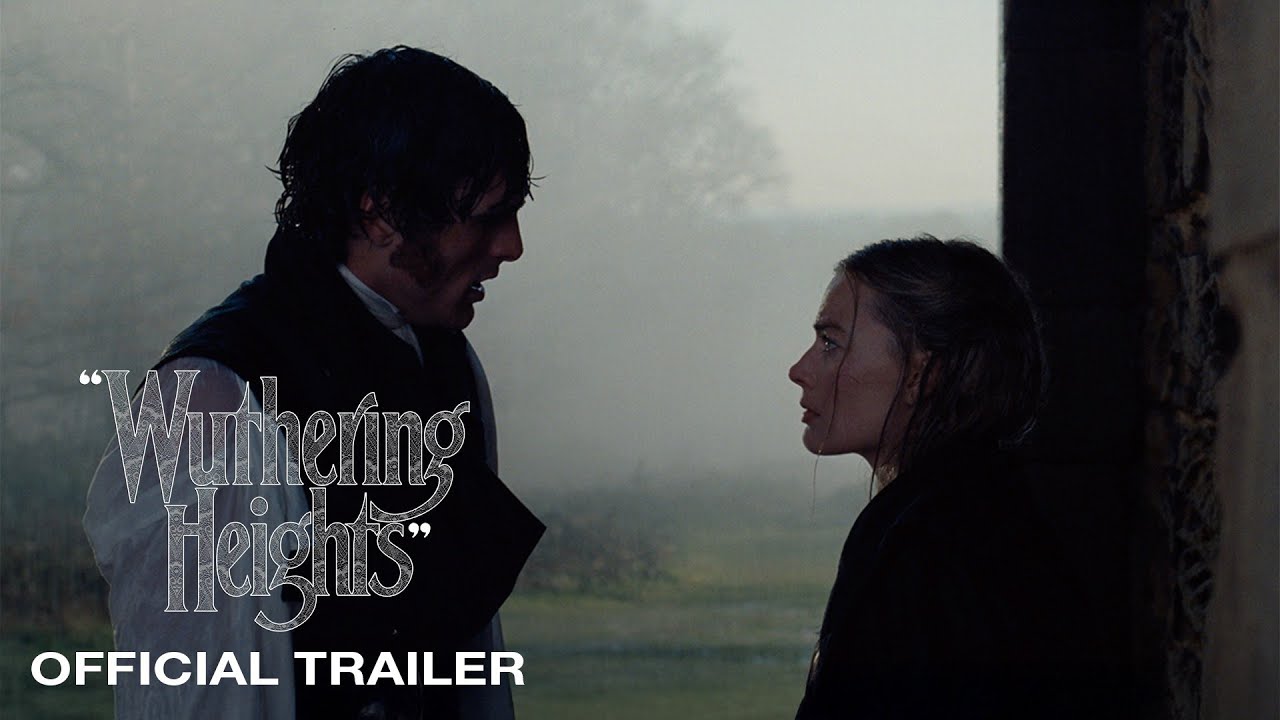
Emerald Fennell's 2026 adaptation, starring Margot Robbie as Catherine and Jacob Elordi as Heathcliff, is one of the year's most anticipated literary films. Fennell, who directed Promising Young Woman and Saltburn, brings her characteristic sexual candor and moral unease to Brontë's material. The film premiered at Cannes to polarized reviews — critics praised the performances and Fennell's refusal to soften the novel's cruelty, though some found her visual style too contemporary for the period setting.
| Character | In the Book | In the The Movie |
|---|---|---|
| Catherine Earnshaw Margot Robbie |
Wild, self-aware, and ultimately self-destructive — she knows exactly what she's choosing when she marries Edgar Linton and articulates it in some of Victorian literature's most extraordinary speeches. | Robbie plays Catherine as physically feral in youth and increasingly trapped by social performance as an adult, emphasizing the bodily cost of her choices in ways the novel can only imply. |
| Heathcliff Jacob Elordi |
Deliberately opaque — Brontë never grants him interiority, leaving readers to decide whether he's a Byronic hero destroyed by class prejudice or a sociopath who weaponizes his trauma. | Elordi's physicality makes Heathcliff's threat explicit from the start; Fennell reportedly foregrounds his outsider status and the racialized language used against him in ways earlier adaptations avoided. |
| Nelly Dean Hong Chau |
The novel's primary narrator and an unreliable one — she's complicit in much of what happens, morally judgmental, and possibly editing events to make herself look better. | Chau's casting updates the servant-class perspective; Fennell uses Nelly's voiceover sparingly, trusting the audience to understand the story without constant mediation. |
| Edgar Linton Alison Oliver |
Weak but not villainous — a genuinely kind man who loves Catherine and is destroyed by her inability to love him back in the way he needs. | Oliver (gender-swapped in some early reports, though this was later clarified as a different character) plays Edgar with more steel than usual, making Catherine's choice feel less like settling and more like genuine miscalculation. |
| Young Cathy Unannounced |
Catherine's daughter, who inherits her mother's spirit but learns to temper it — she survives Heathcliff's cruelty and eventually redeems Hareton, providing the novel's only hopeful ending. | Fennell compresses the second-generation plot significantly; young Cathy appears but her arc is truncated, which loses Brontë's long view of how trauma echoes across decades. |
Key Differences
The Nested Narrative Structure Is Flattened
Brontë tells the story at double remove — Lockwood narrates what Nelly Dean told him, and Nelly herself is recounting events she witnessed or heard about from others. This creates deliberate distance, unreliability, and a quality of rumor that makes the novel's moral ambiguity possible. You never get direct access to Catherine or Heathcliff's interiority; everything is filtered through observers with their own biases.
Fennell uses Nelly's voiceover in the opening and closing but otherwise works in a more linear, visually immediate mode. The camera shows you what happened rather than what Nelly claims happened. This makes the film more emotionally direct but loses the novel's epistemological uncertainty — the sense that you're hearing a legend rather than witnessing truth.
The Second Generation Is Severely Compressed
The novel's second half follows young Cathy, Linton Heathcliff, and Hareton Earnshaw as Heathcliff pursues his revenge across decades. This subplot occupies nearly half the book and is essential to understanding what Heathcliff actually becomes — not a romantic anti-hero but a man who tortures children to punish their parents.
Fennell reduces this to a brief coda. Young Cathy appears, and Hareton is present, but their slow, hard-won redemption of each other — the novel's only hopeful arc — is largely absent. The film ends shortly after Catherine's death and Heathcliff's final decline, which makes for a tighter narrative but loses Brontë's long view of generational damage. Without the second generation, Heathcliff remains more sympathetic than Brontë intended.
Heathcliff's Race and Class Are Foregrounded
The novel leaves Heathcliff's origins deliberately ambiguous. He's described in ways Victorian readers would have coded as racially other — "dark-skinned," "a little Lascar," "gypsy" — and his outsider status is fundamental to how he's treated and how he retaliates. But Brontë never makes this explicit, leaving generations of adaptations to cast white actors and downplay the racial subtext.
Fennell updates the class dynamics for a contemporary reading and reportedly makes Heathcliff's racialized otherness more explicit. Elordi's casting (he's white but plays Heathcliff as visibly marked as different) and the script's attention to the language used against him change the story's historical texture while sharpening its contemporary resonance. This is a genuine reinterpretation rather than simple faithfulness.
Catherine's Self-Awareness Is Harder to Convey
Brontë gives Catherine some of the most extraordinary self-aware speeches in Victorian fiction. Her description of her love for Heathcliff as being "like the eternal rocks beneath" while her feeling for Edgar is "like the foliage" is a precise account of a woman who understands herself perfectly and chooses wrong anyway. She knows marrying Edgar is a betrayal of her essential self and does it because the alternative is social suicide.
Robbie conveys this through performance — the way Catherine's body language changes when she's with Edgar versus Heathcliff, the visible effort of maintaining social performance. But a film can show what Catherine does; only the novel can show you the exact quality of her self-knowledge as she does it. The famous "I am Heathcliff" speech is in the film, but it lands differently when you've spent 200 pages inside the narrative voice that makes such declarations possible.
Fennell's Erotic Register Is Explicit
The novel implies rather than depicts the physical dimension of Catherine and Heathcliff's relationship. Brontë works through atmosphere, possession, and absence — the eroticism is in what's not shown, in Heathcliff digging up Catherine's grave, in the violence that substitutes for consummation.
Fennell, coming off Saltburn's bathtub scene, brings a more explicitly erotic lens to the material. The film includes scenes of Catherine and Heathcliff as teenagers on the moors that are physically intimate in ways the novel only suggests. This isn't a faithfulness failure — it's a genuine reinterpretation. The sexuality the novel implies through Gothic displacement, Fennell makes visible. Whether this clarifies or diminishes Brontë's achievement depends on whether you think the displacement was the point.
Yes — though Wuthering Heights is a more demanding read than its reputation suggests. The famous opening chapters are deliberately disorienting; Brontë makes you work through Lockwood's obtuseness and Nelly's biases before you understand what you're reading. The structure is nested and non-linear, the characters are almost uniformly unsympathetic, and the novel refuses to tell you how to feel about any of it. Push through and you'll find one of the strangest, most structurally controlled novels in the English language.
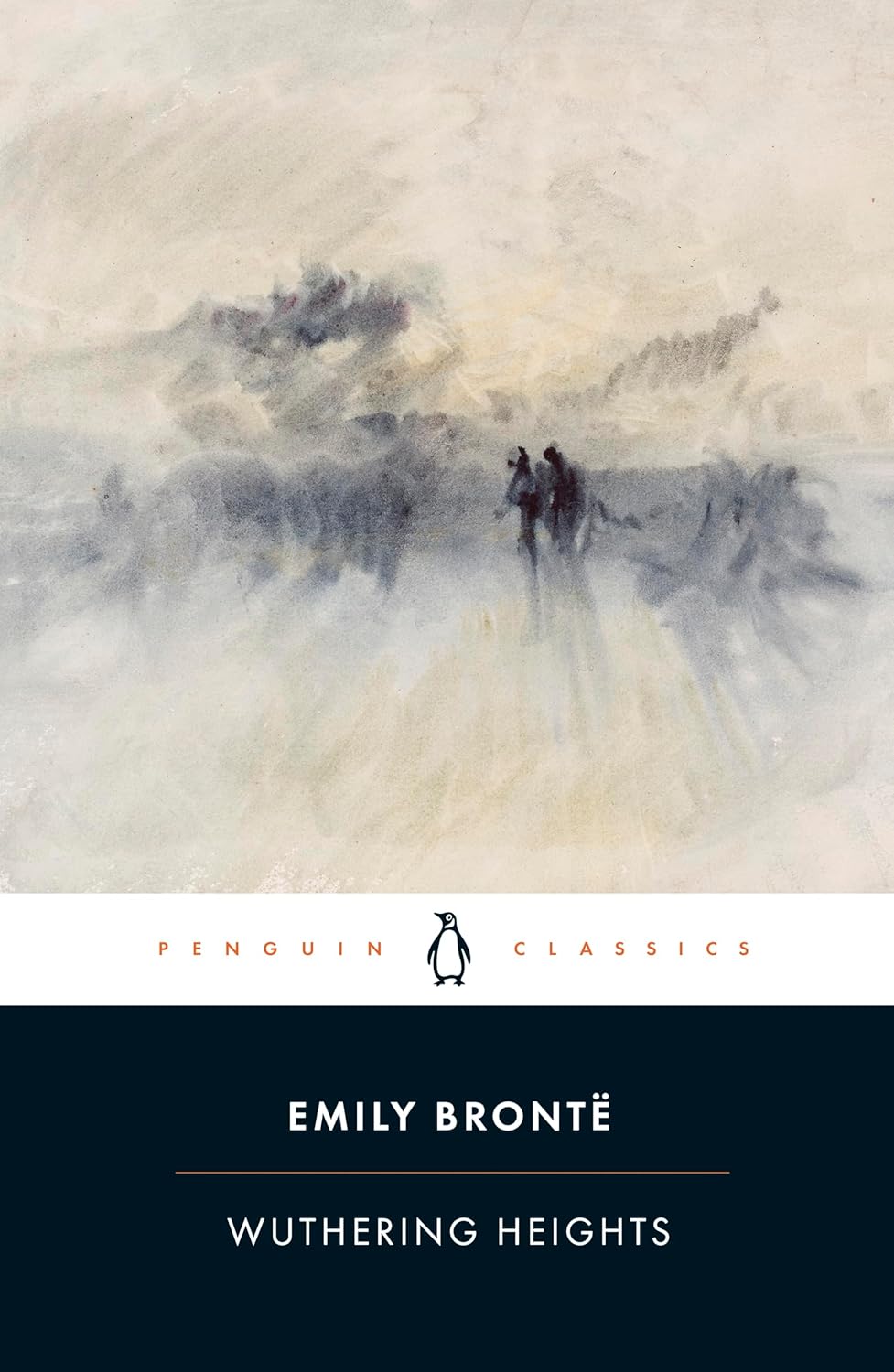
Read it first to understand what risks Fennell is taking. The novel's power is inseparable from its form — the way it withholds and displaces and refuses easy access. Fennell's film is more immediate, more visceral, and more conventionally cinematic. Both are valid approaches, but you should know what the novel is doing before you watch someone translate it into a medium that can't replicate its central formal achievement. The Penguin Classics edition with Pauline Nestor's introduction is a good place to start.
Should You Read First?
Yes — though Wuthering Heights is a more demanding read than its reputation suggests. The famous opening chapters are deliberately disorienting; Brontë makes you work through Lockwood's obtuseness and Nelly's biases before you understand what you're reading. The structure is nested and non-linear, the characters are almost uniformly unsympathetic, and the novel refuses to tell you how to feel about any of it. Push through and you'll find one of the strangest, most structurally controlled novels in the English language.
Read it first to understand what risks Fennell is taking. The novel's power is inseparable from its form — the way it withholds and displaces and refuses easy access. Fennell's film is more immediate, more visceral, and more conventionally cinematic. Both are valid approaches, but you should know what the novel is doing before you watch someone translate it into a medium that can't replicate its central formal achievement. The Penguin Classics edition with Pauline Nestor's introduction is a good place to start.
Brontë's novel is a structural and psychological achievement that Fennell's provocative adaptation can gesture toward but not replicate. The film is worth seeing precisely because it takes real risks with difficult material — Robbie and Elordi are a compelling pairing, and Fennell refuses to soften the novel's cruelty into conventional romance. But the book is doing something only a book can do: withholding interiority, nesting unreliable narrators, and making you complicit in the act of interpretation. You should know what that feels like before you watch someone make it visible.