The Story in Brief
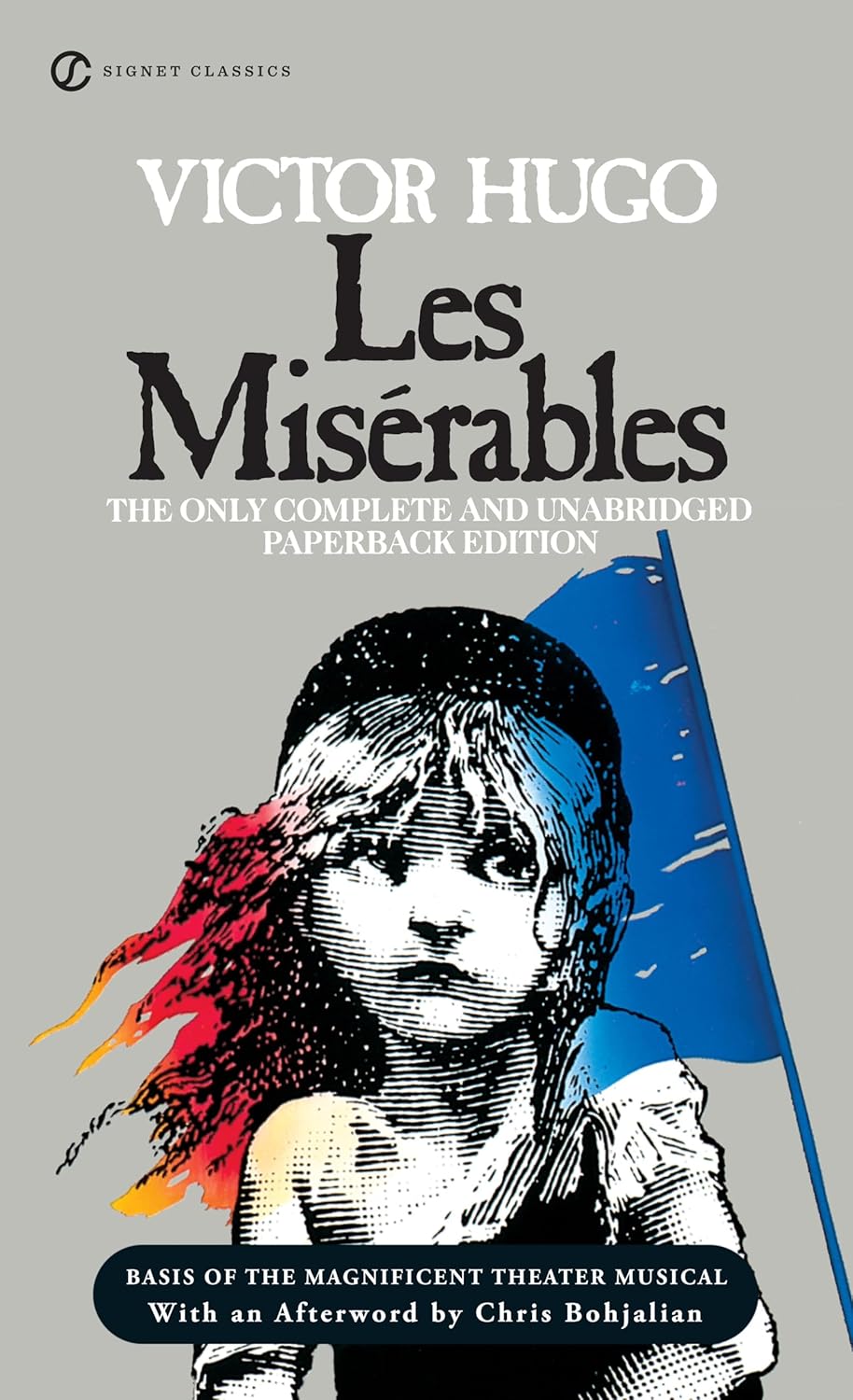
Victor Hugo's 1862 novel follows Jean Valjean, prisoner 24601, who serves nineteen years for stealing a loaf of bread and subsequent escape attempts. After his release, Bishop Myriel's act of mercy—giving Valjean silver candlesticks and urging him toward righteousness—sparks his transformation. Valjean reinvents himself as Monsieur Madeleine, a factory owner and mayor, but Inspector Javert, who believes in absolute law, pursues him relentlessly. The story expands to include Fantine, a desperate factory worker who sells her hair and teeth to support her daughter Cosette; the exploitative innkeepers the Thénardiers; and the idealistic student Marius Pontmercy, who falls for the grown Cosette during the 1832 June Rebellion.
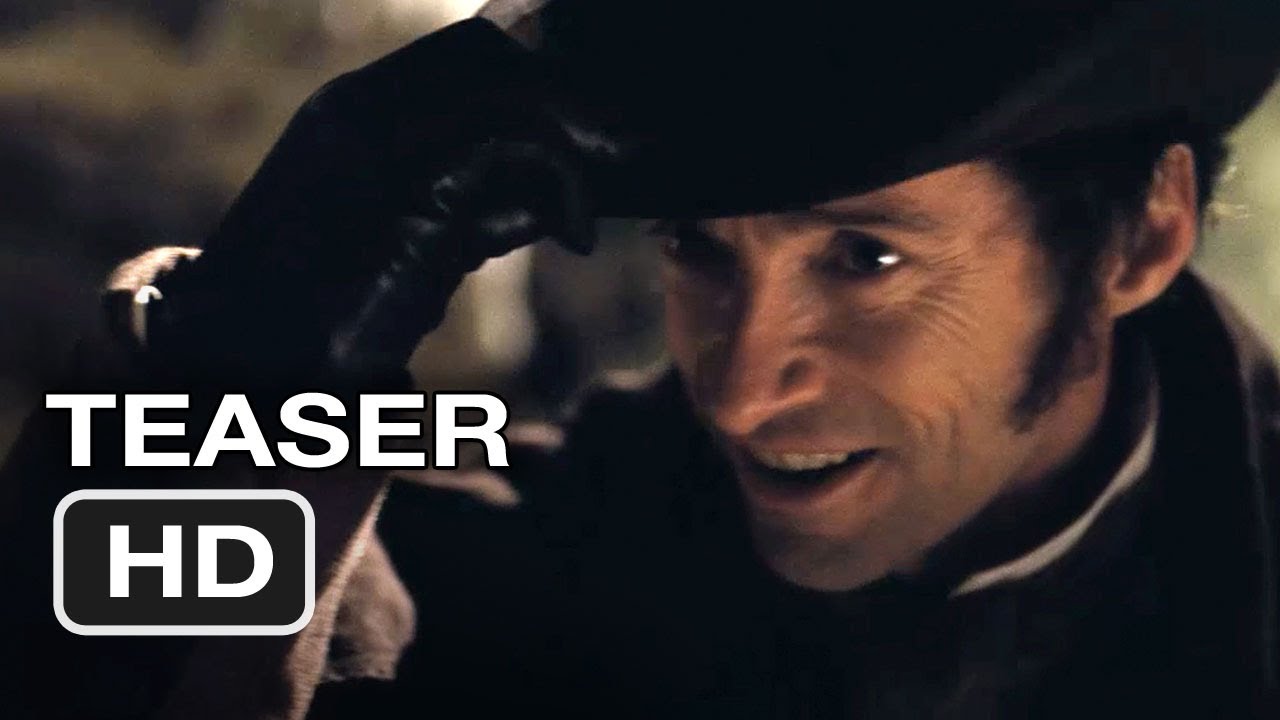
Tom Hooper's 2012 film adapts the stage musical rather than Hugo's text directly, with Hugh Jackman as Valjean, Russell Crowe as Javert, Anne Hathaway as Fantine, and Amanda Seyfried as Cosette. Hooper filmed the vocals live on set—a technical gamble that earned Hathaway an Oscar for her raw, single-take rendition of "I Dreamed a Dream." The film grossed over $440 million worldwide and received eight Academy Award nominations, cementing the musical's status as a cultural phenomenon.
Les Misérables remains one of the most adapted novels in history, inspiring over fifty film and television versions. Hugo's sprawling narrative about justice, mercy, and the dignity of the poor continues to resonate, though each adaptation must grapple with the novel's sheer scope—1,400 pages encompassing everything from the Battle of Waterloo to Parisian argot to the architecture of the city's sewer system.
| Character | In the Book | In the The Movie |
|---|---|---|
| Jean Valjean Hugh Jackman |
A complex figure whose internal moral struggles span decades, with Hugo devoting chapters to his crisis of conscience when he must reveal his identity to save an innocent man. | Jackman's Valjean is physically imposing and vocally powerful, but the sung-through format compresses his philosophical torment into musical soliloquies like "Who Am I?" |
| Javert Russell Crowe |
Hugo presents him as tragically principled—a man born in prison who clings to law as his only moral compass, making his suicide a philosophical collapse rather than mere defeat. | Crowe's Javert is stern and unyielding, though his vocal limitations in "Stars" drew criticism; the film emphasizes his rigidity but loses some of Hugo's sympathy for his worldview. |
| Fantine Anne Hathaway |
Her descent from naive seamstress to prostitute unfolds over many chapters, with Hugo detailing the systemic cruelty that destroys her—fired for having an illegitimate child, exploited at every turn. | Hathaway's performance condenses Fantine's tragedy into twenty minutes of screen time, but her live-sung "I Dreamed a Dream" captures the character's devastation with visceral immediacy. |
| Cosette Amanda Seyfried |
As a child, she's brutalized by the Thénardiers; as an adult, she's sheltered and innocent, serving more as Marius's love interest than as a fully developed character in her own right. | Seyfried's Cosette is ethereal and sweet-voiced, but the film gives her even less agency than the novel—she exists primarily to be rescued and to sing duets with Eddie Redmayne's Marius. |
| Marius Pontmercy Eddie Redmayne |
A law student torn between his royalist grandfather and his revolutionary friends, Marius is earnest but politically naive, surviving the barricades only because Valjean saves him. | Redmayne plays him as boyishly passionate, his "Empty Chairs at Empty Tables" becoming the film's emotional centerpiece as he mourns his fallen comrades. |
| Éponine Samantha Barks |
The Thénardiers' daughter, raised in cruelty, who loves Marius hopelessly and dies at the barricades after leading him there—Hugo treats her with surprising tenderness. | Barks, reprising her stage role, delivers a heartbreaking "On My Own" and a deathbed confession to Marius that ranks among the film's most affecting moments. |
| The Thénardiers Sacha Baron Cohen & Helena Bonham Carter |
Hugo's Thénardiers are genuinely menacing criminals who run a gang, torture Cosette, and rob corpses at Waterloo—comic relief exists, but they're primarily villains. | Cohen and Bonham Carter play them as grotesque comic figures in "Master of the House," providing levity but losing the book's darker edge—they're more Dickensian caricatures than threats. |
Key Differences
Hugo's Digressions Are Entirely Absent
The novel famously interrupts its narrative for essays on topics ranging from the Battle of Waterloo (50 pages) to Parisian slang (20 pages) to the history of convents (30 pages). Hugo uses these digressions to contextualize his characters within French history and social structures—the Waterloo section, for instance, explains how Thénardier robbed corpses on the battlefield, establishing his moral bankruptcy.
The film, adapted from the stage musical, eliminates every digression. There's no Waterloo, no exploration of the Paris sewers' engineering, no philosophical treatise on the nature of monasticism. This makes for a tighter narrative, but it strips away Hugo's ambition to write not just a novel but a comprehensive portrait of early 19th-century France. The book is as much social history as fiction; the film is pure melodrama.
Valjean's Moral Crises Are Compressed Into Songs
Hugo devotes an entire volume—"A Tempest in a Skull"—to Valjean's agonized decision about whether to reveal his identity and save Champmathieu, a man falsely accused of being the escaped convict Jean Valjean. The chapter tracks Valjean's internal debate hour by hour, weighing his duty to an innocent man against his responsibility to the workers who depend on him and to Cosette.
The film condenses this into the four-minute song "Who Am I?" Jackman's performance is powerful, but the format can't replicate Hugo's psychological depth. The novel makes you feel the weight of Valjean's choice; the film tells you it's difficult and moves on. Similarly, Valjean's decision to let Marius live (despite Marius taking Cosette from him) is a brief moment in the film, whereas Hugo explores it as an act of supreme self-sacrifice.
The Barricade Sequence Loses Its Political Context
In the novel, the 1832 June Rebellion is a failed republican uprising with specific historical causes—anger over the death of General Lamarque, economic hardship, and disillusionment with the July Monarchy. Hugo names individual students like Enjolras, Combeferre, and Courfeyrac, giving each distinct political philosophies. The barricade scenes span over 150 pages, detailing the tactical progression of the battle and the students' doomed idealism.
Hooper's film reduces this to a series of rousing musical numbers—"Do You Hear the People Sing?" and "One Day More"—that emphasize emotion over politics. Aaron Tveit's Enjolras is charismatic but generic; we never learn what specific reforms the students are fighting for. The barricade falls quickly, and the focus shifts to Marius's survival and Éponine's death. The film captures the tragedy of young lives lost but not Hugo's critique of political violence and the futility of revolution without popular support.
Javert's Suicide Is Less Philosophically Grounded
Hugo's Javert is a tragic figure whose entire identity rests on the belief that law and morality are identical. When Valjean spares his life at the barricades, Javert experiences a complete ontological crisis—if a criminal can show mercy, then the categories of "good" and "evil" that have structured his existence are meaningless. Hugo devotes a full chapter to Javert's mental breakdown before he jumps into the Seine, framing it as the collapse of an entire worldview.
Russell Crowe's Javert sings "Stars" early in the film, establishing his rigid philosophy, but his final scene is brief. He releases Valjean, walks to the bridge, removes his medal, and jumps—effective visually, but lacking the novel's philosophical weight. The film presents his suicide as the act of a man who's been proven wrong; the book presents it as the death of a man who can no longer understand the universe.
The Thénardiers Are Played for Laughs
Hugo's Thénardiers are genuinely dangerous. Monsieur Thénardier runs a criminal gang in Paris, attempts to rob Valjean's house, and participates in the ambush at the Gorbeau tenement. Madame Thénardier abuses Cosette with casual cruelty—forcing her to haul water in the freezing cold, beating her, starving her. They're comic at times, but primarily they're villains who embody the moral rot of poverty without virtue.
Sacha Baron Cohen and Helena Bonham Carter transform them into Dickensian grotesques. "Master of the House" is a bawdy, slapstick number where they cheat customers and crack jokes. They reappear at the wedding to pick pockets, providing comic relief in the finale. This tonal shift makes them entertaining but toothless—the film never conveys the genuine threat they pose to Cosette or the darkness of their exploitation.
Reading Hugo's novel first is essential if you want to understand Les Misérables as a work of literature rather than a musical spectacle. The book's philosophical depth—its meditations on justice, mercy, poverty, and redemption—can't be conveyed in sung dialogue. Hugo's digressions, while challenging, provide historical and social context that makes Valjean's journey resonate beyond individual tragedy. You'll understand why Javert's worldview is tragic rather than simply villainous, why the barricade sequence matters politically, and why Valjean's decision to save Champmathieu is the novel's moral climax.
If you watch the film first, you'll experience a powerful musical with stunning performances—Hathaway's "I Dreamed a Dream" and Redmayne's "Empty Chairs at Empty Tables" are genuinely moving. But you'll miss the novel's scope and intelligence. The film is an adaptation of the stage musical, which is itself an adaptation of Hugo's text, meaning you're two steps removed from the source. Read the book first, then watch the film to appreciate how Hooper translates Hugo's epic into cinematic terms—and to see what gets lost in translation.
Should You Read First?
Reading Hugo's novel first is essential if you want to understand Les Misérables as a work of literature rather than a musical spectacle. The book's philosophical depth—its meditations on justice, mercy, poverty, and redemption—can't be conveyed in sung dialogue. Hugo's digressions, while challenging, provide historical and social context that makes Valjean's journey resonate beyond individual tragedy. You'll understand why Javert's worldview is tragic rather than simply villainous, why the barricade sequence matters politically, and why Valjean's decision to save Champmathieu is the novel's moral climax.
If you watch the film first, you'll experience a powerful musical with stunning performances—Hathaway's "I Dreamed a Dream" and Redmayne's "Empty Chairs at Empty Tables" are genuinely moving. But you'll miss the novel's scope and intelligence. The film is an adaptation of the stage musical, which is itself an adaptation of Hugo's text, meaning you're two steps removed from the source. Read the book first, then watch the film to appreciate how Hooper translates Hugo's epic into cinematic terms—and to see what gets lost in translation.
Hugo's novel is a masterpiece of 19th-century literature—sprawling, digressive, and philosophically ambitious in ways the film can't match. Hooper's adaptation delivers emotional highs through live-sung performances and sweeping visuals, but it's a musical first and a Hugo adaptation second. The book wins for anyone who wants to understand why Les Misérables endures as more than a story about a man who stole bread—it's a portrait of a nation, a critique of justice, and a hymn to human dignity.