The Story in Brief
Jean Louise "Scout" Finch grows up in Maycomb, Alabama during the Depression, watched over by her widowed father Atticus — a lawyer who agrees to defend Tom Robinson, a Black man falsely accused of raping Mayella Ewell, a white woman. Scout's brother Jem and their summer friend Dill Harris are obsessed with Boo Radley, the reclusive neighbour who never leaves his house. The trial divides the town and exposes Scout to adult hypocrisy, violence, and moral courage.
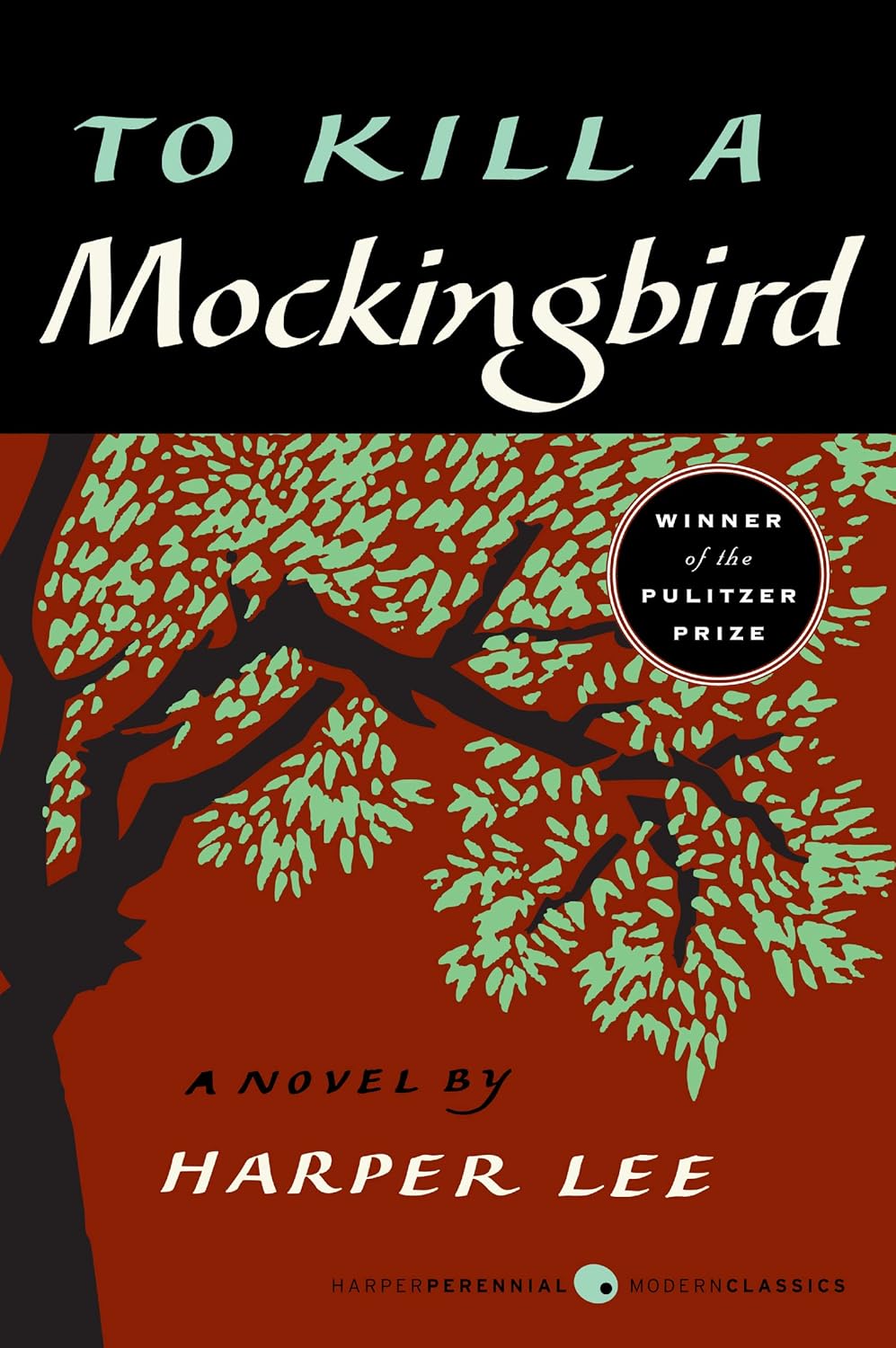
Harper Lee's 1960 novel won the Pulitzer Prize and became required reading in American schools. Robert Mulligan's 1962 film adaptation, with a screenplay by Horton Foote, won three Academy Awards including Best Actor for Gregory Peck and Best Adapted Screenplay. The film was shot in black and white despite colour being standard by 1962 — a deliberate choice that gives it the quality of memory.
Both versions remain cultural touchstones for discussions of racial injustice, childhood innocence, and moral integrity in the American South. The novel has sold over 40 million copies worldwide and the film ranks among the American Film Institute's greatest American movies.
| Character | In the Book | In the The Film |
|---|---|---|
| Atticus Finch Gregory Peck |
A widowed lawyer in his fifties, morally upright but also a man of his time and place, with ambiguities Lee explores through Scout's evolving understanding. | Peck's performance is iconic — moral authority made visible, decency incarnate, perhaps more saintly than Lee's more complex portrayal. |
| Scout Finch Mary Badham |
The adult Scout narrates her childhood with retrospective wisdom layered over her younger self's confusion and wonder. | Badham was nine during filming and delivers an immediate, naturalistic performance, though the adult reflection is largely absent. |
| Jem Finch Phillip Alford |
Scout's older brother who matures dramatically during the trial and its aftermath, losing his childhood innocence. | Alford captures Jem's protective instincts and his devastation when the jury convicts Tom Robinson despite the evidence. |
| Tom Robinson Brock Peters |
A Black field hand with a crippled left arm, falsely accused and doomed by Maycomb's racial hierarchy. | Peters's courtroom testimony is heartbreaking — his dignity and terror equally visible as he explains why he helped Mayella Ewell. |
| Boo Radley Robert Duvall |
The reclusive neighbour who exists in Scout's imagination as both monster and guardian angel, revealed in the final chapters as the children's protector. | Duvall's film debut is wordless and haunting — pale, terrified of daylight, and ultimately the man who saves Scout and Jem from Bob Ewell. |
| Calpurnia Estelle Evans |
The Finch family's Black housekeeper who serves as Scout's maternal figure and bridge between white and Black Maycomb. | Evans brings warmth and authority, though the film omits the chapter where Scout and Jem attend Calpurnia's church. |
Key Differences
Scout's Double Narration Is Lost
The novel is narrated by an adult Scout looking back on her childhood, which gives the prose a double register — the child's bewilderment and the adult's understanding, sometimes in the same sentence. This double consciousness is the novel's structural genius.
The film opens with Scout's adult voice-over but quickly abandons it for the child's immediate perspective. Mary Badham is magnificent — natural, fierce, bewildered — but the adult reflection that gives the novel its moral depth is largely absent. You lose the sense of memory being examined and reinterpreted.
Gregory Peck Becomes Atticus
Peck's Atticus is one of cinema's great performances — moral authority made physical, decency made visible. Harper Lee said he was her father. She gave Peck her father's pocket watch after filming wrapped.
The performance may be more iconic than the novel's Atticus, whose virtue is somewhat more ambiguous in the text. Lee's Atticus is a good man in a racist society, complicit in some ways even as he defends Tom Robinson. Peck's noble bearing and quiet strength make him almost saintly. This is one of the rare cases where the casting defines the character beyond the author's intentions, for better and worse.
The Boo Radley Mystery Is Compressed
The novel gives significant space to the children's fascination with Boo Radley — the gifts he leaves in the tree, their attempts to make him come out, the fire at Miss Maudie's house when Boo drapes a blanket over Scout's shoulders without her noticing. Boo exists for Scout as a figure of terror and eventual grace.
The film preserves this thread but compresses it. Robert Duvall's debut performance as Boo is wordless and haunting — he appears in the final sequence, pale and terrified, having killed Bob Ewell to save the children. The film's Boo is more purely symbolic, less developed as a character in his own right.
Maycomb's Social Fabric Is Thinned
Lee's novel is dense with secondary characters who constitute Maycomb's social fabric — Aunt Alexandra and her missionary circle, Mrs. Dubose and her morphine addiction, the Cunninghams and the Ewells and their respective places in the town's class hierarchy. The novel is as much about community as it is about the trial.
The film necessarily focuses on the central narrative and loses some of this texture. Aunt Alexandra appears briefly. Mrs. Dubose's subplot — which in the novel serves as Atticus's lesson about real courage — is cut entirely. The missionary circle tea, where Scout witnesses adult hypocrisy firsthand, is absent. The film is leaner and more focused, but Maycomb feels less lived-in.
The Trial Sequence Is Devastating
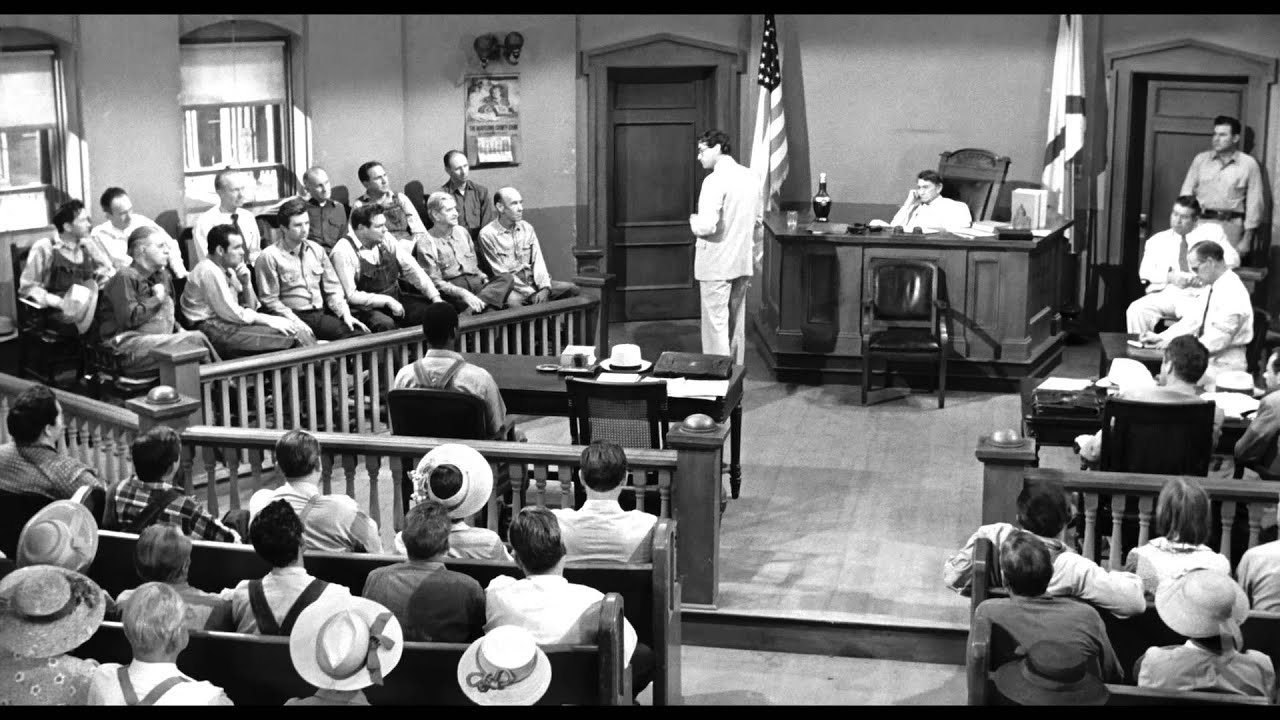
Mulligan shoots the courtroom with restraint and precision — the segregated gallery where Scout sits with Reverend Sykes and the Black community, Atticus's closing argument delivered directly to the jury, the long wait for the verdict. The film's trial sequence is among the finest in courtroom cinema.
The novel's trial has more legal detail and more of Atticus's internal reasoning. Lee gives you the mechanics of how a guilty verdict is reached despite overwhelming evidence of innocence. But the film's version is arguably more emotionally devastating — Peck's quiet fury, Brock Peters's terrified dignity, the moment when the Black gallery stands as Atticus leaves the courtroom. Both are essential, but they work differently.
Either order works — this is one of the very few cases where the film is good enough that watching first is not a diminishment. Read first if you want Scout's full interior world and the novel's double narration. Watch first if you want Gregory Peck's Atticus Finch in his full authority and the courtroom sequence in visual form. Both are essential American works.
The consequence of watching first is that Peck's performance will define Atticus in your imagination, which may make the novel's more ambiguous portrayal feel less vivid. The consequence of reading first is that the film's compression will feel like loss, even though what remains is nearly perfect. Choose based on whether you want the child's voice or the father's face to arrive first.
Should You Read First?
Either order works — this is one of the very few cases where the film is good enough that watching first is not a diminishment. Read first if you want Scout's full interior world and the novel's double narration. Watch first if you want Gregory Peck's Atticus Finch in his full authority and the courtroom sequence in visual form. Both are essential American works.
The consequence of watching first is that Peck's performance will define Atticus in your imagination, which may make the novel's more ambiguous portrayal feel less vivid. The consequence of reading first is that the film's compression will feel like loss, even though what remains is nearly perfect. Choose based on whether you want the child's voice or the father's face to arrive first.
Lee wrote one of the great American novels of the twentieth century and Mulligan made one of the great American films of the same period. They are different achievements of approximately equal stature. Read the novel for Scout's voice and the double consciousness of memory. See the film for Gregory Peck and the courtroom in black and white. This is a genuine tie — two masterworks that honor each other.