The Story in Brief
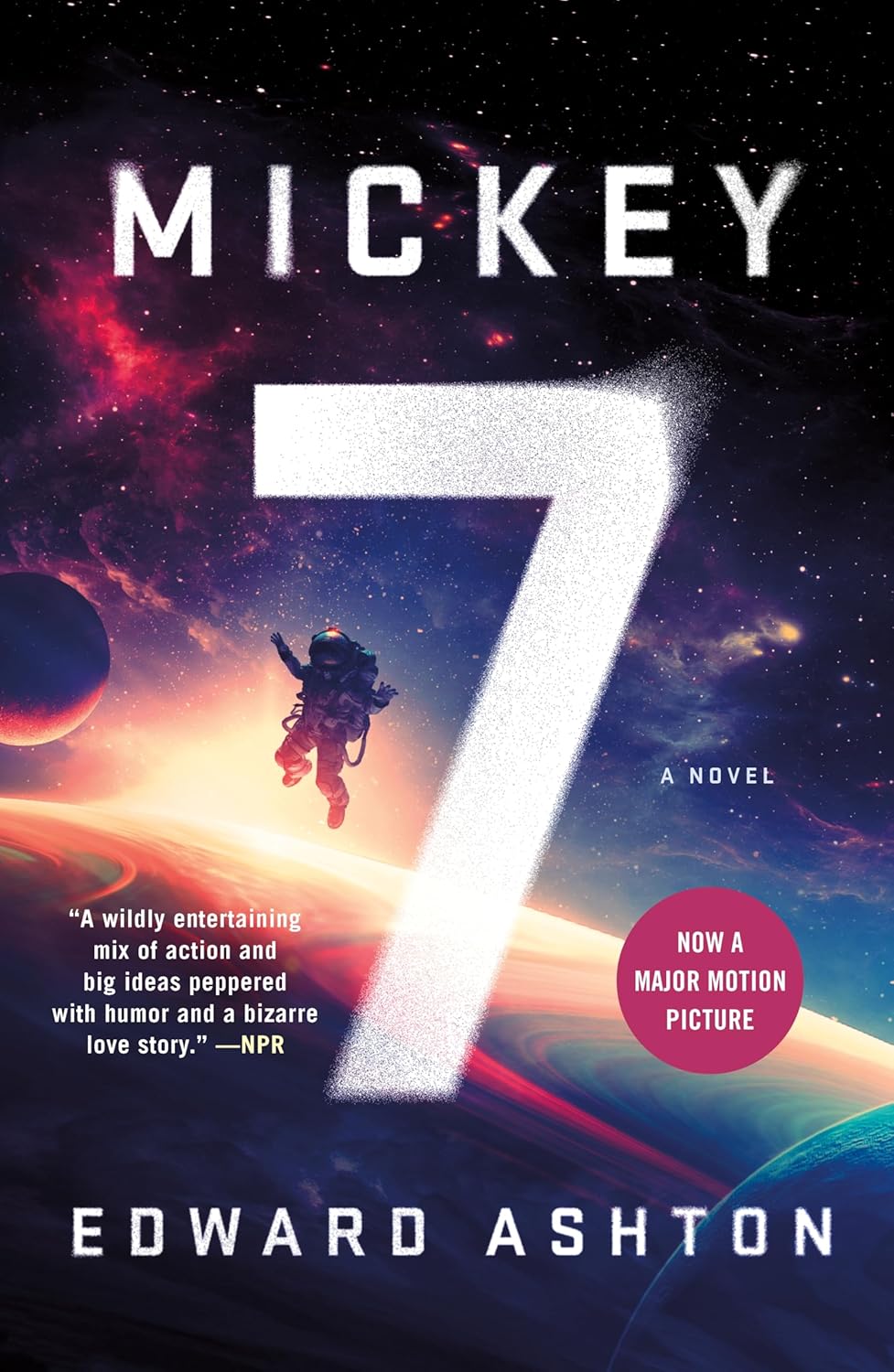
Mickey Barnes is an Expendable — the polite corporate term is "Disposable" — on humanity's colonization mission to Niflheim, an ice planet hostile to human life. When Mickey dies on a dangerous assignment, the colony's printer spits out a new version of him from a stored consciousness backup. By the time the novel opens, Mickey has died and been reprinted seventeen times.
The system works until Mickey 17 survives a mission everyone assumed would kill him. He returns to the colony to discover Mickey 18 has already been printed. Now two versions of the same person exist simultaneously, which violates colony protocol and threatens both their lives. Mickey 17 and Mickey 18 must hide their dual existence while navigating the colony's rigid hierarchy, the mysterious native lifeforms called creepers, and the ethical nightmare of a system that treats human consciousness as disposable.
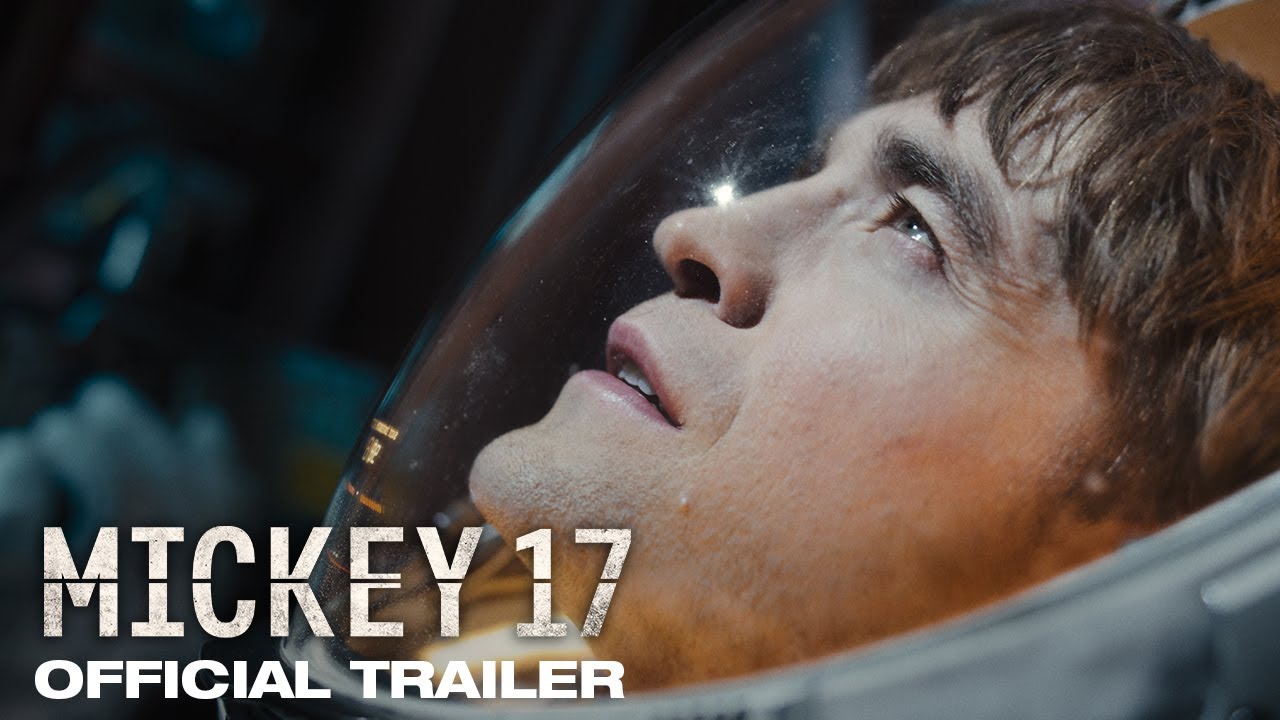
Bong Joon-ho's 2025 adaptation, starring Robert Pattinson as both Mickeys, premiered to significant critical attention as the Parasite director's first English-language science fiction film. The production emphasizes the visual contrast between Niflheim's frozen wasteland and the claustrophobic colony interiors, while Pattinson's dual performance anchors the film's exploration of identity and exploitation. The adaptation condenses Ashton's satirical edge into a more streamlined narrative, trading some philosophical depth for visceral spectacle.
| Character | In the Book | In the The Movie |
|---|---|---|
| Mickey Barnes Robert Pattinson |
A cynical, self-deprecating narrator who signed up as a Disposable to escape debt on Earth; his internal monologue reveals deep existential dread masked by dark humor. | Pattinson plays both Mickey 17 and 18 with subtle physical distinctions — 17 is wearier, more resigned, while 18 is slightly more naive and hopeful. |
| Nasha Naomi Ackie |
Mickey's girlfriend and fellow colonist who works in food production; she's pragmatic, loyal, and one of the few people who treats Mickey as fully human. | Ackie's Nasha becomes a more active participant in the plot, helping both Mickeys navigate their predicament with a sharper edge than her book counterpart. |
| Berto Steven Yeun |
Mickey's bunkmate and closest friend, a maintenance worker who provides comic relief and genuine friendship despite the colony's dehumanizing systems. | Yeun brings warmth and humor to Berto, though the film reduces his role in the third act to focus on the two Mickeys' relationship. |
| Ken Marshall Toni Collette |
The colony's mission commander, a ruthless pragmatist who views Disposables as tools and enforces the colony's survival-at-any-cost philosophy. | Collette's Marshall is more overtly villainous, with the film emphasizing her authoritarian control and willingness to sacrifice anyone for the mission. |
| Hieronymus Mark Ruffalo |
The colony's chief scientist who oversees the printing technology; he's intellectually curious but morally compromised by his complicity in the Disposable system. | Ruffalo's Hieronymus is given a more prominent role, serving as both exposition source and ethical counterweight to Marshall's authoritarianism. |
Key Differences
The Dual Mickey Premise Arrives Earlier
Ashton's novel takes its time establishing Mickey 17's routine before introducing the complication of Mickey 18's existence around page 80. The film accelerates this timeline dramatically, with Mickey 18 appearing within the first thirty minutes. Bong Joon-ho prioritizes the visual comedy and tension of two Mickeys sharing cramped quarters, hiding from surveillance, and nearly exposing themselves in public.
This structural change sacrifices the book's slow-burn exploration of what it means to be Disposable. Ashton uses the first third to establish the psychological toll of repeated death and the colony's casual cruelty toward Expendables. The film gestures at these themes through flashbacks and Pattinson's haunted performance, but the emphasis shifts to the immediate problem of survival rather than the existential horror of the system itself.
The Creepers Become Action Set Pieces
In the book, the creepers — Niflheim's native lifeforms — are mysterious, barely understood, and primarily exist as background threat. Ashton reveals late in the novel that they're intelligent, communicative, and have been observing the human colony with growing concern. This revelation reframes the entire narrative as a first-contact story where humans are the invaders.
Bong Joon-ho transforms the creepers into visceral antagonists for multiple action sequences. The film stages elaborate set pieces where Mickey 17 confronts creepers in ice tunnels and during surface missions, emphasizing their alien biology and threat level. While visually striking, these sequences reduce the creepers' narrative function from philosophical mirror to monster-movie menace. The film preserves the intelligence reveal but gives it less thematic weight.
Nasha's Agency and the Love Triangle
The book's Nasha is supportive but peripheral to the main plot. She knows Mickey is a Disposable, accepts the relationship's limitations, and provides emotional grounding without driving the narrative. When Mickey 18 appears, Nasha becomes an unwitting participant in the deception but never learns the full truth.
The film gives Naomi Ackie's Nasha significantly more screen time and agency. She discovers both Mickeys exist much earlier and becomes an active co-conspirator in hiding them. The adaptation also introduces romantic tension between Nasha and both versions of Mickey, with the film exploring whether she can distinguish between them and which one she truly loves. This love triangle adds melodrama absent from Ashton's more cerebral approach.
The Colony's Class System Gets Visual Language
Ashton's novel describes Niflheim colony's rigid hierarchy through Mickey's narration — the command staff live in better quarters, eat real food, and treat Disposables as subhuman. The book trusts readers to imagine this stratification through Mickey's bitter observations and occasional confrontations with authority.
Bong Joon-ho, drawing on Snowpiercer and Parasite, gives the class divide striking visual form. The film's production design segregates the colony into vertical levels: command occupies spacious upper decks with natural light and greenery, while Disposables and workers inhabit cramped lower levels with flickering lights and recycled air. The camera emphasizes these spatial hierarchies through long tracking shots that move between levels, making the exploitation literal and architectural. It's effective cinema but less subtle than the book's approach.
The Ending's Philosophical Stakes
Ashton's novel concludes with Mickey 17 and 18 discovering that Marshall plans to exterminate the creepers to secure Niflheim for human colonization. The Mickeys broker a fragile peace by revealing the creepers' intelligence and threatening to expose Marshall's genocidal intent. The ending is ambiguous — the colony's future remains uncertain, and Mickey must live with the knowledge that he's complicit in a system he can't escape. It's a downbeat, morally complex conclusion.
The film opts for a more definitive climax. Bong Joon-ho stages a confrontation where both Mickeys publicly expose Marshall's plans, leading to her removal from command. The creepers and humans establish tentative communication, and the film ends with the suggestion of genuine coexistence. One Mickey sacrifices himself to save the other, giving Pattinson a heroic final scene. It's emotionally satisfying but resolves tensions the book deliberately leaves unresolved, trading ambiguity for catharsis.
Reading Ashton's novel first gives you the full weight of Mickey's existential crisis and the book's satirical critique of corporate exploitation. The film's accelerated pacing and action-oriented approach work better if you already understand the philosophical questions Ashton raises about consciousness, identity, and what makes a person disposable. The book's internal monologue provides context the film can only gesture at through Pattinson's performance.
That said, Bong Joon-ho's adaptation functions as a compelling entry point if you prefer visual storytelling. The film's production design and Pattinson's dual performance communicate the core premise effectively, even if they simplify the thematic complexity. Watching first won't spoil the book's deeper pleasures — Ashton's prose and satirical edge offer plenty the film doesn't attempt. Either order works, but the book rewards patience in ways the film's spectacle can't replicate.
Should You Read First?
Reading Ashton's novel first gives you the full weight of Mickey's existential crisis and the book's satirical critique of corporate exploitation. The film's accelerated pacing and action-oriented approach work better if you already understand the philosophical questions Ashton raises about consciousness, identity, and what makes a person disposable. The book's internal monologue provides context the film can only gesture at through Pattinson's performance.
That said, Bong Joon-ho's adaptation functions as a compelling entry point if you prefer visual storytelling. The film's production design and Pattinson's dual performance communicate the core premise effectively, even if they simplify the thematic complexity. Watching first won't spoil the book's deeper pleasures — Ashton's prose and satirical edge offer plenty the film doesn't attempt. Either order works, but the book rewards patience in ways the film's spectacle can't replicate.
Ashton's Mickey 17 is the superior work because it trusts readers to sit with uncomfortable questions about consciousness, exploitation, and humanity's colonial impulses without offering easy answers. Bong Joon-ho's film is visually accomplished and features a committed performance from Pattinson, but it trades philosophical depth for narrative momentum and resolves tensions the book deliberately sustains. The novel asks what it means to be human when your life is infinitely reproducible; the film asks how two versions of the same person survive the week. Both are worth your time, but only one will haunt you after it ends.