The Story in Brief
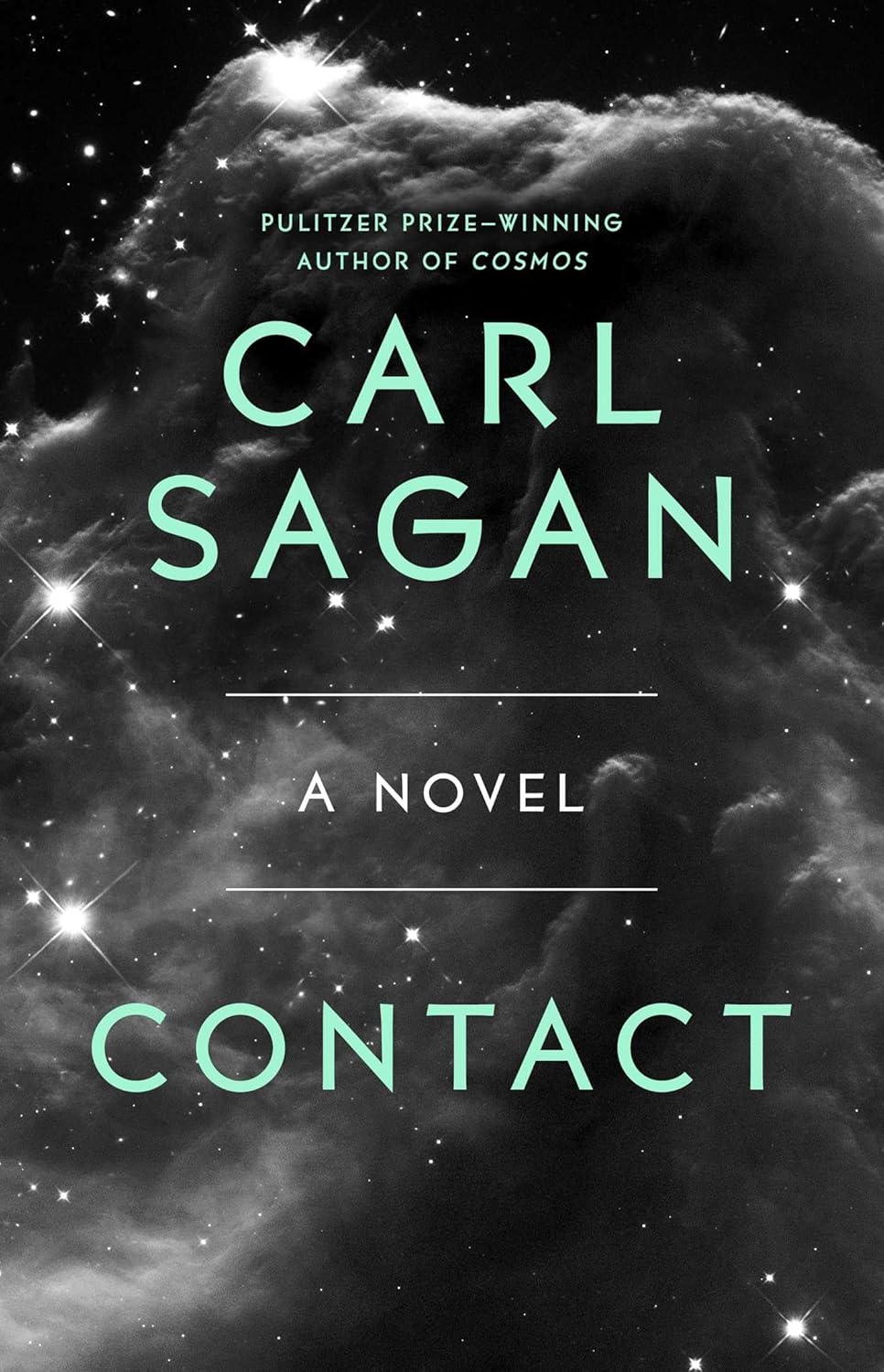
Dr. Eleanor "Ellie" Arroway is a radio astronomer who has devoted her career to the Search for Extraterrestrial Intelligence, driven by a childhood love of science and a refusal to accept that humanity is alone in the universe. When her team at the Very Large Array in New Mexico receives a signal from Vega — a signal containing blueprints for a machine of unknown purpose — the discovery triggers a global political, religious, and scientific crisis.
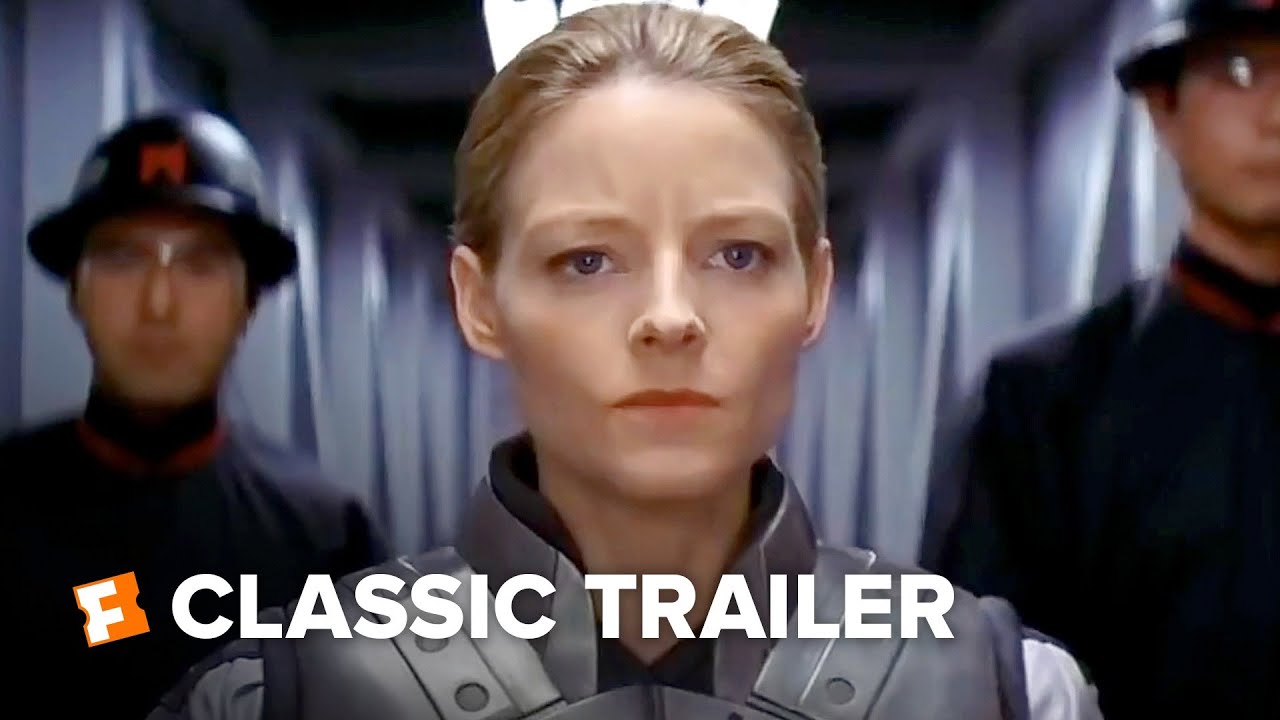
Carl Sagan wrote the novel in 1985, drawing on his decades as an astronomer and science communicator to imagine first contact with a rigour that most science fiction doesn't attempt. Robert Zemeckis's 1997 film, starring Jodie Foster as Ellie, was produced with a budget of $90 million and earned critical praise for its scientific accuracy and philosophical depth. The film grossed $171 million worldwide and received an Academy Award nomination for Best Sound.
Both versions remain culturally significant as rare examples of science fiction that treats scientific method and religious faith with equal seriousness, refusing to trivialize either perspective in the debate over what constitutes evidence and belief.
| Character | In the Book | In the The Movie |
|---|---|---|
| Dr. Eleanor Arroway Jodie Foster |
A more austere, intellectually driven scientist whose emotional life is secondary to her work; Sagan emphasizes her isolation and single-minded devotion to SETI research. | Foster softens Ellie's edges, making her more emotionally accessible while preserving her intellectual rigor and moral commitment to empirical truth. |
| Palmer Joss Matthew McConaughey |
A composite character in the film; the novel distributes the faith-versus-science debate across multiple religious and political figures rather than a single romantic interest. | McConaughey's theologian and former lover provides the film's central counterpoint to Ellie's empiricism, personalizing the philosophical debate. |
| David Drumlin Tom Skerritt |
Ellie's professional rival who represents institutional science's tendency toward careerism over genuine inquiry. | Skerritt plays Drumlin as more overtly antagonistic, and his death in the sabotaged Machine creates dramatic stakes the novel handles differently. |
| S.R. Hadden John Hurt |
A wealthy industrialist who funds Ellie's research; the novel gives him more extensive development as a dying man seeking meaning. | Hurt's Hadden is more enigmatic and appears primarily via video transmission, serving as a deus ex machina who enables Ellie's journey. |
| The Machine Passengers — |
Five international representatives travel together, making first contact a collective, multinational experience that reflects Sagan's vision of humanity as a species. | Only Ellie travels, making the experience singular, unverifiable, and more focused on the personal crisis of faith versus evidence. |
Key Differences
The scientific depth and texture
Sagan was one of the world's leading astronomers, and the novel carries that expertise in every chapter — the physics of radio detection, the mathematics of the Message, the political economy of international scientific collaboration, the specific texture of what SETI research actually involves. This is not background decoration; it is the substance of the book, and it gives the story an authority that no film can fully replicate.
Zemeckis handles the science responsibly and accurately, consulting with actual SETI researchers and NASA scientists to ensure the film's depictions were credible. But the film moves through the technical material at the pace the story requires, condensing months of signal analysis into montage sequences.
The book is the more intellectually nourishing experience for readers who want to understand the actual process of detecting and decoding an extraterrestrial signal.
Jodie Foster's performance as Ellie
Foster's performance is one of the defining screen portrayals of a scientist — rigorous, passionate, socially awkward in specific ways that feel authentic rather than performed. She makes Ellie's devotion to empirical truth feel like a moral position rather than a professional one, which is exactly what the character requires.
The film's Ellie is somewhat more emotionally accessible than the novel's — Foster softens certain edges, particularly in her interactions with Palmer Joss and in the scenes with her father. Sagan's Ellie is more isolated, more willing to sacrifice personal connection for her work.
But this is Foster at her most fully committed, and the film is better for it. Her reaction to receiving the signal, her testimony before the congressional hearing, and her experience inside the Machine are all anchored by Foster's ability to convey intellectual wonder as a form of spiritual experience.
The Machine and its passengers
The novel sends five people in the Machine — a multinational group representing different regions and perspectives, each with their own response to what they experience. The film sends only Ellie, which is more dramatically focused and loses the collective dimension of Sagan's vision.
The novel's contact experience is something humanity shares across five witnesses, each of whom can corroborate the others' accounts. The film's is a singular, unverifiable personal experience that leaves Ellie in the position of asking others to believe her without evidence — the exact position she has refused to accept from religious believers throughout the story.
Both choices are defensible; the novel's is more consistent with its argument that first contact would be a civilisation-scale event rather than an individual one. The film's choice sharpens the faith-versus-evidence paradox into a personal crisis.
The faith and science tension
Both versions engage seriously with the question of whether Ellie's experience — which she cannot prove — constitutes a kind of faith. Matthew McConaughey's Palmer Joss makes the film's version of this argument compellingly, and his romantic history with Ellie gives the debate emotional stakes.
The novel's equivalent is more extensively developed across a wider cast of religious and political figures, including a subplot involving religious extremists who see the Message as a threat to faith. Sagan treats the debate as a civilisational question rather than a personal one, exploring how different cultures and belief systems respond to evidence of extraterrestrial intelligence.
The film focuses the debate productively by channeling it through Palmer and Ellie's relationship, but loses some of the novel's global scope.
The ending and the message in pi
Sagan's novel ends with a mathematical discovery — pi, computed to sufficient decimal places in base 11, contains a message embedded in the structure of the universe itself — that is one of the most quietly staggering endings in science fiction. The discovery suggests that the cosmos was designed, that mathematics is not merely a human invention but a language written into reality.
The film's ending is more conventionally moving and does not include this final revelation. Zemeckis concludes with Ellie teaching a group of children about the stars, having found peace with the fact that her experience cannot be proven. It's a satisfying emotional resolution that emphasizes human connection over cosmic revelation.
Readers who reach the novel's last pages will understand why the film's ending, good as it is, gives up something irreplaceable. Sagan's final pages reframe the entire story as an argument about the relationship between science and transcendence, suggesting that empirical inquiry and spiritual wonder are not opposites but two paths toward the same truth.
Yes — for the ending alone, which the film cannot include and which changes the meaning of everything that precedes it. Read first and the film becomes a beautifully made companion that captures most of what matters, with Jodie Foster delivering one of her career-defining performances. Watch first and the book will expand every dimension the film compressed, including a final revelation that the film cannot give you.
The novel also provides far greater scientific depth and a more expansive vision of first contact as a species-wide event rather than an individual experience. But the film is one of the most faithful major adaptations of a science fiction novel ever made, and watching it after reading will deepen your appreciation for what Zemeckis preserved and what he necessarily sacrificed.
Should You Read First?
Yes — for the ending alone, which the film cannot include and which changes the meaning of everything that precedes it. Read first and the film becomes a beautifully made companion that captures most of what matters, with Jodie Foster delivering one of her career-defining performances. Watch first and the book will expand every dimension the film compressed, including a final revelation that the film cannot give you.
The novel also provides far greater scientific depth and a more expansive vision of first contact as a species-wide event rather than an individual experience. But the film is one of the most faithful major adaptations of a science fiction novel ever made, and watching it after reading will deepen your appreciation for what Zemeckis preserved and what he necessarily sacrificed.
Sagan's novel is more expansive, more scientifically rigorous, and ends with one of science fiction's great final pages. Zemeckis's film is one of the most faithful major adaptations of a science fiction novel, anchored by Foster at her finest, and gives up Sagan's ending for something more immediately moving. Too close to call — but read the book for the ending. It will change the film when you watch it after.