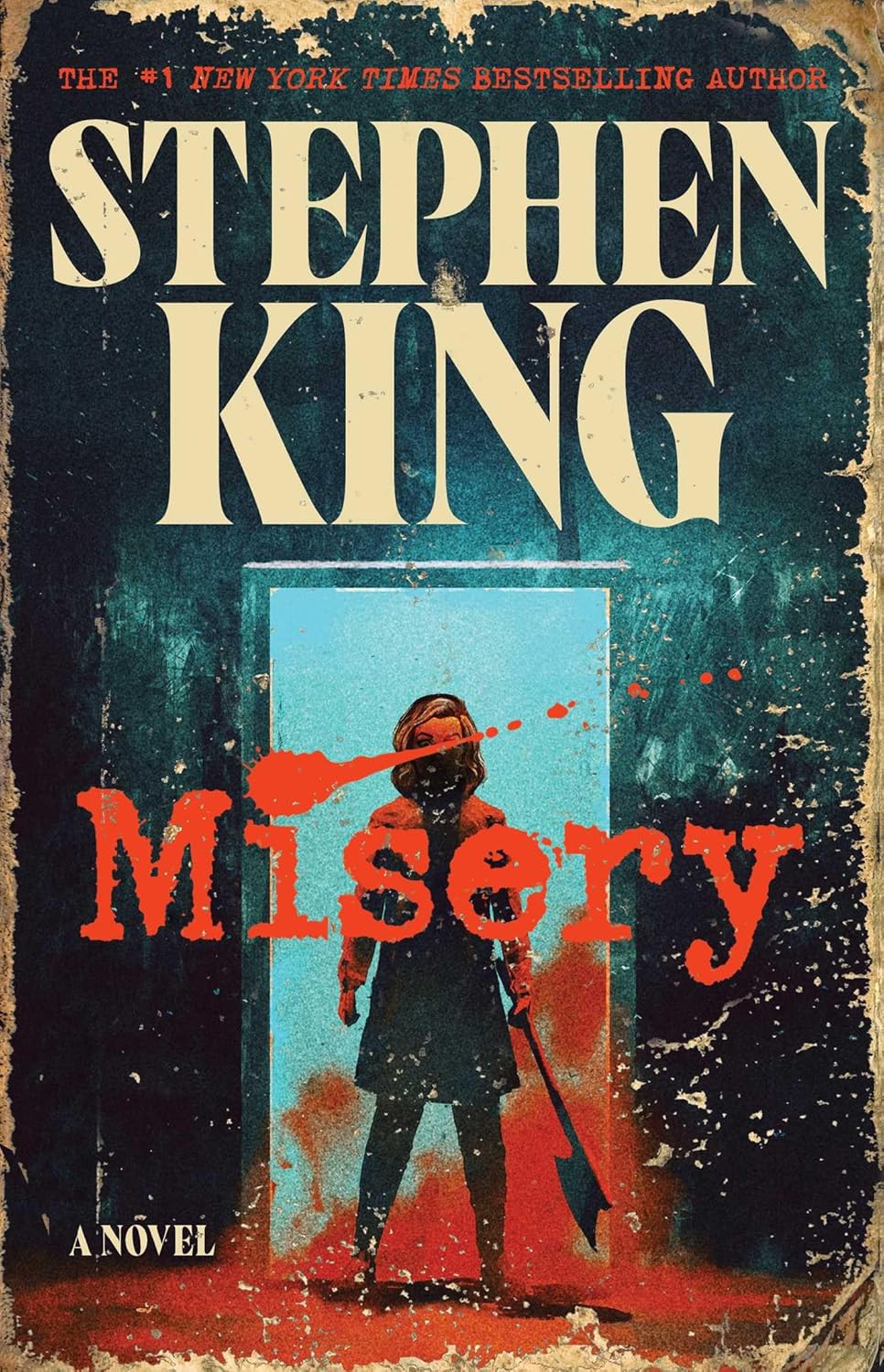
The Story in Brief
Romance novelist Paul Sheldon crashes his 1974 Camaro in a Colorado blizzard and wakes up in the remote farmhouse of Annie Wilkes, a former nurse who claims to be his number one fan. Annie has rescued Paul from the wreck, set his shattered legs, and begun nursing him back to health. When she reads the manuscript of his latest Misery Chastain novel and discovers he's killed off her beloved heroine, Annie's devotion curdles into rage. She forces Paul to burn the only copy of his new literary novel and write a new Misery book bringing the character back to life.
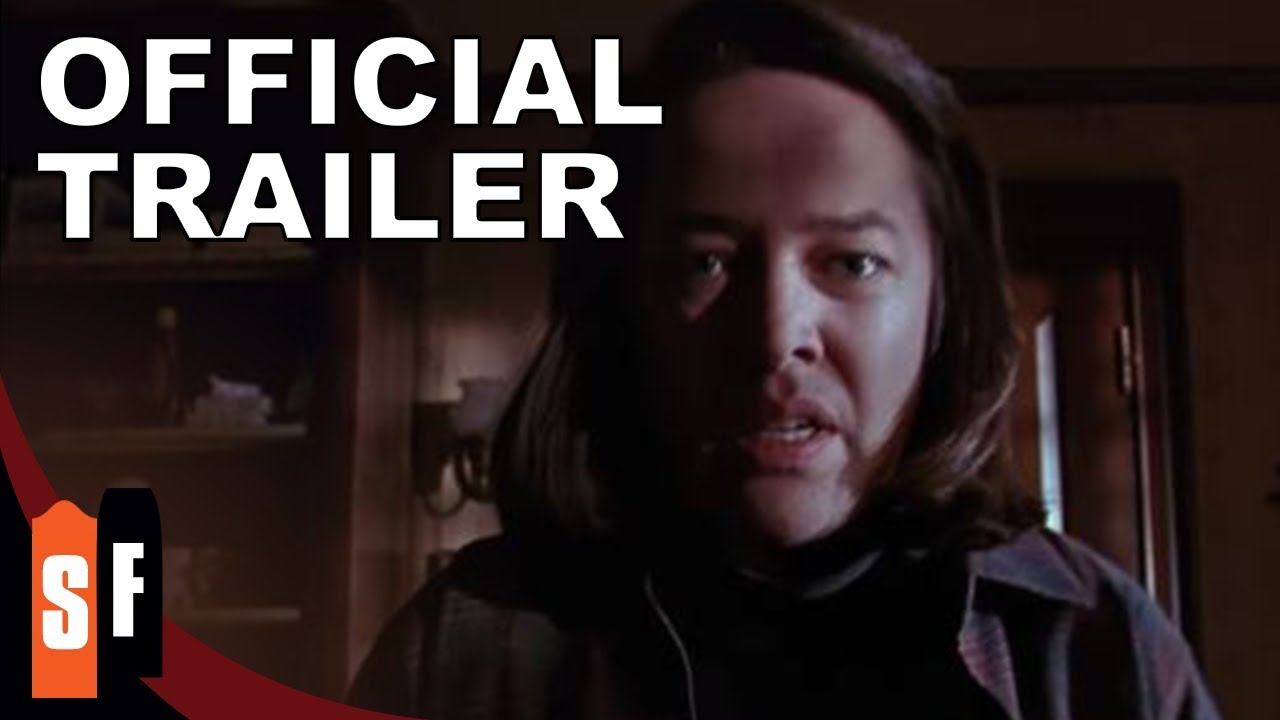
Stephen King published the novel in 1987, during a period when he was confronting his own addictions and his complicated relationship with genre fiction and audience expectation. Rob Reiner's 1990 film adaptation, scripted by William Goldman, became one of the most critically acclaimed King adaptations ever made. Kathy Bates won the Academy Award for Best Actress for her portrayal of Annie Wilkes — the first time a performance in a horror-thriller won the Oscar in that category.
The film grossed $61 million domestically and cemented Annie Wilkes as one of cinema's most terrifying villains, alongside Hannibal Lecter and Norman Bates. It remains the gold standard for how to adapt King's interior, psychological horror to the screen.
| Character | In the Book | In the The Movie |
|---|---|---|
| Annie Wilkes Kathy Bates |
A deeply unstable former nurse with a history of infant deaths at hospitals where she worked, rendered through Paul's terrified perception and fragmented memories. | Bates plays her as a childlike, volatile woman whose mood swings from maternal warmth to homicidal rage in seconds — an Oscar-winning performance that defines the character for most audiences. |
| Paul Sheldon James Caan |
A successful romance novelist ashamed of his commercial work, struggling with alcoholism and desperate to be taken seriously as a literary writer. | Caan emphasizes Paul's physical suffering and survival instinct over his interior conflict about his career and artistic identity. |
| Buster Richard Farnsworth |
The local sheriff who becomes suspicious of Annie and investigates Paul's disappearance, though his role is relatively minor. | Expanded slightly in the film to provide external tension and a ticking clock, culminating in his death at Annie's hands. |
Key Differences
The hobbling scene is an axe in the book, a sledgehammer in the film
King's novel has Annie cut off Paul's left foot at the ankle with an axe, then cauterize the stump with a blowtorch, after he leaves his room while she's away. It's described in excruciating detail across multiple pages. The film changes this to the now-iconic sledgehammer scene, where Annie breaks both of Paul's ankles with a wooden block between them.
Rob Reiner made the change because he felt the axe amputation would be too graphic and push the film into exploitation territory. The sledgehammer version is arguably more disturbing because it's prolonged — Annie places the block, explains what she's about to do, and then brings the hammer down twice while Paul screams. The sound design and Bates's calm demeanor make it unbearable.
Both versions accomplish the same narrative goal — Paul is now physically incapable of escape — but the film's version became one of the most infamous moments in horror cinema, frequently cited alongside the shower scene in Psycho and the chest-burster in Alien.
Paul's interior life is far richer on the page
The novel spends extensive time inside Paul Sheldon's head as he plans his escape, rations his pain medication, and wrestles with his addiction to Novril. King devotes whole chapters to Paul's thoughts about his career, his shame over writing romance novels, and his desperate desire to be recognized as a serious literary author. The Misery books have made him wealthy and famous, but he considers them hack work.
James Caan conveys Paul's physical agony and survival instinct effectively, but the film necessarily externalizes what King keeps interior. We lose Paul's self-loathing, his complicated relationship with his own success, and his gradual psychological breakdown. The novel is as much about a writer's crisis of identity as it is about captivity and torture.
Annie's backstory is more explicit in the novel
King's book reveals that Annie Wilkes is a serial killer who has murdered infants and elderly patients at multiple hospitals where she worked as a nurse. Paul discovers a scrapbook documenting her past, including newspaper clippings about suspicious deaths that followed her from hospital to hospital. The novel makes clear that Annie has been getting away with murder for decades.
The film hints at Annie's violent past but keeps it vague. Buster mentions that she's been in trouble before, and there's a suggestion of instability, but the scrapbook and the infant deaths are omitted. This makes the film's Annie more unpredictable — we don't know if she's killed before or if Paul is her first victim. It's a deliberate choice that emphasizes her volatility over her history.
The novel-within-the-novel gets more space in the book
King includes lengthy excerpts from Misery's Return, the novel Paul writes under duress to bring Misery Chastain back from the dead. These passages are intentionally purple and melodramatic, and Paul's internal commentary on them reveals his contempt for the genre even as he demonstrates his skill at it. The book explores the craft of writing and the compromises commercial authors make.
The film shows Paul typing and occasionally reading passages aloud to Annie, but we get only fragments. The focus stays on the thriller mechanics — will Paul finish the book, will Annie approve, will he escape? The meta-dimension about the relationship between artist and audience is present but subordinated to suspense.
The ending is more psychologically complex in the novel
Both versions end with Paul killing Annie in a violent confrontation and being rescued, but the novel includes a substantial aftermath. Paul is haunted by visions of Annie for months after his escape. He imagines seeing her in crowds, hears her voice, and suffers from severe PTSD. The final scene has him at a book signing, hallucinating that Annie is in the audience.
The film condenses this into a single restaurant scene where Paul, now recovered and meeting with his agent, imagines Annie appearing as a waitress. It's effective as a final scare, but the novel's extended exploration of trauma and the impossibility of ever truly escaping your captor is more psychologically honest. King understands that surviving horror doesn't mean being free of it.
Either order works unusually well with Misery. If you watch the film first, Kathy Bates will define Annie Wilkes in your imagination forever — but that's not necessarily a problem, because her performance is so definitive that even King has said she became his mental image of the character. The film's version of the hobbling scene will also replace the book's axe with the sledgehammer in your mind, which some readers might prefer given how graphically King describes the amputation.
If you read first, you'll get the full scope of Paul's interior crisis, the explicit details of Annie's serial killer past, and King's meta-commentary on the writer-reader relationship. But you'll also experience one of the rare cases where the film adaptation is so well-executed that it doesn't feel like a diminishment. This is one of the few King adaptations where watching first is a legitimate choice.
Should You Read First?
Either order works unusually well with Misery. If you watch the film first, Kathy Bates will define Annie Wilkes in your imagination forever — but that's not necessarily a problem, because her performance is so definitive that even King has said she became his mental image of the character. The film's version of the hobbling scene will also replace the book's axe with the sledgehammer in your mind, which some readers might prefer given how graphically King describes the amputation.
If you read first, you'll get the full scope of Paul's interior crisis, the explicit details of Annie's serial killer past, and King's meta-commentary on the writer-reader relationship. But you'll also experience one of the rare cases where the film adaptation is so well-executed that it doesn't feel like a diminishment. This is one of the few King adaptations where watching first is a legitimate choice.
One of the rare King adaptations that genuinely competes with its source. The novel has more interior dimension, a more explicit serial killer backstory, and the full horror of the axe and blowtorch. The film has Kathy Bates, whose Oscar-winning performance is so perfect that it retroactively defines the character even for readers. It's close enough to call a tie — and that almost never happens with Stephen King.