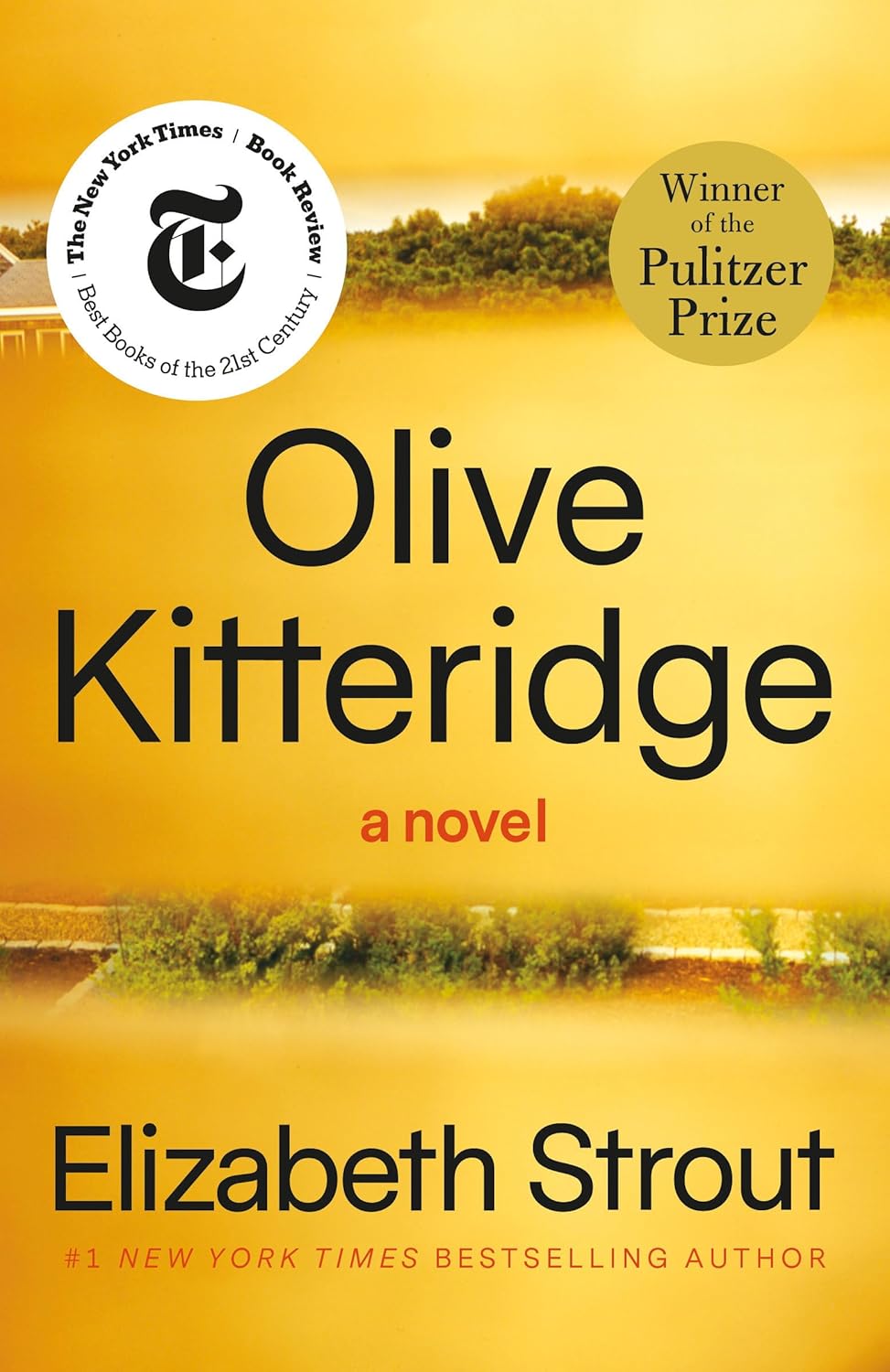
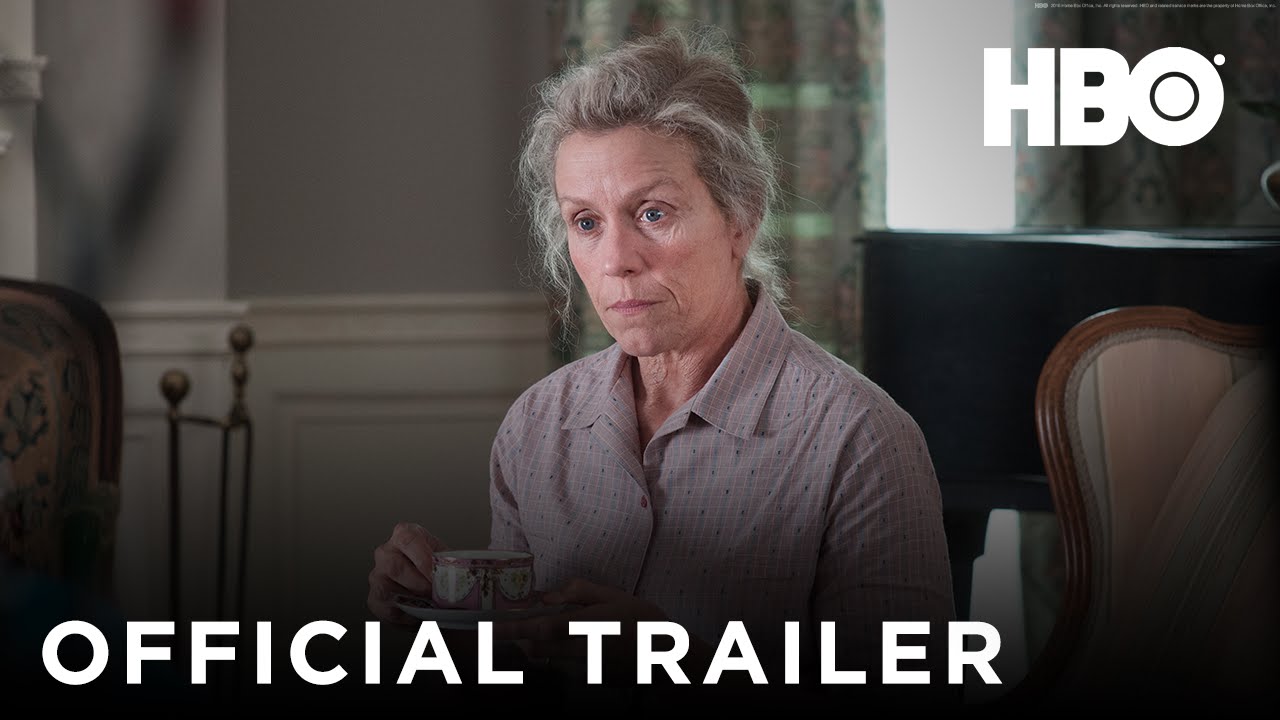
The Story in Brief
Elizabeth Strout's Olive Kitteridge is a collection of thirteen interconnected stories set in the fictional coastal town of Crosby, Maine, spanning twenty-five years. At the center is Olive, a retired seventh-grade math teacher whose blunt manner and emotional opacity alienate nearly everyone around her — including her gentle pharmacist husband Henry and their son Christopher, who flees to California partly to escape her.
The novel won the 2009 Pulitzer Prize for Fiction and spent eight weeks on the New York Times bestseller list. HBO's 2014 four-part miniseries, directed by Lisa Cholodenko and adapted by Jane Anderson, condenses Strout's mosaic structure into a more linear narrative. Frances McDormand's performance as Olive earned her an Emmy, a Golden Globe, and a SAG Award, while Richard Jenkins won an Emmy for his portrayal of Henry.
The adaptation aired to critical acclaim and introduced Strout's uncompromising protagonist to a wider audience, though it necessarily sacrificed the novel's prismatic perspective for the demands of serialized television.
| Character | In the Book | In the The Movie |
|---|---|---|
| Olive Kitteridge Frances McDormand |
A towering, caustic woman whose interior life is revealed gradually through multiple perspectives, sometimes as protagonist, sometimes as peripheral observer. | The consistent focal point across all four episodes, with McDormand's physicality and vocal delivery capturing Olive's abrasiveness while making her more immediately sympathetic. |
| Henry Kitteridge Richard Jenkins |
A mild-mannered pharmacist whose quiet longing for his assistant Denise and patient endurance of Olive's coldness are explored in fragmented glimpses. | Given more screen time and emotional depth, with Jenkins emphasizing Henry's decency and the poignancy of his unrequited feelings for Denise. |
| Christopher Kitteridge John Gallagher Jr. |
Olive's son, whose strained relationship with his mother is shown primarily through his absence and occasional tense visits from California. | Appears more frequently, with scenes that dramatize his resentment and his struggle to establish boundaries with Olive. |
| Denise Thibodeau Zoe Kazan |
Henry's young assistant at the pharmacy, whose warmth and beauty represent everything Olive is not; her story is told in the opening chapter. | Her role is condensed, with less emphasis on her own troubled marriage and more focus on Henry's quiet infatuation. |
| Jack Kennison Bill Murray |
A widowed former Harvard professor who becomes Olive's unlikely companion in the final story, offering her a chance at late-life connection. | Murray brings wry humor and vulnerability to Jack, and his scenes with McDormand form the emotional climax of the miniseries. |
Key Differences
The Fragmented Structure Becomes Linear
Strout's novel is a mosaic, not a conventional narrative. Olive appears centrally in some stories — like "Pharmacy," where she watches Henry pine for Denise, or "A Little Burst," where she intervenes in a potential suicide — and only peripherally in others, such as "Incoming Tide," which focuses on Kevin Coulson's depression.
The miniseries abandons this structure entirely. It reorganizes the material into four chronological episodes that keep Olive front and center throughout. Stories like "Incoming Tide" and "Criminal" are either omitted or absorbed into the main narrative, eliminating the novel's kaleidoscopic effect.
The result is more accessible but less formally daring. The book's genius lies in how it reveals Olive obliquely, through the eyes of others; the miniseries makes her the constant subject, which paradoxically flattens her.
Olive's Interior Life Is Externalized
In the novel, Olive's thoughts are rendered in Strout's precise, unsentimental prose — her self-loathing, her envy of other women, her terror of her own capacity for cruelty. We see her remember slapping Christopher as a child and feel her shame decades later.
McDormand's performance is extraordinary, but film cannot replicate the intimacy of Strout's free indirect discourse. The miniseries compensates with visual cues — Olive staring at her reflection, her body language around Christopher — but these are blunter instruments.
The adaptation also softens Olive slightly. Her worst moments — telling a bride she looks like a "big white balloon," or her vicious dismissal of Henry's grief — are either toned down or contextualized more sympathetically.
Henry's Death and Its Aftermath
Henry's stroke and decline occur off-page in the novel, mentioned in passing in later stories. His death is not dramatized; we learn about it retrospectively, which mirrors how Olive herself processes loss — by avoiding it.
The miniseries devotes significant screen time to Henry's final days, with Jenkins delivering a heartbreaking performance as a man losing his speech and mobility. Olive's vigil at his bedside becomes a centerpiece of the third episode.
This change is emotionally effective but shifts the tonal balance. The book trusts readers to feel the absence; the miniseries fills it with conventional pathos.
Christopher's Resentment Is More Explicit
In the novel, Christopher's anger at Olive is conveyed through his physical distance and clipped phone calls. When he visits with his wife Suzanne, the tension is palpable but largely unspoken. Olive's realization that she has failed as a mother comes in small, devastating increments.
The miniseries stages a confrontation. Christopher tells Olive directly that she was a terrible mother, that she made his childhood miserable. It's a scene that doesn't exist in the book, and while it provides catharsis, it also makes the subtext text.
Strout's method is more painful precisely because it's more oblique. Olive never gets the clarity of a shouting match; she's left with the slow, corrosive knowledge of her own failures.
The Ending: Jack Kennison and the Possibility of Grace
The novel's final story, "River," introduces Jack Kennison, a widower as prickly as Olive. Their tentative romance is unsentimental and awkward, two damaged people finding companionship without illusions. The book ends with Olive imagining her own death and feeling, for the first time, something like peace.
Bill Murray's Jack is warmer and more overtly charming than the book's version. The miniseries gives their relationship more screen time and a more conventionally hopeful resolution. Olive's final moments are less ambiguous, more affirming.
It's a choice that makes the ending more satisfying in a traditional sense, but it undercuts the novel's refusal to offer easy redemption. Strout's Olive doesn't earn forgiveness; she simply endures, and that's enough.
Read the book first if you want to experience Strout's formal innovation and the full complexity of Olive's character. The novel's structure — its willingness to sideline its protagonist, to let other voices dominate — is integral to its meaning. Watching the miniseries first will give you a more linear, emotionally accessible version of the story, but you'll miss the book's prismatic brilliance.
If you watch first, you'll find McDormand's performance so definitive that it may be hard to imagine Olive any other way. The book allows you to construct Olive in your own imagination, which is part of its power. Start with Strout, then appreciate what Cholodenko and McDormand accomplish within the constraints of adaptation.
Should You Read First?
Read the book first if you want to experience Strout's formal innovation and the full complexity of Olive's character. The novel's structure — its willingness to sideline its protagonist, to let other voices dominate — is integral to its meaning. Watching the miniseries first will give you a more linear, emotionally accessible version of the story, but you'll miss the book's prismatic brilliance.
If you watch first, you'll find McDormand's performance so definitive that it may be hard to imagine Olive any other way. The book allows you to construct Olive in your own imagination, which is part of its power. Start with Strout, then appreciate what Cholodenko and McDormand accomplish within the constraints of adaptation.
The miniseries is a triumph of performance and a respectful adaptation, but Strout's novel is the richer, braver work. The book trusts you to sit with Olive's unpleasantness and find the humanity underneath; the miniseries guides you there more gently. Both are worth your time, but the novel is the one that will stay with you — difficult, unsparing, and true.