The Story in Brief
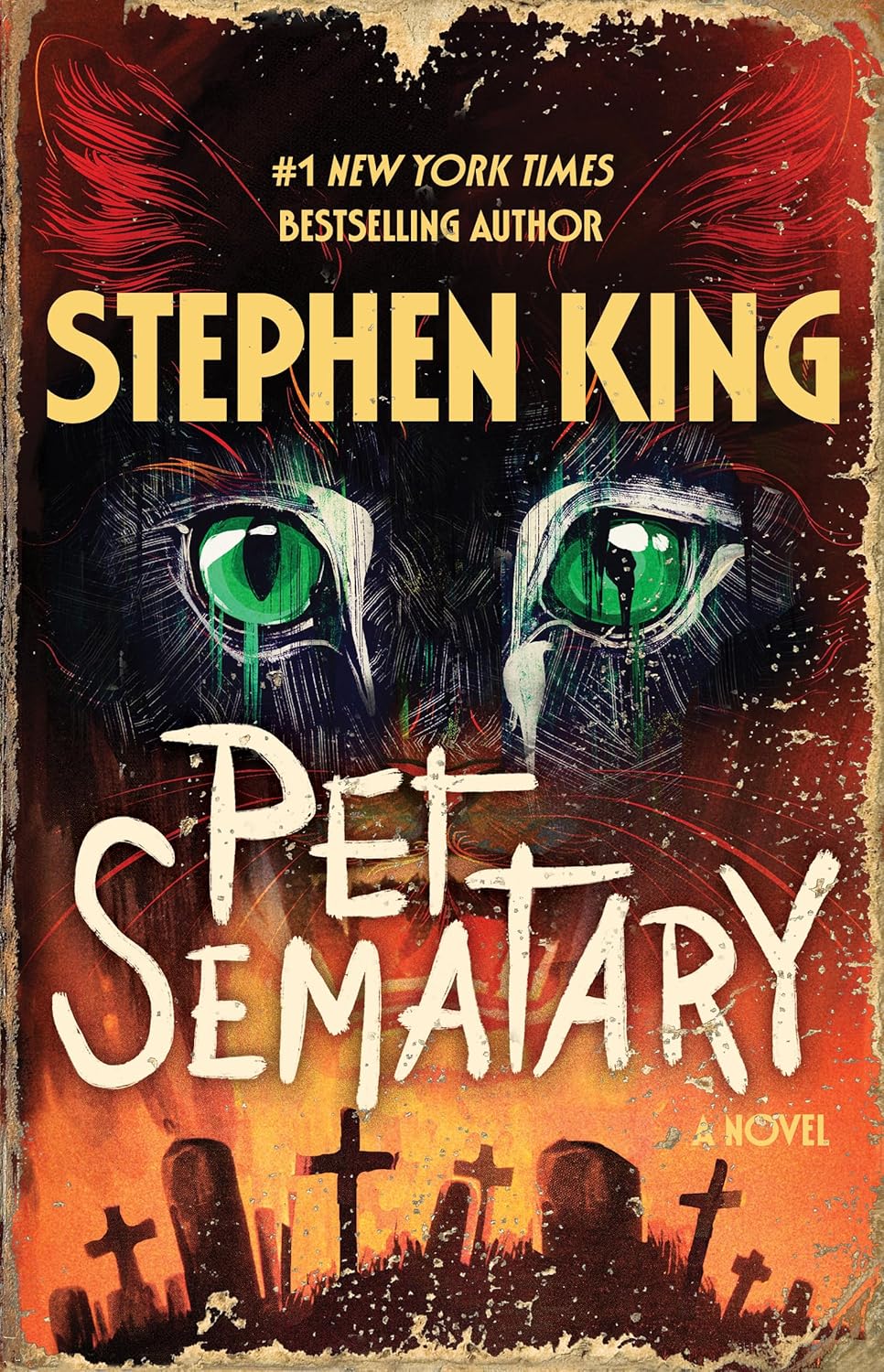
Louis Creed, a doctor from Chicago, moves his family to rural Ludlow, Maine — wife Rachel, eight-year-old daughter Ellie, toddler son Gage, and Church the cat. Their new house sits on a dangerous road where tanker trucks barrel past at lethal speeds. Their neighbour, elderly Jud Crandall, befriends the family and shows them the pet cemetery in the woods behind their property, where generations of local children have buried their animals. When Church is killed on the road, Jud takes Louis beyond the pet cemetery to older ground — Micmac burial ground — and shows him what happens when you bury something there. Church comes back. But he doesn't come back right.
King wrote Pet Sematary while living in Orrington, Maine, near a road where pets were frequently killed and where local children had created a pet cemetery with a misspelled sign. His own daughter's cat was killed on that road, and his young son nearly ran into traffic before King caught him. The novel, published in 1983, became one of King's most disturbing works — the one he has called his most frightening, the one he nearly didn't publish because it felt too dark. It examines parental grief with unflinching honesty: what would you do if death took your child, and what would you become if you refused to accept that loss?
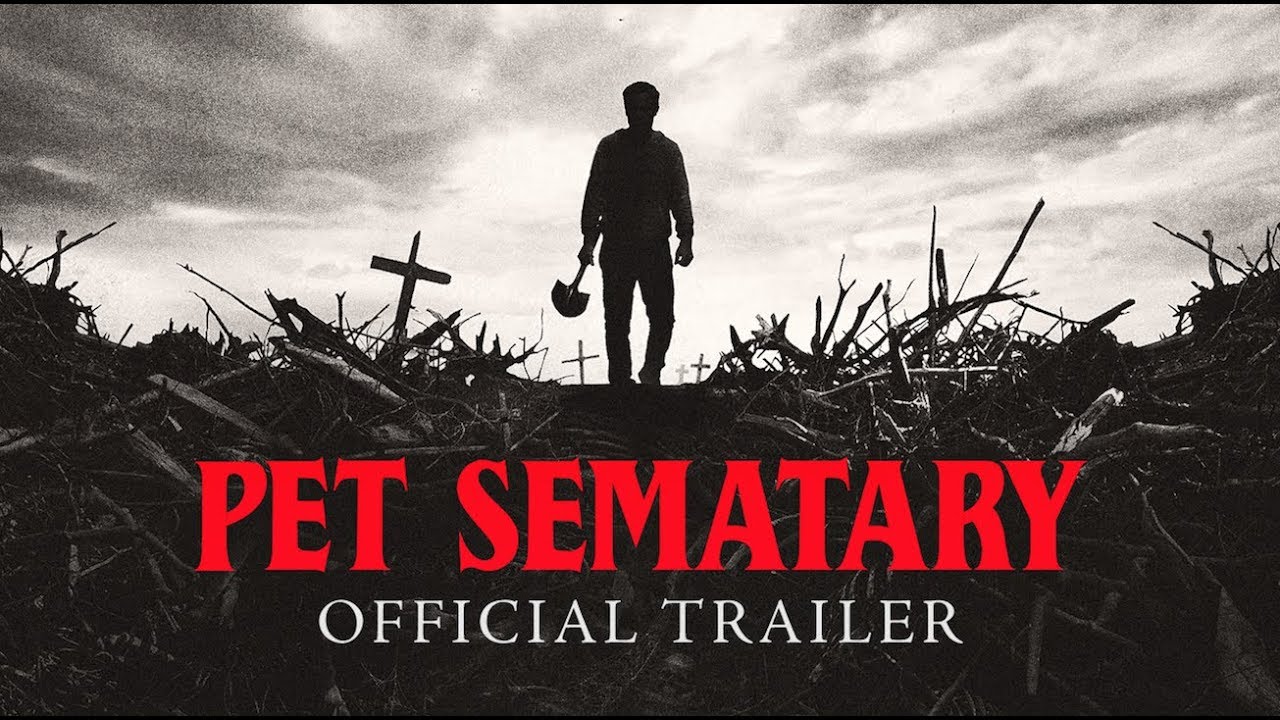
The 2019 film, directed by Kevin Kölsch and Dennis Widmyer, stars Jason Clarke as Louis, Amy Seimetz as Rachel, and John Lithgow as Jud. It received mixed reviews — praised for atmosphere and Lithgow's performance, debated intensely for one major structural change. The film grossed $113 million worldwide and stands as the second theatrical adaptation, following Mary Lambert's 1989 version.
| Character | In the Book | In the The Movie |
|---|---|---|
| Louis Creed Jason Clarke |
A rational doctor whose scientific worldview collapses when grief and the burial ground's power combine; King gives us his full interior descent. | Clarke plays Louis with desperate competence, but the film cannot convey the full psychological record of a man arguing himself into catastrophe. |
| Rachel Creed Amy Seimetz |
Haunted by her sister Zelda's death from spinal meningitis; her fear of death is extensively developed and psychologically grounded. | Seimetz brings intelligence and terror to Rachel, and the Zelda sequences are effective, but the backstory is somewhat compressed. |
| Jud Crandall John Lithgow |
The kindly neighbour who knows the burial ground's secret and cannot stop himself from sharing it, despite knowing the cost. | Lithgow's finest work in the film — warm, weathered, carrying a sadness that suggests he's been waiting his whole life to tell someone and knows it will end badly. |
| Ellie Creed Jeté Laurence |
The eight-year-old daughter who loves Church and asks difficult questions about death; she survives the novel's events. | The film kills Ellie instead of Gage, allowing the resurrected child to speak and interact; Laurence plays both versions effectively. |
| Gage Creed Hugo and Lucas Lavoie |
The toddler son killed by a tanker truck on Route 15; what Louis does with Gage's body is the novel's central horror. | Gage survives in the 2019 film — the adaptation's most controversial change, reversing the novel's choice of which child dies. |
Key Differences
Ellie dies instead of Gage
The film's most significant and controversial change: the 2019 adaptation kills Ellie, the eight-year-old daughter, instead of Gage, the toddler son. In King's novel, Gage is hit by an Orinco tanker truck on Route 15 during a family kite-flying outing — Louis nearly catches him, misses by inches, and watches his son die. What Louis then does with the Micmac burial ground and Gage's body forms the novel's unbearable final act. Directors Kölsch and Widmyer argued that killing Ellie would be more dramatically effective because she's a developed character who can deliver dialogue when resurrected, making her wrongness more explicit and interactive.
Novel readers remain divided. The book's choice is more devastating precisely because Gage is so young, so innocent, so unable to understand what has happened to him — his resurrection is pure wrongness, a toddler's body animated by something that isn't him anymore. The film's choice is more conventionally dramatic and allows for horror-movie dialogue and confrontations, but it loses the specific quality of violation that makes King's version so difficult to read. Both versions work as horror; only one feels like the worst thing that could happen.
Louis's interior monologue is lost
King's novel is told largely through Louis Creed's perspective, and the book's power comes from watching a rational, intelligent man rationalize his way toward catastrophe. Louis is a doctor, a man of science, someone who believes in empirical evidence and logical explanations. The burial ground's power works on him precisely because he can justify each step: Church came back, so the ground works. Gage deserves another chance. I can control this. I know what I'm doing. We watch him argue himself into the worst decision imaginable, each step internally justified, each step more clearly wrong from the outside.
Jason Clarke plays Louis with the required quality of desperate competence, and the film gives us visual cues to his deteriorating judgment, but cinema cannot provide the full interior record that makes the novel so psychologically devastating. We lose the texture of Louis's self-deception, the specific quality of a good man dismantling his own morality through love. The film's Louis makes bad choices; the book's Louis shows us exactly how a good person becomes a monster.
John Lithgow elevates Jud Crandall
Lithgow's Jud Crandall is the 2019 film's finest element — a performance that honours King's character while bringing something new. Lithgow plays Jud as warm, weathered, and carrying a deep sadness, as if he's been waiting his whole life for someone to share the burial ground's secret with and knows the sharing will destroy them. His Jud is complicit and sympathetic simultaneously, a man who cannot stop himself from passing on knowledge that should die with him.
The novel's Jud is similarly written — he knows what the burial ground does, he's seen it before with Timmy Baterman during World War II, and yet he shows Louis anyway, driven by loneliness and the human need to share terrible knowledge. Fred Gwynne's Jud in the 1989 film remains beloved for his folksy Maine accent and tragic warmth, but Lithgow brings a different register: quieter, sadder, more aware of his own culpability. It's excellent casting that deepens rather than replaces the source material.
Rachel's Zelda trauma is compressed
The novel gives Rachel Creed substantial psychological depth through her childhood trauma: her sister Zelda died of spinal meningitis when Rachel was eight, and Rachel was left alone with Zelda's twisted, suffering body when it happened. King writes this backstory with characteristic specificity — Zelda's resentment of Rachel's health, the physical horror of the disease, Rachel's guilt and terror. Rachel's fear of death isn't abstract; it's rooted in a specific, traumatic experience that she's never processed.
The film includes the Zelda storyline and handles it effectively — the Zelda sequences are genuinely horrifying, and Amy Seimetz plays Rachel's terror with conviction. But the backstory is somewhat compressed, given less space to breathe and less connection to Rachel's present-day choices. Novel readers will find Rachel's psychology more extensively developed in the book, where her fear of death and her relationship with Louis's rationalism form a more complete character arc.
The ending's nihilism arrives faster
Both versions end in approximately the same place: darkness absolute, the Creed family destroyed, no redemption, no survival of goodness or innocence. King's novel earns this nihilism through patient accumulation — we watch Louis's self-destruction unfold step by step, each choice leading inevitably to the next, until the final pages deliver an ending so bleak that King himself considered it too dark. The book's final image — Rachel returning from the dead, Louis waiting for her — is brief, understated, and devastating precisely because we've watched Louis become someone who would welcome that return.
The film arrives at its dark ending more quickly and with less of the moral horror that makes the novel so difficult. The 2019 version adds a final sequence showing the resurrected family together, which makes the horror more explicit but less psychologically devastating. Both endings work as horror; the novel's works as tragedy. The book's nihilism feels earned through Louis's choices; the film's feels more like genre convention.
Yes — the novel's interiority is the experience, and King's version of the central tragedy lands with more devastating force than the film's alteration. Read first to understand why King called this his most frightening novel, to experience Louis's psychological descent in full, and to judge the film's structural change against the original. The book is a sustained study in grief and the irrationality of parental love; the film is a competent horror movie that changes the story's heart without improving it.
The film is worth watching after reading — Lithgow's performance alone justifies it, and the debate over which child should die is genuinely interesting. But the book is the version that will stay with you, the one that examines what grief can make us do with unflinching honesty. Read it first. Then watch the film and decide whether Ellie or Gage makes the story more unbearable.
Should You Read First?
Yes — the novel's interiority is the experience, and King's version of the central tragedy lands with more devastating force than the film's alteration. Read first to understand why King called this his most frightening novel, to experience Louis's psychological descent in full, and to judge the film's structural change against the original. The book is a sustained study in grief and the irrationality of parental love; the film is a competent horror movie that changes the story's heart without improving it.
The film is worth watching after reading — Lithgow's performance alone justifies it, and the debate over which child should die is genuinely interesting. But the book is the version that will stay with you, the one that examines what grief can make us do with unflinching honesty. Read it first. Then watch the film and decide whether Ellie or Gage makes the story more unbearable.
King's darkest novel is a sustained study in parental grief and the irrationality of love — how a father's inability to accept death leads him somewhere no rational man should go, step by internally justified step. The 2019 film is atmospheric, anchored by Lithgow's excellent Jud, and makes a structural change to the novel's central horror that is defensible but not an improvement. The book is the version that will stay with you, the one that scared even Stephen King. Read it. Then watch the film and argue about which child's death is more unbearable.