The Story in Brief
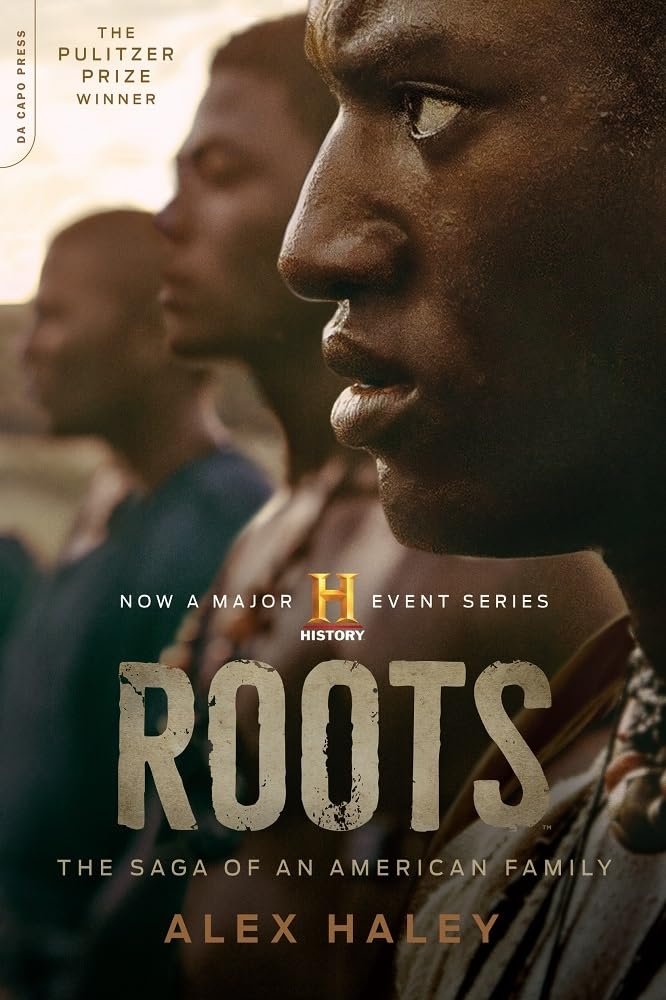
Roots traces seven generations of Alex Haley's family, beginning with Kunta Kinte, a Mandinka warrior captured in 1767 Gambia and enslaved in Virginia. The novel follows Kunta's daughter Kizzy, sold away after helping a slave escape; her son Chicken George, a cockfighter who earns his freedom; and George's son Tom, a blacksmith who lives to see emancipation. Haley's 688-page narrative ends with the author's own genealogical quest to trace his ancestry back to Kunta Kinte's village of Juffure.
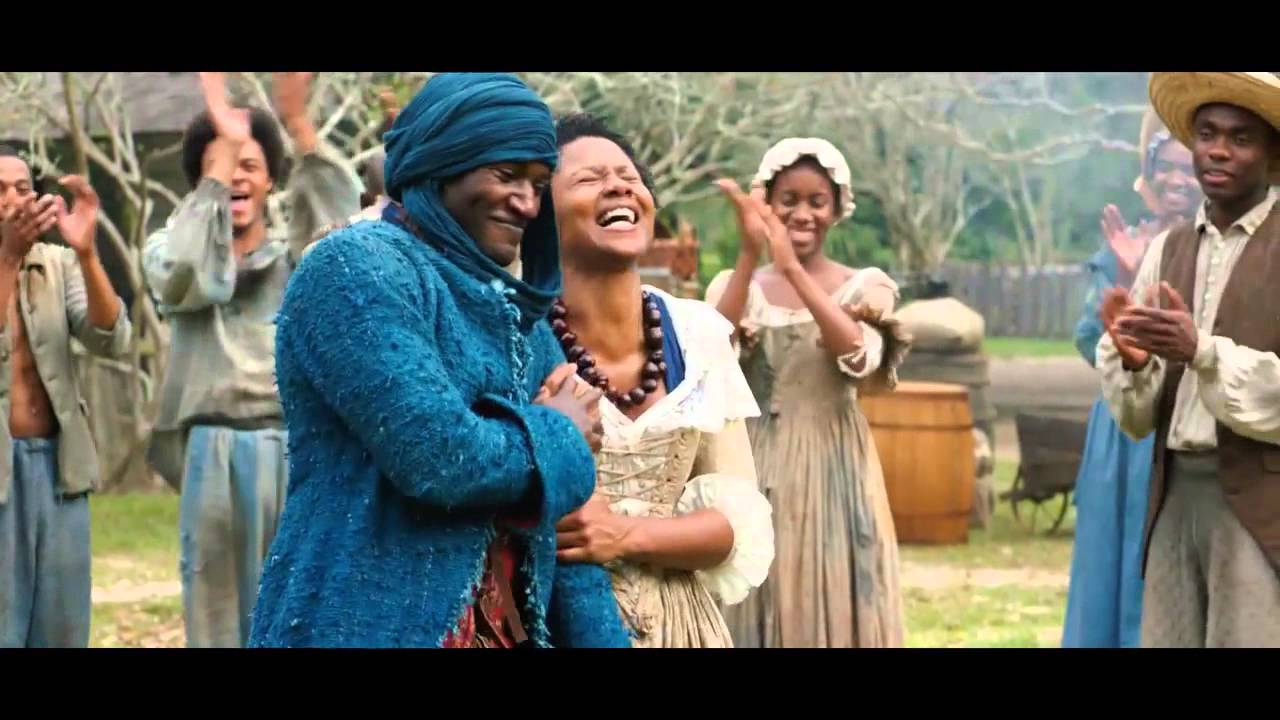
The 2016 History Channel miniseries, produced by Mark Wolper (son of the original 1977 miniseries producer), reimagines the story across four nights with a cast including Malachi Kirby as Kunta Kinte, Forest Whitaker as Fiddler, and Laurence Fishburne as Alex Haley. Directors Phillip Noyce, Mario Van Peebles, Thomas Carter, and Bruce Beresford split the episodes. The remake earned four Emmy nominations and sparked renewed conversation about slavery's representation on television.
Published during America's bicentennial, Roots spent 22 weeks atop the New York Times bestseller list and won the Pulitzer Prize special award. The book became a cultural phenomenon, though later scholarship questioned Haley's genealogical claims and a plagiarism lawsuit resulted in a settlement with Harold Courlander.
| Character | In the Book | In the The Movie |
|---|---|---|
| Kunta Kinte Malachi Kirby |
Haley devotes 200 pages to Kunta's African childhood, his Mandinka training, and his internal monologues preserving his native language and customs through decades of enslavement. | Kirby's Kunta is physically defiant—the foot-whipping scene is brutal—but the miniseries compresses his African life into 20 minutes and his psychological resistance into reaction shots. |
| Kizzy E'myri Crutchfield |
Kunta's daughter learns to read from Missy Anne, uses that literacy to forge a travel pass, and suffers sale and rape as consequences—a 150-page arc exploring literacy as both weapon and curse. | Crutchfield captures Kizzy's heartbreak when Missy Anne betrays her, but the miniseries rushes through her years on the Lea plantation to reach Chicken George's story. |
| Chicken George Regé-Jean Page |
George dominates three chapters—his cockfighting career, his trip to England with Master Lea, his complex pride in his skills, and his eventual purchase of freedom at age 60. | Page brings swagger and charm, but the miniseries cuts George's English sojourn entirely and reduces his cockfighting to montage, making him a charismatic supporting player rather than a protagonist. |
| Tom Sedale Threatt Jr. |
The blacksmith who lives through the Civil War, Tom negotiates freedom for his family and witnesses the first generation born free—Haley's grandfather. | Tom appears primarily in the final episode, his blacksmithing skill and his negotiations with the Murray family compressed into a few key scenes before the emancipation finale. |
| Fiddler Forest Whitaker |
The enslaved musician who mentors young Kunta, teaching him survival through accommodation—a pragmatist who lives into old age by bending rather than breaking. | Whitaker's Fiddler is the miniseries' moral center, his weathered face conveying decades of compromise, though his later years and death receive less attention than in the book. |
Key Differences
Kunta's African Childhood Gets Gutted
Haley spends the first 200 pages in Juffure, detailing Kunta's manhood training, his brothers Lamin and Suwadu, his mother Binta's cooking, his father Omoro's dignity, and the Mandinka rituals that shape his identity. You learn the word "toubob" (white person) alongside Kunta, understand why he treasures his saphie charm, and feel the weight of his warrior training before the capture.
The miniseries gives Juffure 20 minutes. Kunta's family appears in brief scenes, his manhood ceremony is a montage, and his capture happens in episode one's first act. Malachi Kirby conveys Kunta's pride, but without the book's foundation, his later refusal to accept the name Toby feels like generic defiance rather than the specific preservation of Mandinka identity.
The whipping scene where Kunta finally says "Toby" lands harder in the book because you've spent months inside his head, hearing him recite Mandinka words to himself, remembering his father's lessons. The miniseries makes it brutal spectacle; the book makes it spiritual death.
The Middle Passage Loses Its Psychological Horror
The miniseries depicts the slave ship's physical horror effectively—the hold's darkness, the chained bodies, the suicide attempts, the casual violence of the crew. But Haley's 30-page Middle Passage sequence is a psychological descent, tracking Kunta's loss of time sense, his hallucinations, his fantasies of killing the toubob, and his gradual realization that death might be preferable to this floating hell.
The book makes you endure the passage day by day, feeling Kunta's muscles atrophy, his mind fracture, his hope drain. The miniseries makes you witness it—a crucial difference. You see the horror but don't inhabit it.
Chicken George's Complexity Becomes Charisma
In the book, George is a study in contradictions—proud of his cockfighting skill yet ashamed it comes from his white father Tom Lea, loyal to Master Lea yet desperate for freedom, vain about his appearance yet aware that vanity is survival. His trip to England with Lea, where he sees free Black people and realizes what he's missing, transforms him. He returns to buy his family's freedom, a process that takes years and costs him his pride.
Regé-Jean Page's George is charming and defiant, but the miniseries cuts the England trip, compresses his cockfighting career into montage, and rushes his freedom purchase. Page delivers swagger where the book delivers ambivalence. You like miniseries George; you understand book George.
Kizzy's Literacy Arc Gets Simplified
The book makes Kizzy's literacy a double-edged sword. Missy Anne teaches her to read as a childhood game, a secret bond between plantation girls. When Kizzy uses that literacy to forge a travel pass for a slave she loves, she's sold south as punishment. Her reading ability—the thing that made her valuable, that connected her to her father's stories—becomes the weapon that destroys her life.
The miniseries includes these beats but doesn't explore the irony. E'myri Crutchfield's Kizzy is heartbroken by Missy Anne's betrayal, but the show treats literacy as straightforward empowerment rather than the complicated gift-curse Haley depicts. The book asks what literacy means when it can't save you; the miniseries just shows that it can't.
The Generational Scope Collapses
Haley gives roughly equal weight to seven generations, spending 80-100 pages with each. You feel the passage of time, the accumulation of small victories and devastating losses, the way family stories get passed down and distorted. Tom's children hear about Kunta Kinte as legend; Haley himself hears about "the African" as faint family myth.
The miniseries front-loads Kunta's story, then accelerates through subsequent generations. Tom appears primarily in the final episode. The post-emancipation generations—Haley's grandfather and father—get brief epilogue treatment. The book is about generational endurance; the miniseries is about Kunta Kinte with sequels.
Read first if you want to understand why Roots mattered in 1976. The book's power lies in its accumulation—the way Haley makes you live through decades of small humiliations, brief joys, and crushing losses until you feel the weight of generational trauma. The miniseries delivers the story's highlights; the book delivers its texture. Kunta's internal monologues, Kizzy's literacy lessons, George's cockfighting pride, Tom's blacksmith negotiations—these aren't just plot points but psychological studies that the miniseries can only sketch.
Watch first if you want the story's emotional core without the 688-page commitment. The miniseries captures the major beats and benefits from powerful performances, particularly Forest Whitaker's Fiddler and Malachi Kirby's physical embodiment of Kunta's defiance. But know that you're getting the CliffsNotes version—faithful in plot, abbreviated in depth. The book asks you to endure the journey; the miniseries asks you to witness it.
Should You Read First?
Read first if you want to understand why Roots mattered in 1976. The book's power lies in its accumulation—the way Haley makes you live through decades of small humiliations, brief joys, and crushing losses until you feel the weight of generational trauma. The miniseries delivers the story's highlights; the book delivers its texture. Kunta's internal monologues, Kizzy's literacy lessons, George's cockfighting pride, Tom's blacksmith negotiations—these aren't just plot points but psychological studies that the miniseries can only sketch.
Watch first if you want the story's emotional core without the 688-page commitment. The miniseries captures the major beats and benefits from powerful performances, particularly Forest Whitaker's Fiddler and Malachi Kirby's physical embodiment of Kunta's defiance. But know that you're getting the CliffsNotes version—faithful in plot, abbreviated in depth. The book asks you to endure the journey; the miniseries asks you to witness it.
The book earns its length by making you inhabit seven generations of survival, while the miniseries compresses that endurance into four nights of powerful but abbreviated drama. Haley's prose turns genealogy into lived experience; the miniseries turns it into prestige television. Read the book for the full weight of the journey—the miniseries will feel like watching someone else's family photos instead of living through the album yourself.