
The Story in Brief
Jackson, Mississippi, 1962. Eugenia "Skeeter" Phelan has returned from college with ambitions to write, and begins interviewing the Black domestic workers of her white social circle — Aibileen Clark, a dignified and quietly furious maid who has raised seventeen white children, and Minny Jackson, her sharp-tongued friend who cannot keep a job because she refuses to stay silent — to document their experience of working in white households in the Jim Crow South. The project is illegal, dangerous, and eventually world-changing for everyone involved.
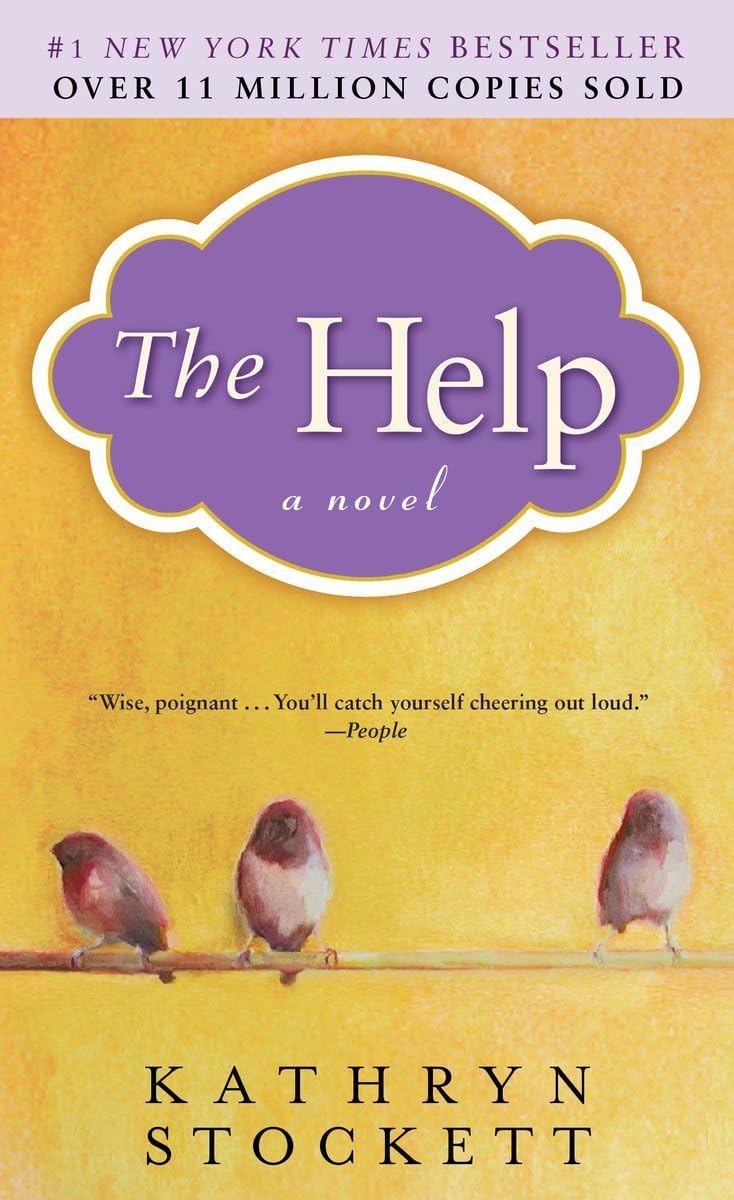
Kathryn Stockett's 2009 novel tells the story through three alternating first-person voices and became one of the bestselling debut novels of its decade, spending more than 100 weeks on the New York Times bestseller list. Tate Taylor's 2011 film, starring Viola Davis and Octavia Spencer alongside Emma Stone, was nominated for four Academy Awards and won Best Supporting Actress for Spencer. The film grossed $216 million worldwide and launched a significant cultural conversation about whose stories get told and by whom — a conversation that continues to shape how both versions are read and received.
| Character | In the Book | In the The Movie |
|---|---|---|
| Aibileen Clark Viola Davis |
A fifty-three-year-old maid who has raised seventeen white children and lost her own son to a workplace accident; her first-person chapters are dignified, searching, and carry decades of suppressed fury. | Davis brings a contained intelligence and chosen dignity to Aibileen, making every small gesture feel freighted with meaning — her performance was nominated for Best Actress and is widely considered one of the defining screen portrayals of the decade. |
| Minny Jackson Octavia Spencer |
Aibileen's best friend, the best cook in Jackson, and unable to keep a job because she cannot stop speaking her mind; her voice is arch, furious, and consistently the novel's funniest. | Spencer won the Academy Award for Best Supporting Actress for a performance that makes Minny's comedy and rage the same thing — she is the film's most immediately enjoyable presence and delivers the pie scene with perfect timing. |
| Eugenia "Skeeter" Phelan Emma Stone |
A twenty-two-year-old aspiring writer who returns from college to find her childhood maid Constantine gone and begins the dangerous project of interviewing Black maids; her chapters are anxious, well-intentioned, and increasingly aware of her own complicity. | Stone plays Skeeter as earnest and increasingly radicalized by what she learns, though the film's structure tilts slightly more toward her as protagonist than the novel's three-way balance allows. |
| Hilly Holbrook Bryce Dallas Howard |
The novel's primary antagonist, president of the Junior League, and architect of the Home Help Sanitation Initiative requiring separate bathrooms for Black domestic workers; she is specific, credible, and terrifying in her certainty. | Howard plays Hilly as a villain who believes she is a reformer — the performance is precise and makes Hilly's social power feel as dangerous as any physical threat. |
| Celia Foote Jessica Chastain |
A white-trash outsider married to Hilly's ex-boyfriend, desperate to be accepted by Jackson society and unable to cook or clean; she hires Minny in secret and their relationship becomes one of the novel's most surprising friendships. | Chastain plays Celia as both comic relief and genuine pathos — her scenes with Spencer provide the film's warmest moments and demonstrate that class can complicate race in unexpected ways. |
Key Differences
The three-voice structure is the novel's greatest achievement and the film's necessary compromise
Stockett's alternating first-person narration — Aibileen, Minny, Skeeter — gives each woman a distinct voice that shapes her chapters from the inside. Aibileen's voice is dignified and searching, Minny's is arch and furious, Skeeter's is anxious and well-intentioned. The novel's richness comes from the space between these three perspectives, from what each narrator cannot or will not say about her own situation.
The film cannot fully sustain three equally weighted points of view and tilts somewhat toward Skeeter as protagonist, which shifts the story's centre of gravity away from Aibileen and Minny. This is not a failure of adaptation — film requires a clearer narrative centre than a novel with three rotating narrators — but it changes the experience. The novel gives you four hundred pages inside the minds of Black domestic workers; the film gives you two extraordinary performances that honour those voices but cannot replicate the experience of reading them.
Viola Davis as Aibileen delivers one of the defining performances of 2011
Davis's performance is contained, intelligent, and carries decades of suppressed fury with a precision that makes every small gesture feel freighted with meaning. She brings to Aibileen a specific quality of dignity that has been chosen rather than given, and her scenes with Mae Mobley — the white child she is raising — have a tenderness that makes the story's central irony quietly devastating: these children will grow up to replicate their parents' world.
Davis was nominated for the Academy Award for Best Actress; the performance deserved to win it. Her Aibileen is not a saint or a victim but a woman making calculated decisions about when to speak and when to stay silent, and Davis makes you feel the cost of every choice. The novel's Aibileen is equally well-drawn; Davis's embodiment adds a physical presence that prose can suggest but only a performer can deliver.
Octavia Spencer's Minny is the film's most immediately enjoyable presence
Spencer won the Academy Award for Best Supporting Actress and is the reason many viewers return to the film — Minny's comedy and her rage are the same thing, and Spencer makes every scene she occupies more alive. The novel's Minny is equally well-drawn and gets more page time; Spencer's embodiment adds a physical comedy that the prose can suggest but only a performer can deliver.
The pie subplot — the novel and film's most discussed single element — works in both versions as a moment of subversive power reversal, but lands differently when you're watching Spencer's face. In the novel, Minny tells the story; in the film, Spencer performs it, and the visual reveal makes the scene both darker and funnier. Her performance makes clear that Minny's sharp tongue is not a character flaw but a form of resistance, and that her inability to stay silent is both her greatest strength and her most dangerous liability.
The critical conversation about who tells this story is present in both versions
Both the novel and the film have generated significant critical discussion about a white author writing in the first person as Black domestic workers in the Jim Crow South — questions about authenticity, appropriation, and who has the standing to tell which stories. These questions were present from the novel's publication and intensified when the film became a major awards contender. The Association of Black Women Historians issued a statement in 2011 expressing concern about the film's historical accuracy and its portrayal of Black women.
The novel is a more extensive version of this conversation because it spends more time inside Aibileen and Minny's perspectives; the film's tilt toward Skeeter makes the framing question more visible. Readers and viewers approaching either version should know this context exists and that both versions have been praised for bringing attention to the experiences of Black domestic workers and criticized for centering a white protagonist in a story about Black women's lives. The conversation is part of the work's legacy.
The novel is funnier than the film, and both are funnier than their subject matter suggests
Stockett's novel is consistently funnier than its subject matter might suggest — Minny's voice in particular generates comedy from the specific absurdities of domestic life in a deeply unjust society, and the novel's pacing uses humour to modulate the emotional intensity. The extended sequences of Minny teaching Celia Foote to cook, Aibileen's observations about the white families she works for, and Skeeter's increasingly desperate attempts to fit in with the Junior League are all genuinely funny.
The film preserves much of this comedy, but the compression required for a two-hour running time means some of the novel's slower, funnier passages are abbreviated. The film is funnier than most dramas about civil rights; the novel is funnier than the film. The humour in both versions is not a distraction from the serious subject matter but a necessary part of how these characters survive — laughter as a form of resistance and a way to maintain sanity in an insane system.
Yes — the three-voice structure and the specific interiority of Aibileen and Minny are the novel's greatest achievements, and they are best encountered in full before the film's necessary compressions. The novel gives you four hundred pages inside the minds of these women; the film gives you two extraordinary performances that honour those voices but cannot fully replicate the experience of reading them. Read first for the complete Aibileen and Minny, for the extended comedy of Minny's chapters, and for the novel's more balanced three-way structure.
Watch for Davis and Spencer, who deliver performances that stand alongside the best characterisation in the book. The film is a faithful, well-crafted adaptation that makes intelligent choices about what to preserve and what to compress. But the novel's first-person voices — the way Aibileen thinks about prayer, the way Minny thinks about cooking, the way Skeeter thinks about her own complicity — are the reason the story works, and they are best encountered on the page before the screen.
Should You Read First?
Yes — the three-voice structure and the specific interiority of Aibileen and Minny are the novel's greatest achievements, and they are best encountered in full before the film's necessary compressions. The novel gives you four hundred pages inside the minds of these women; the film gives you two extraordinary performances that honour those voices but cannot fully replicate the experience of reading them. Read first for the complete Aibileen and Minny, for the extended comedy of Minny's chapters, and for the novel's more balanced three-way structure.
Watch for Davis and Spencer, who deliver performances that stand alongside the best characterisation in the book. The film is a faithful, well-crafted adaptation that makes intelligent choices about what to preserve and what to compress. But the novel's first-person voices — the way Aibileen thinks about prayer, the way Minny thinks about cooking, the way Skeeter thinks about her own complicity — are the reason the story works, and they are best encountered on the page before the screen.
Stockett's novel gives Aibileen and Minny the full weight of first-person voices across four hundred pages — their interiority, their humour, their fury, their dignity. Tate Taylor's film is a faithful, well-crafted adaptation anchored by two of the finest performances of 2011, but its slight tilt toward Skeeter as protagonist shifts the balance the novel maintains. Read first for the complete voices. Watch for Davis and Spencer, who honour those voices as completely as any adaptation could.