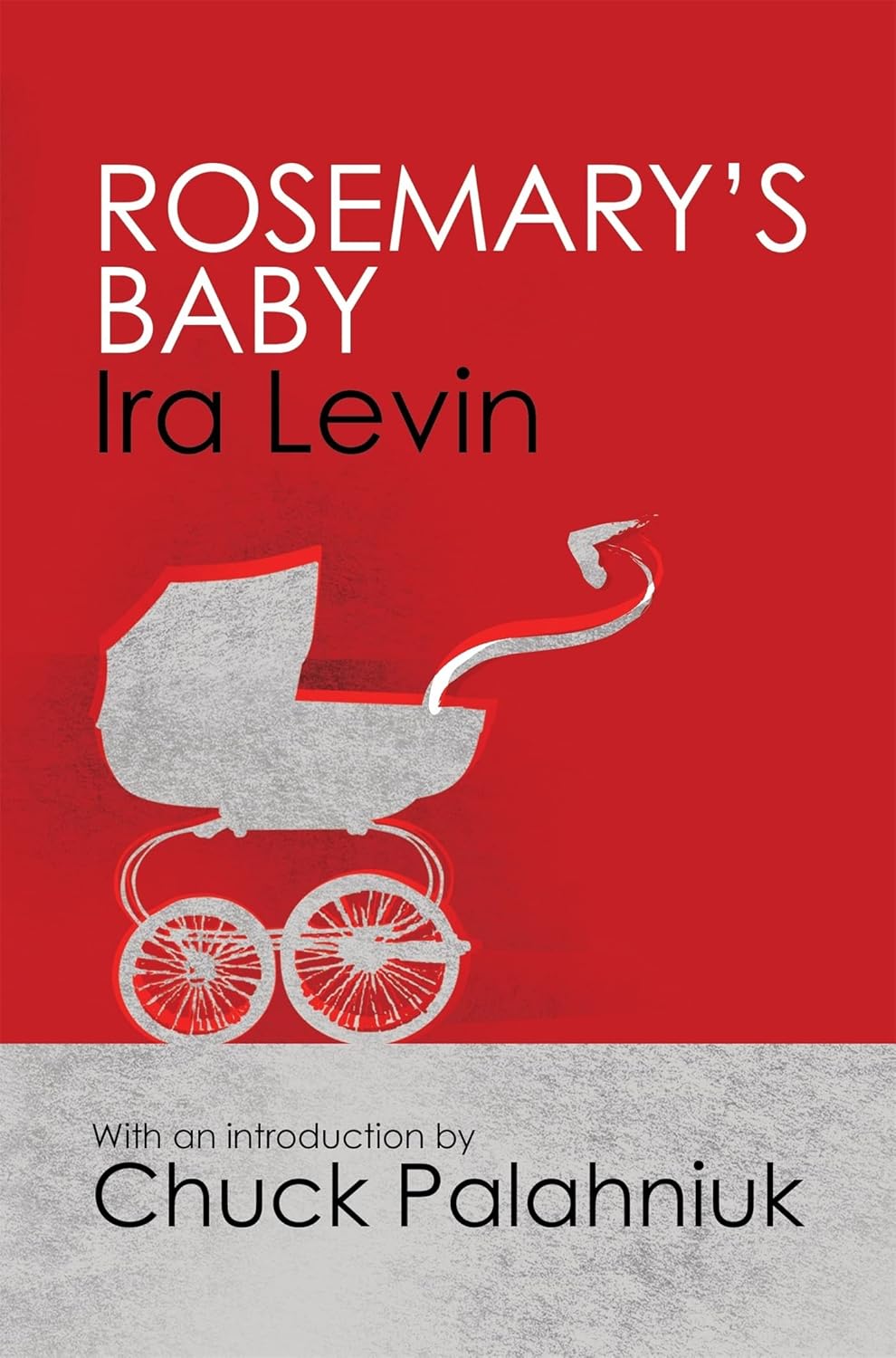
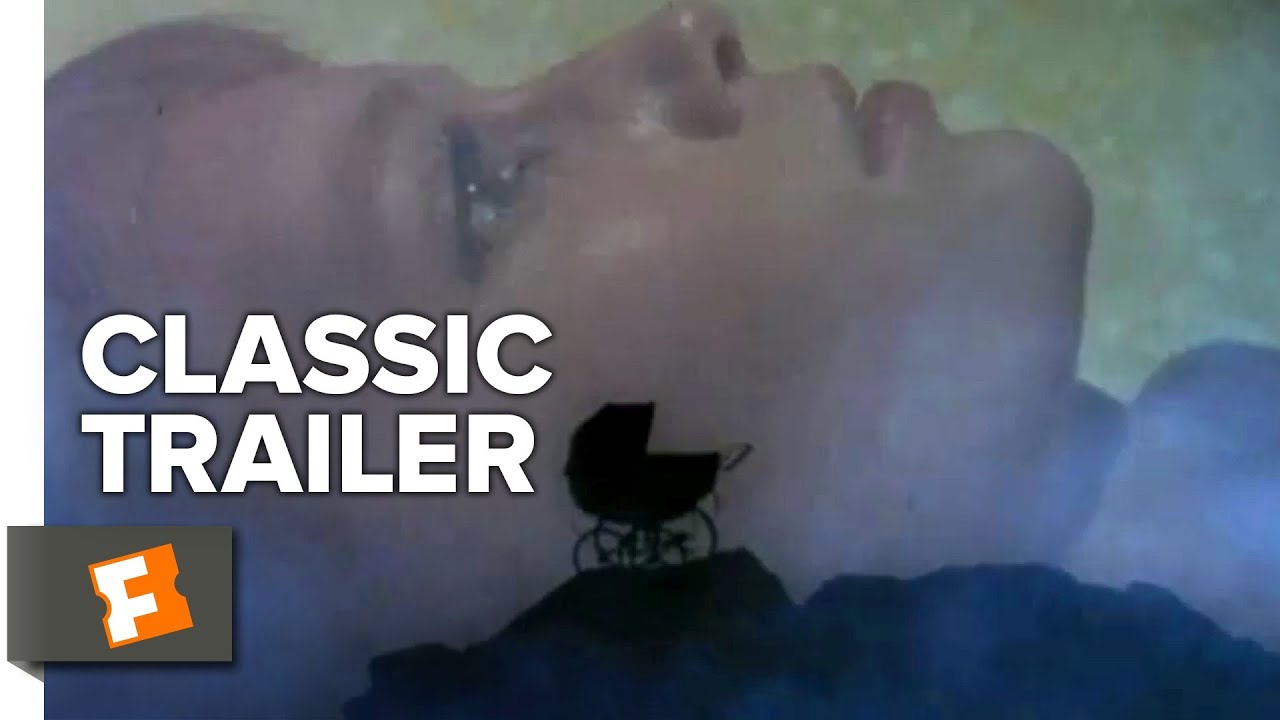
The Story in Brief
Rosemary Woodhouse and her struggling actor husband Guy move into the Bramford — a grand, Gothic Revival apartment building on Manhattan's Upper West Side with a history of witchcraft, murder, and cannibalism — where their elderly neighbors, Minnie and Roman Castevet, take an immediate and suffocating interest in the young couple. When Rosemary becomes pregnant after a night she can barely remember, during which she experienced vivid nightmares of being assaulted by a demonic figure, she begins to suspect that the Castevets and Guy have conspired to use her unborn child for occult purposes.
Ira Levin's 1967 novel became an immediate bestseller and established the template for modern domestic horror — the apartment as trap, pregnancy as body horror, a woman systematically disbelieved by every male authority figure she turns to. Roman Polanski's 1968 film adaptation, starring Mia Farrow as Rosemary, John Cassavetes as Guy, and Ruth Gordon as Minnie, was shot at the Dakota building and became one of the most critically acclaimed horror films in cinema history. Gordon won the Academy Award for Best Supporting Actress, and the film was selected for preservation in the National Film Registry in 2014.
The novel and film together represent one of the most successful author-director collaborations in adaptation history — Levin approved of nearly every change Polanski made, and both versions remain equally essential to understanding how psychological horror works in their respective mediums.
| Character | In the Book | In the The Movie |
|---|---|---|
| Rosemary Woodhouse Mia Farrow |
A young Catholic woman from Omaha whose dawning realization that everyone around her is lying is rendered through strict first-person narration that keeps the reader uncertain whether her fears are rational or delusional. | Farrow's performance is one of cinema's great portrayals of gaslighting — she becomes visibly gaunt during the pregnancy scenes and conveys Rosemary's intelligence and isolation with devastating precision. |
| Guy Woodhouse John Cassavetes |
Rosemary's husband, an actor whose career suddenly improves after befriending the Castevets — Levin keeps his complicity ambiguous until late in the novel. | Cassavetes plays Guy with visible discomfort and guilt, making the character's betrayal more obvious to the audience than Levin's narration allows. |
| Minnie Castevet Ruth Gordon |
The elderly neighbor whose cheerful intrusiveness and constant gifts of herbal drinks gradually reveal themselves as part of a larger conspiracy. | Gordon won the Oscar for playing Minnie with a warmth that makes her simultaneously funny and genuinely threatening — you understand why Rosemary can't bring herself to be rude even as everything Minnie does is designed to compromise her. |
| Roman Castevet Sidney Blackmer |
Minnie's husband, a courtly older man who claims to have traveled the world — revealed to be Steven Marcato, son of a witch who died in the Bramford. | Blackmer plays Roman with urbane menace, his performance complementing Gordon's more overtly comic approach. |
| Dr. Sapirstein Ralph Bellamy |
The obstetrician recommended by the Castevets who dismisses all of Rosemary's concerns about her pregnancy and prescribes daily vitamin drinks that make her increasingly ill. | Bellamy plays Sapirstein as a figure of patriarchal medical authority whose calm dismissals of Rosemary's pain are more chilling than any overtly villainous behavior. |
Key Differences
The film is extraordinarily faithful to the novel's structure and dialogue
Polanski adapted Levin's novel scene by scene, keeping most of the dialogue verbatim and preserving the narrative's careful pacing. The famous Scrabble game scene, Rosemary's haircut at Vidal Sassoon, the New Year's Eve party where she meets Hutch, the lunch at the Time-Life Building where she reveals her suspicions — all of these appear in the film exactly as Levin wrote them. This is one of the most faithful literary adaptations in cinema history.
The only significant structural change is the compression of some of Rosemary's research into the Bramford's history and the Castevets' background. The novel includes more detail about the building's past residents and Roman's true identity as Steven Marcato. Polanski streamlined these revelations without losing their impact, trusting the audience to follow Rosemary's logic without extensive exposition.
The novel's strict first-person perspective creates genuine ambiguity about the conspiracy
Levin's greatest achievement is his control of point of view — we experience only what Rosemary experiences, and the novel maintains genuine uncertainty about whether the conspiracy is real or whether Rosemary is experiencing a psychotic break brought on by pregnancy hormones and isolation. The reader shares her doubt and her certainty in alternation, and the ambiguity holds until the final pages when she sees her baby's eyes.
The film necessarily makes the conspiracy more visible to the audience. John Cassavetes plays Guy's guilt and discomfort in ways that telegraph his complicity. The staging of scenes Rosemary isn't present for — Guy's conversation with Roman about his rival actor going blind, the coven members gathering in the Castevets' apartment — confirms what the novel keeps ambiguous. This is a small but inevitable loss; film cannot sustain the same kind of unreliable narration that prose can.
Mia Farrow's physical transformation makes the pregnancy horror visceral
Farrow lost significant weight during filming to portray Rosemary's physical deterioration during the pregnancy. Her increasingly gaunt appearance — the famous pixie haircut making her face look even more skeletal — gives the film a documentary quality that is deeply unsettling. When she looks at herself in the mirror and sees how thin she's become, the shock on her face is genuine.
The novel describes Rosemary's weight loss and pain, but prose cannot achieve what Farrow's visible transformation does. Her performance makes the body horror of pregnancy — the sense of something growing inside you that you cannot control — more immediate than any amount of description could. Frank Sinatra served her divorce papers on set because she refused to leave the production; her commitment to the role is visible in every frame.
The dream sequence is more explicit and more ambiguous in the film
The scene in which Rosemary is drugged and raped by Satan while the coven watches is the novel's most difficult passage and the film's most controversial sequence. Levin describes the assault through Rosemary's drugged, fragmented consciousness — she believes she's on a yacht, sees the Pope, feels claws scratching her skin. The novel keeps the scene brief and maintains some distance through its dreamlike narration.
Polanski stages the sequence as a surreal nightmare that lasts several minutes of screen time. We see Rosemary's naked body painted with occult symbols, the coven members chanting around her, and a figure with yellow eyes mounting her while she drifts in and out of consciousness. The scene is simultaneously more explicit than the novel — we see more of what happens — and more ambiguous, because Polanski films it with the logic of a nightmare rather than realistic staging. It remains one of cinema's most disturbing sequences precisely because it refuses to clarify what is real and what is hallucination.
Ruth Gordon's Oscar-winning performance makes Minnie both comic and terrifying
Gordon plays Minnie Castevet as a cheerful, intrusive busybody whose constant gifts of food and herbal drinks gradually reveal themselves as instruments of control. She won the Academy Award for Best Supporting Actress at age 72, and the performance is a masterclass in playing villainy through excessive friendliness. Her Minnie is funny — the way she barges into the apartment, her malapropisms, her insistence on being involved in every aspect of Rosemary's pregnancy — and genuinely threatening precisely because her warmth makes it impossible for Rosemary to refuse her without seeming rude or paranoid.
The novel's Minnie is equally well-drawn on the page, but Gordon's performance adds a physical comedy and vocal specificity that makes the character iconic. Her line readings — "He chose you out of all the world!" — are simultaneously absurd and chilling. This is the film's most important creative achievement after Farrow's performance, and it elevates material that could have been played as straightforward villainy into something more complex and more disturbing.
Yes — Levin's controlled first-person narration is the experience, and the novel's genuine uncertainty about whether Rosemary is right or delusional is best encountered before the film's staging makes the conspiracy more visible. The novel is short and propulsive — you can read it in an evening — and Levin's prose style is clean and precise, never overwritten. The book's final revelation, when Rosemary sees her baby's eyes and realizes everything she feared was true, lands with devastating force precisely because Levin has kept you uncertain until that moment.
Then watch Polanski's film immediately after and notice what he kept, what he added, and how much of Levin's vision he understood completely. The film is not an illustration of the novel but a parallel work of art that uses cinema's specific tools — Farrow's physical presence, Gordon's performance, the claustrophobic framing of the Dakota's interiors — to achieve the same psychological effects through different means. This is one of the rare cases where both versions are genuinely essential and neither diminishes the other.
Should You Read First?
Yes — Levin's controlled first-person narration is the experience, and the novel's genuine uncertainty about whether Rosemary is right or delusional is best encountered before the film's staging makes the conspiracy more visible. The novel is short and propulsive — you can read it in an evening — and Levin's prose style is clean and precise, never overwritten. The book's final revelation, when Rosemary sees her baby's eyes and realizes everything she feared was true, lands with devastating force precisely because Levin has kept you uncertain until that moment.
Then watch Polanski's film immediately after and notice what he kept, what he added, and how much of Levin's vision he understood completely. The film is not an illustration of the novel but a parallel work of art that uses cinema's specific tools — Farrow's physical presence, Gordon's performance, the claustrophobic framing of the Dakota's interiors — to achieve the same psychological effects through different means. This is one of the rare cases where both versions are genuinely essential and neither diminishes the other.
Levin's novel is a masterwork of controlled domestic horror — a woman's dawning, systematically disbelieved terror rendered through strict first-person precision that keeps the reader uncertain whether the conspiracy is real until the final pages. Polanski's film is one of cinema's great adaptations: scene-for-scene faithful, visually suffocating, and anchored by Farrow and Gordon doing career-defining work. Read the book first to experience Levin's ambiguity. Watch the film immediately after to see how Polanski translated psychological horror into visual terms. Then argue about which version scared you more — it's the closest call on this site.