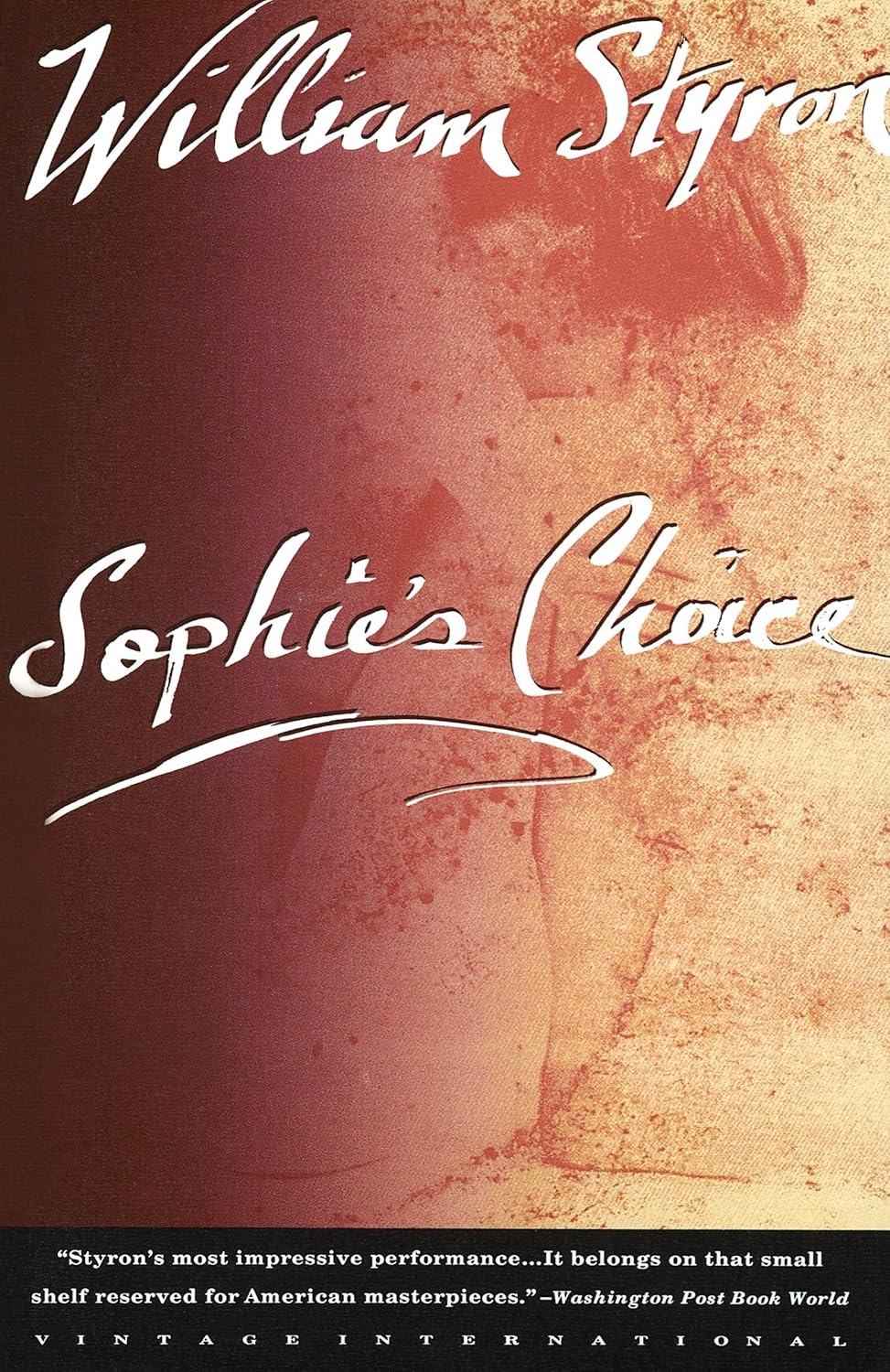
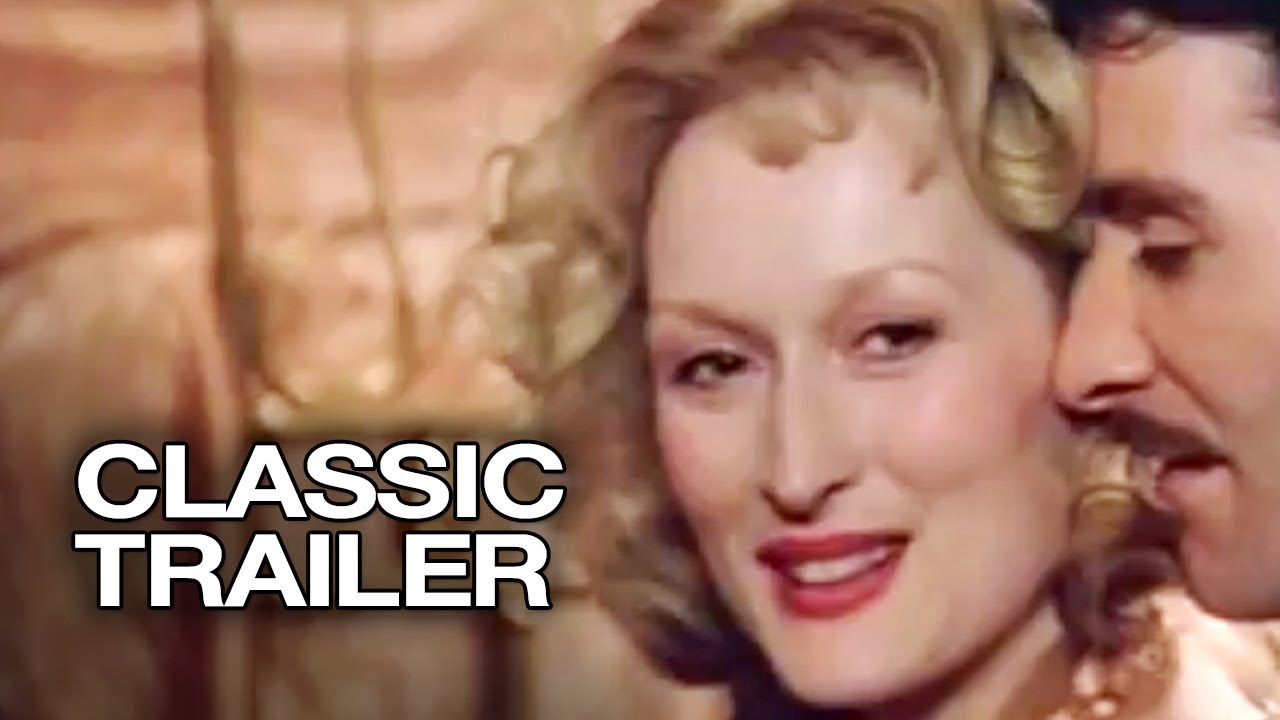
The Story in Brief
In the summer of 1947, Stingo—a 22-year-old aspiring novelist from Virginia—moves into a pink boarding house in Flatbush, Brooklyn, where he meets Sophie Zawistowska, a Polish Catholic survivor of Auschwitz, and Nathan Landau, her brilliant but unstable Jewish lover. Stingo becomes infatuated with Sophie and drawn into the couple's passionate, volatile relationship, which oscillates between ecstatic joy and violent confrontation driven by Nathan's paranoid schizophrenia.
As Stingo grows closer to Sophie, she gradually reveals the horrors of her past: her father's anti-Semitic writings, her work as a secretary at Auschwitz, her affair with the camp commandant Rudolf Höss, and finally the unbearable choice a Nazi doctor forced upon her at the selection platform—to surrender one of her two children to immediate death. Alan J. Pakula's 1982 adaptation earned Meryl Streep the Academy Award for Best Actress and marked Kevin Kline's film debut. The film grossed $30 million and cemented its place as one of cinema's most devastating examinations of Holocaust trauma and survivor's guilt.
| Character | In the Book | In the The Movie |
|---|---|---|
| Sophie Zawistowska Meryl Streep |
A Polish Catholic survivor whose backstory unfolds gradually through multiple flashbacks, revealing layers of complicity, survival, and unbearable loss. | Streep's performance emphasizes Sophie's fragility and accent work, condensing her revelations into fewer, more dramatically concentrated scenes. |
| Nathan Landau Kevin Kline |
A charismatic research biologist whose paranoid schizophrenia and drug addiction are explored in clinical detail, including his brother's interventions. | Kline plays Nathan's volatility with theatrical intensity but the film reduces exposition about his mental illness and family background. |
| Stingo Peter MacNicol |
The novel's narrator and Styron's semi-autobiographical stand-in, whose Southern upbringing, sexual inexperience, and literary ambitions receive extensive development. | MacNicol's Stingo becomes more of an observer and audience surrogate, with his personal arc and Southern identity significantly compressed. |
| Rudolf Höss Günther Maria Halmer |
The Auschwitz commandant appears in extended flashbacks where Sophie works as his secretary and attempts to seduce him to save her son. | Höss appears briefly in flashback, with the film streamlining Sophie's morally complex relationship with him into shorter sequences. |
Key Differences
Stingo's Southern Identity Is Largely Erased
Styron's novel devotes considerable space to Stingo's Virginia roots, his relationship with his dying father, his inheritance of a small sum from the sale of a slave named Artiste, and his guilt over the South's racial legacy. These elements form a deliberate parallel to Sophie's inherited guilt over her father's anti-Semitism.
Pakula's film reduces Stingo to a wide-eyed observer. His Southern accent is barely present, his father appears only in a brief phone call, and the Artiste subplot vanishes entirely. This makes the film more streamlined but removes Styron's thematic architecture—the idea that inherited guilt and historical atrocity connect across continents and generations.
Sophie's Revelations Unfold Differently
The novel structures Sophie's past as a series of nested revelations, each more damning than the last. First she claims her husband and father were resistance heroes. Then she admits her father was a virulent anti-Semite. Later she confesses to working for Höss. Only at the end does she reveal the choice itself—selecting her daughter Eva for the gas chamber to save her son Jan.
The film compresses this structure. Sophie's lies are less elaborate, and the timeline moves more quickly to the central trauma. Streep's performance carries the emotional weight, but the book's slow accumulation of moral complexity—the way Sophie's complicity and victimhood coexist—is harder to convey in two hours. The novel makes you complicit in Sophie's self-deception; the film makes you a witness to her suffering.
Nathan's Mental Illness Gets Less Explanation
Styron provides clinical detail about Nathan's paranoid schizophrenia, his brother Larry's attempts to institutionalize him, and the specific delusions that fuel his rages—he believes Sophie is unfaithful, that Stingo is a plagiarist, that everyone is conspiring against him. The novel treats Nathan's illness as a tragic medical reality, not just a plot device.
Kline's performance is electric, but the film offers less context. Nathan's brother Larry appears only briefly, and the pharmacological specifics of Nathan's condition are omitted. This makes Nathan feel more like a symbolic figure—the self-destructive lover—than a fully realized character. The novel's Nathan is terrifying because his illness is so precisely rendered; the film's Nathan is terrifying because Kline plays him at fever pitch.
The Auschwitz Flashbacks Are More Restrained
Styron's novel includes extended sequences at Auschwitz: Sophie's work in Höss's office, her failed seduction attempt, her glimpses of the crematoria, and the agonizing selection scene where the doctor forces her choice. The prose is unflinching but not exploitative, grounding the horror in specific sensory details—the smell of burning flesh, the sound of children crying.
Pakula films the flashbacks with muted color and careful framing, avoiding graphic violence. The choice itself is shown in a single, devastating scene: the doctor's casual cruelty, Sophie's desperate plea, the moment she points to Eva. It's one of cinema's most harrowing sequences, but it's also more contained than the novel's sustained immersion in camp life. The film trusts Streep's face to convey what the book conveys through accumulation.
The Ending Provides Less Aftermath
After discovering Sophie and Nathan's bodies—they've taken cyanide in a suicide pact—Stingo flees to a beach on Long Island. The novel gives him pages of reflection: he thinks about his father, about the South, about the manuscript he's writing. He wakes on the sand and sees a group of Black children playing, a moment that connects his Southern guilt to Sophie's European trauma in Styron's grand thematic design.
The film ends more abruptly. Stingo finds the bodies, reads Nathan's note, and the screen fades to black after a brief coda. There's no beach scene, no extended meditation. Pakula trusts the image of the two bodies in bed—Nathan's arm around Sophie—to provide closure. It's more cinematically elegant but less philosophically ambitious than Styron's conclusion.
If you watch the film first, Streep's performance will define Sophie in your imagination—her accent, her gestures, her fragility. The novel's Sophie is more elusive and morally ambiguous, harder to pin down. Reading first preserves that ambiguity and allows you to experience Styron's slow-burn structure, where each revelation recontextualizes everything before it. You'll also get the full weight of Stingo's character, which the film largely sacrifices.
If you read first, the film will feel like a greatest-hits version—powerful but compressed. You'll notice what's missing: the Southern parallels, the extended Auschwitz sequences, the clinical detail about Nathan's illness. But you'll also appreciate what Pakula and Streep achieve within their constraints: a performance that distills the novel's tragedy into two hours of devastating emotional precision. Either way, both versions demand to be experienced; they're not redundant but complementary.
Should You Read First?
If you watch the film first, Streep's performance will define Sophie in your imagination—her accent, her gestures, her fragility. The novel's Sophie is more elusive and morally ambiguous, harder to pin down. Reading first preserves that ambiguity and allows you to experience Styron's slow-burn structure, where each revelation recontextualizes everything before it. You'll also get the full weight of Stingo's character, which the film largely sacrifices.
If you read first, the film will feel like a greatest-hits version—powerful but compressed. You'll notice what's missing: the Southern parallels, the extended Auschwitz sequences, the clinical detail about Nathan's illness. But you'll also appreciate what Pakula and Streep achieve within their constraints: a performance that distills the novel's tragedy into two hours of devastating emotional precision. Either way, both versions demand to be experienced; they're not redundant but complementary.
Too Close to Call. Styron's novel is a literary monument—morally complex, structurally ambitious, unsparing in its examination of guilt and complicity. Pakula's film is a showcase for one of the greatest performances in cinema history, with Streep's Sophie achieving a tragic grandeur the novel earns through accumulation rather than embodiment. Read the book for the architecture; watch the film for the performance. Both will break your heart, just in different ways.