The Story in Brief
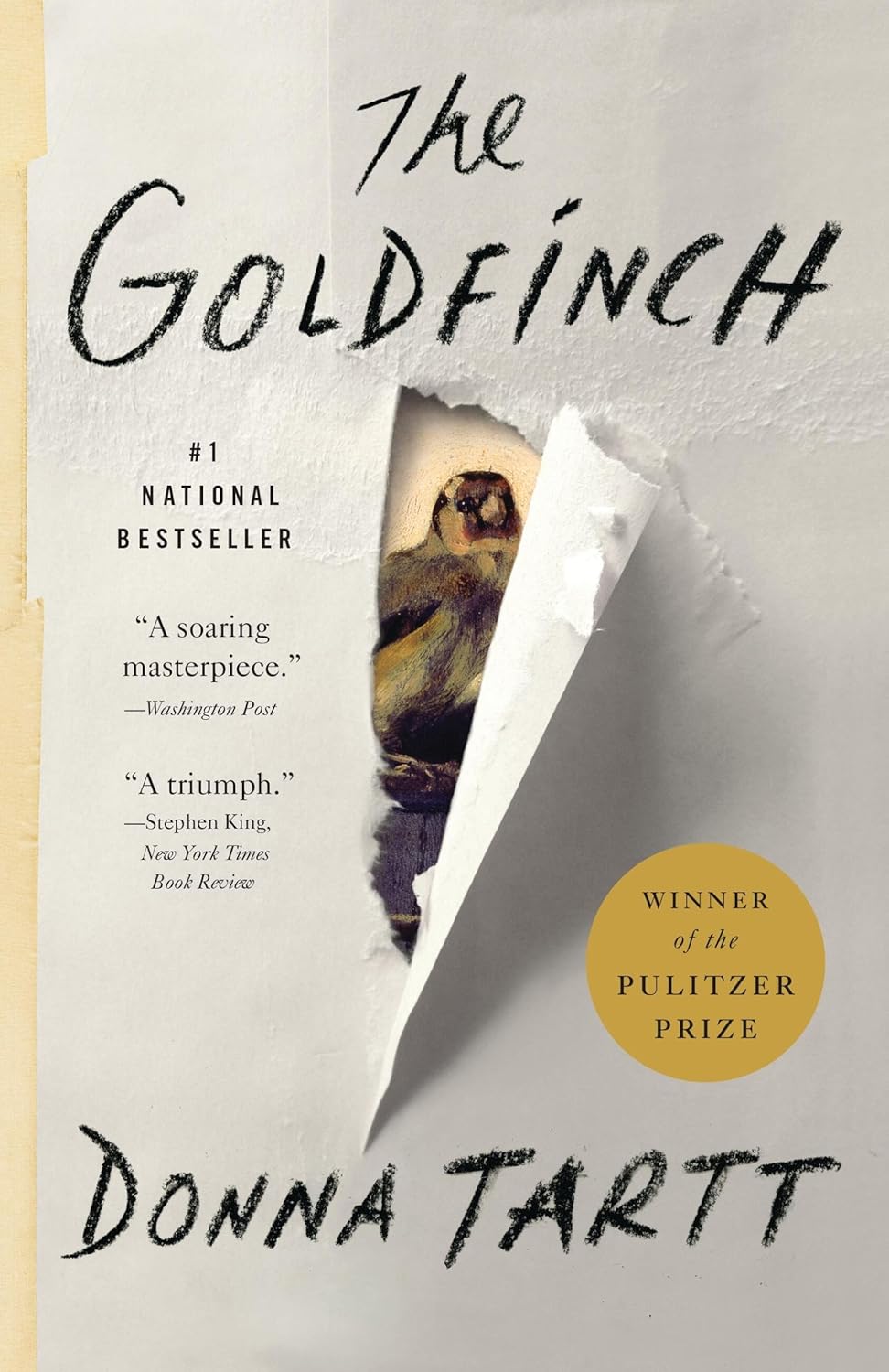
Thirteen-year-old Theo Decker survives a terrorist bombing at the Metropolitan Museum of Art that kills his mother. In the chaos, he steals a small Dutch masterpiece—Carel Fabritius's The Goldfinch—and carries it through the next decade of his life. The Barbour family takes him in temporarily, then his alcoholic father Larry whisks him to a Las Vegas McMansion where he befriends the Ukrainian transplant Boris. After his father's death, Theo returns to New York, apprentices with the antique restorer Hobie, and becomes entangled in furniture fraud while nursing an opiate addiction and an obsessive love for Pippa, a girl injured in the same bombing.
Donna Tartt's 771-page novel won the Pulitzer Prize in 2014 despite divisive reviews—some critics called it a masterpiece of grief and beauty, others found it bloated and pretentious. The 2019 film adaptation, directed by John Crowley (Brooklyn), starred Ansel Elgort as adult Theo and Oakes Fegley as the young version. It employed a non-linear structure, cutting between timelines in a way that confused audiences unfamiliar with the source material.
The movie became one of 2019's biggest flops, earning $9.9 million against a $45 million budget and receiving a 24% Rotten Tomatoes score. Critics noted that the film captured the novel's plot but missed its soul—the internal monologue that makes Theo's journey resonate.
Cast & Characters
| Character | In the Book | In the Film |
|---|---|---|
| Theo Decker Ansel Elgort / Oakes Fegley |
A deeply unreliable narrator whose guilt, addiction, and self-loathing drive 800 pages of introspection and moral compromise. | Elgort plays Theo as withdrawn and haunted, but the performance lacks the feverish desperation that defines the character on the page. |
| Boris Pavlikovsky Finn Wolfhard / Aneurin Barnard |
Theo's chaotic, amoral best friend who introduces him to drugs, theft, and a kind of reckless love—later revealed as both betrayer and savior. | Wolfhard captures young Boris's wild energy, but Barnard's adult version feels underwritten, losing the character's complexity in the condensed runtime. |
| Pippa Ashleigh Cummings |
The red-haired girl from the bombing who becomes Theo's lifelong obsession—a symbol of shared trauma he can never truly reach. | Cummings appears in only a handful of scenes, reducing Pippa to a distant figure rather than the emotional anchor she represents in the novel. |
| Hobie Jeffrey Wright |
The gentle furniture restorer who becomes Theo's surrogate father and moral compass, even as Theo deceives him with fake antiques. | Wright brings warmth and dignity to the role, delivering one of the film's few fully realized performances. |
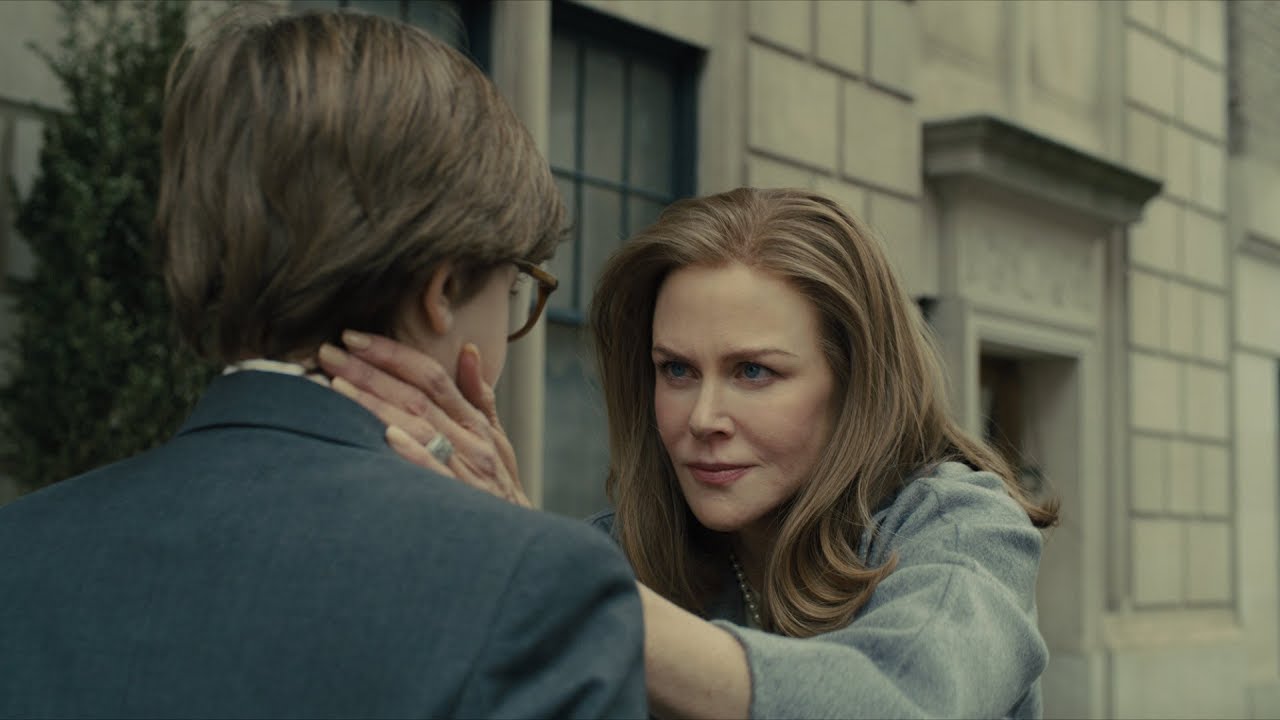
| Mrs. Barbour Nicole Kidman |
The icy WASP matriarch who unexpectedly reveals deep affection for Theo in the novel's later chapters, becoming a surrogate mother. | Kidman's performance hints at the character's hidden warmth, but the film cuts most of her emotional arc, leaving her role feeling incomplete. |
Key Differences
Theo's Addiction Gets Sanitized
The novel spends dozens of pages inside Theo's opiate haze—his reliance on pills to numb grief, his morning rituals of dosing before work, his terror of withdrawal. Tartt makes his addiction visceral and pathetic. The film shows Elgort swallowing pills in a few scenes but never conveys the dependency's grip on his life.
The Amsterdam sequence suffers most from this omission. In the book, Theo arrives strung out and desperate, his judgment clouded by drugs during the confrontation with the painting's buyers. The movie keeps the shootout but removes the pharmaceutical fog that explains his poor decisions. Without the addiction as a constant presence, Theo's self-destruction feels like a plot point rather than a lived reality.
Boris's Betrayal and Redemption Lose Impact
The novel's greatest reveal—that Boris stole the painting years ago in Las Vegas and replaced it with a civics textbook—lands with devastating force because Tartt has spent 400 pages building their friendship. Boris then redeems himself by orchestrating the painting's recovery, risking his life in Amsterdam. The film includes both beats but rushes through them in under twenty minutes.
Aneurin Barnard's adult Boris appears suddenly in New York, confesses the theft, and whisks Theo to Europe with minimal setup. The movie never establishes why Theo would trust him again or why their bond endures despite the betrayal. The book earns this loyalty through hundreds of pages of shared history—the Las Vegas nights of drinking and petty crime, the sense that Boris is the only person who truly knows Theo. The film expects us to accept it on faith.
The Non-Linear Structure Creates Confusion
Peter Straughan's screenplay cuts between three timelines—young Theo in New York, teenage Theo in Las Vegas, adult Theo in crisis—without the clear chapter breaks that guide readers through Tartt's novel. The film opens with adult Theo in an Amsterdam hotel room, then jumps backward and forward seemingly at random. Viewers unfamiliar with the book struggled to track when events occurred and why they mattered.
The novel's chronological structure allows Tartt to build Theo's trauma layer by layer. We experience the bombing, then watch its effects compound over years. The movie's fractured approach sacrifices this accumulation for a puzzle-box aesthetic that adds little beyond confusion. The Las Vegas chapters, which form a self-contained coming-of-age story in the book, become disjointed flashbacks that interrupt the present-day narrative.
Pippa Becomes a Ghost
Tartt dedicates substantial pages to Theo's obsession with Pippa—his belief that their shared trauma bonds them, his inability to move on despite her clear disinterest, his recognition that he loves an idealized version of her rather than the real person. The film reduces her to a handful of scenes: a brief encounter after the bombing, a tense dinner in adult life, a final rejection. Ashleigh Cummings barely has enough screen time to register as a character, let alone as the unattainable figure who haunts Theo's every decision.
The book makes clear that Theo's fixation on Pippa is unhealthy—a way to avoid processing his mother's death by transferring his grief onto another bombing survivor. The movie nods at this dynamic but never explores it, leaving their relationship feeling like an underdeveloped subplot rather than a window into Theo's damaged psyche.
The Philosophical Ending Gets Cut
Tartt's final fifty pages offer Theo's meditation on art, survival, and meaning—a long, winding epilogue that some readers found profound and others found insufferable. He reflects on the painting's survival through centuries of disaster, drawing parallels to his own life. The movie ends with Theo returning the painting and gazing at it in a museum, a visual echo of the novel's themes but without the explicit philosophizing.
This omission will please readers who found Tartt's conclusion overwritten, but it also removes the novel's attempt to justify its own existence. The book argues that art redeems suffering by giving it form and permanence. The film trusts the image of the painting to convey this idea without spelling it out—a more cinematic choice, but one that leaves the story feeling incomplete for those expecting the novel's grand statement of purpose.
Should You Read First?
Read the book first if you want to understand why this story captivated millions despite its flaws. Tartt's prose is dense and digressive, but it creates an immersive experience—you live inside Theo's head for 800 pages, feeling his guilt and self-loathing accumulate. The novel's length allows for the kind of character development that a two-and-a-half-hour film can't replicate. You'll understand Boris's importance, feel the weight of Theo's addiction, and grasp why the painting matters beyond its monetary value.
Watching the movie first will spoil the novel's major twists—Boris's theft, the Amsterdam climax, the painting's fate—but it won't prepare you for the book's emotional depth. The film works as a plot summary, hitting the major beats without capturing what makes them resonate. If you watch first, you'll know what happens but not why it matters. If you read first, the movie will feel like a rushed, surface-level adaptation that confirms why some books resist translation to screen.
The book wins by a wide margin—Tartt's novel is flawed but immersive, while Crowley's film is competent but hollow. The movie captures the plot but misses the interior life that makes Theo's journey worth following. Read the book for the experience; skip the movie unless you're curious how badly a prestige adaptation can misfire.