The Story in Brief
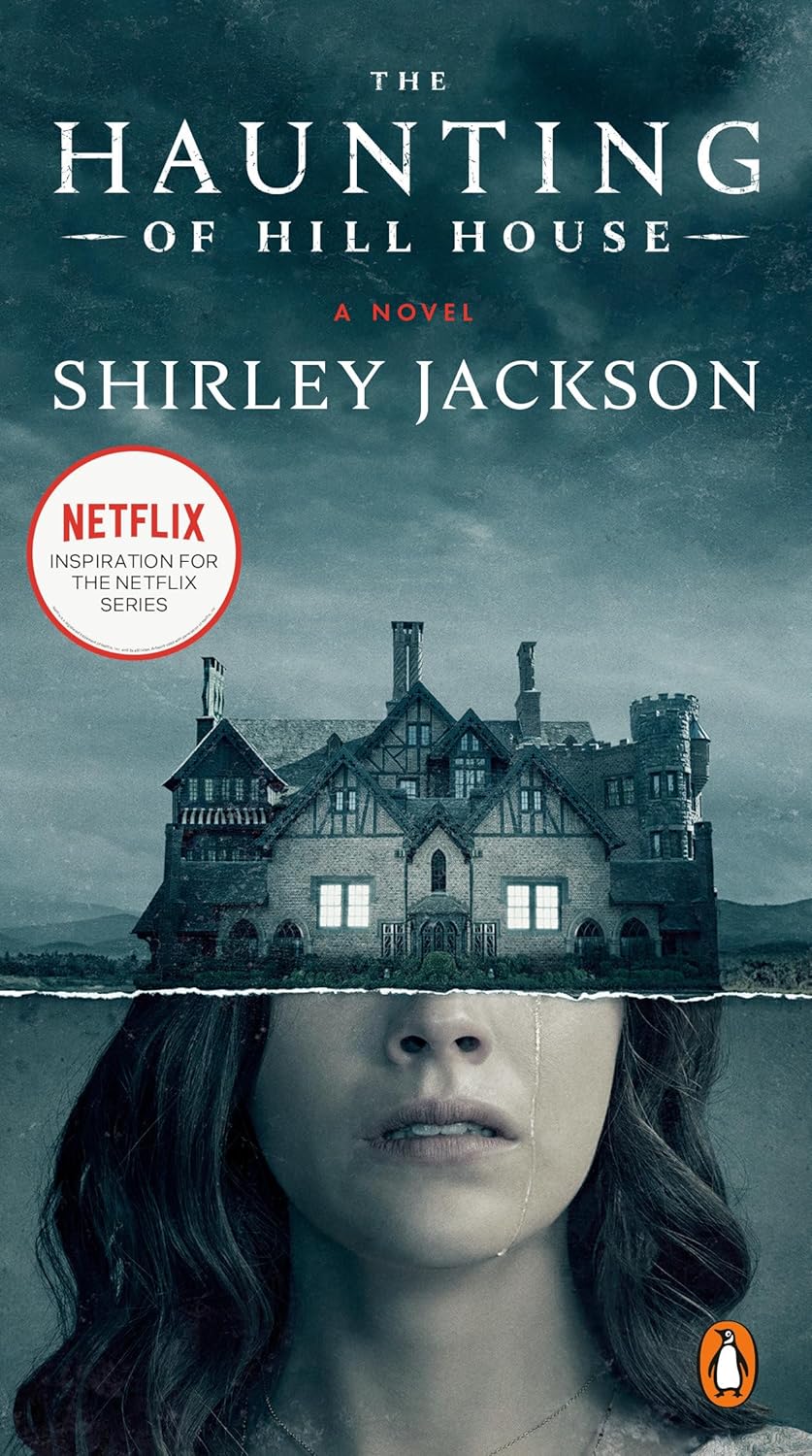
Hill House has stood for eighty years and might stand for eighty more — no live organism can continue for long to exist sanely under conditions of absolute reality, and Hill House, not sane, stands by itself against its hills, holding darkness within. Eleanor Vance, a shy, repressed woman who has spent her adult life caring for her invalid mother, joins a paranormal investigation at Hill House and slowly, irreversibly, begins to belong to it. Shirley Jackson's 1959 novel is one of the defining works of literary horror — precise, ambiguous, conducted entirely through Eleanor's unreliable consciousness in prose of extraordinary control. Mike Flanagan's 2018 Netflix series borrows Jackson's title, her house, and the names of some characters, and uses them as a framework for an entirely original story about a family and the specific ways that trauma echoes across generations. It is less an adaptation than an act of inspired homage.
Key Differences
Eleanor's consciousness
Jackson's novel is a masterwork of unreliable narration — we experience Hill House entirely through Eleanor's perception, and the horror is inseparable from the question of whether Eleanor is haunted by the house or by herself. Jackson's prose mimics Eleanor's dissociation so precisely that the novel's most disturbing passages feel like reports from inside a mind coming apart. Flanagan's series reimagines Eleanor as Nell Crain, one of five siblings, and distributes the narrative across the entire family. The novel's claustrophobic interiority becomes something more expansive and emotionally accessible. Both choices are right for their respective forms.
Flanagan's family drama
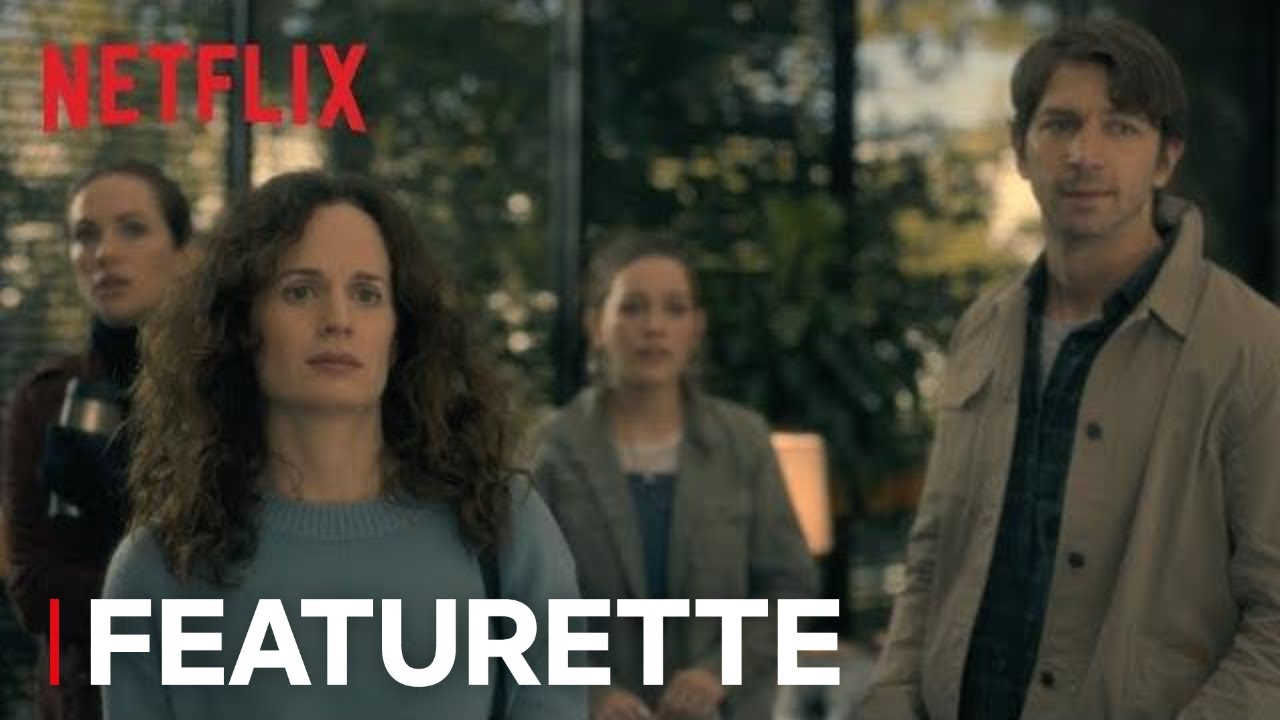
The series is as much about grief, addiction, estrangement, and the long aftermath of a traumatic childhood as it is about ghosts. Flanagan uses Hill House as a metaphor for inherited trauma — the house does to the Crain children what bad childhoods do, marking them in ways they carry into adult lives. This psychological dimension is not absent from the novel — Jackson's Eleanor is damaged by her past — but Flanagan develops it across five siblings and two timelines in ways that give the series an emotional range the book's narrower focus doesn't attempt.
The long-take episode
Episode six, "Two Storms," is constructed to appear as two continuous single takes — the adult Crains in the present and the child Crains in the past, both spending a stormy night in Hill House, cut between through ingenious staging. It is one of the most formally audacious episodes of recent American television, and it has no equivalent in the novel. Flanagan uses the single-take illusion to make the two timelines feel simultaneously present, which is exactly what the novel achieves through prose — but through entirely cinematic means.
The ghosts
Jackson's novel is famously ambiguous about whether the hauntings are real or internal — Eleanor may be projecting, the house may be feeding on her psychology, the manifestations may have no independent existence. Flanagan's series makes the ghosts real and visible — the famous background ghost easter eggs hidden in scenes throughout the season — and gives them identities and histories. This removes the novel's most distinctive quality (its radical ambiguity) in exchange for something more emotionally legible. The series' ghosts are the family's dead, which is devastating in its own right.
Jackson's prose
The novel opens with one of the most celebrated paragraphs in horror literature, and it maintains that level of stylistic control for two hundred pages. Jackson's sentences perform the instability they describe — the grammar itself begins to shift as Eleanor's hold on reality loosens. This is the experience of the novel, and no series can replicate it. Readers who encounter the book after the series will find something entirely different from what they're expecting: quieter, stranger, and more disturbing in a specifically literary way.
Should You Read First?
Yes — the novel is short (under two hundred pages), can be read in a day, and delivers a form of horror that the series, for all its brilliance, cannot replicate. Read first to encounter Jackson's Eleanor in her own voice. Then watch Flanagan's series as the magnificent separate object it is — inspired by the novel rather than faithful to it, and equally worth your time.
Jackson's novel is a masterwork of psychological horror conducted through prose of total control — the unreliable narrator as horror device, the haunted house as metaphor for a haunted mind. Flanagan's series is a masterwork of family trauma drama that uses Jackson's setting as a framework for its own deeply felt argument about grief and inheritance. They are different achievements in different forms, both essential. Too close to call — and the rare case where both source and adaptation deserve the highest praise.