The Story in Brief
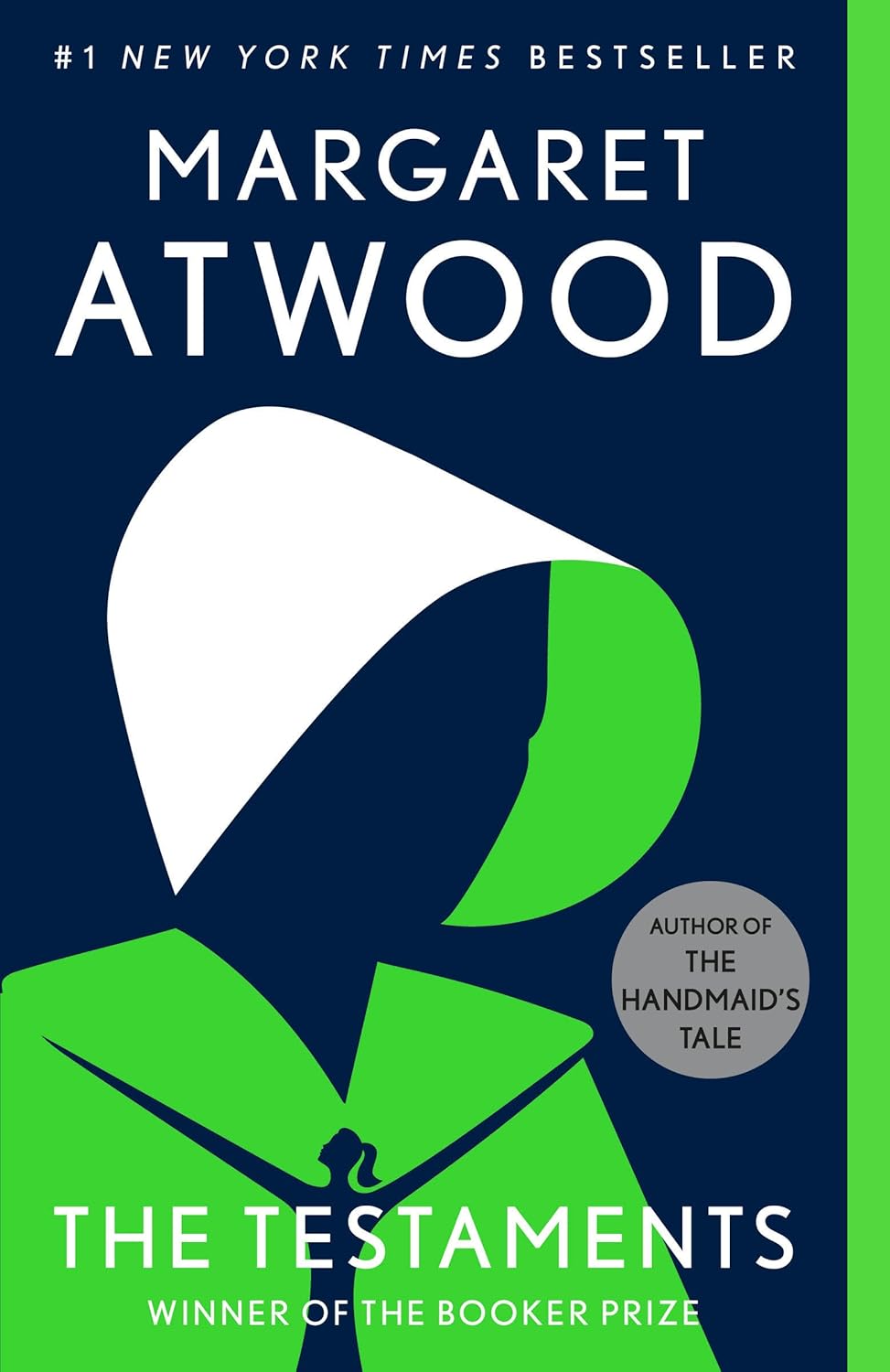
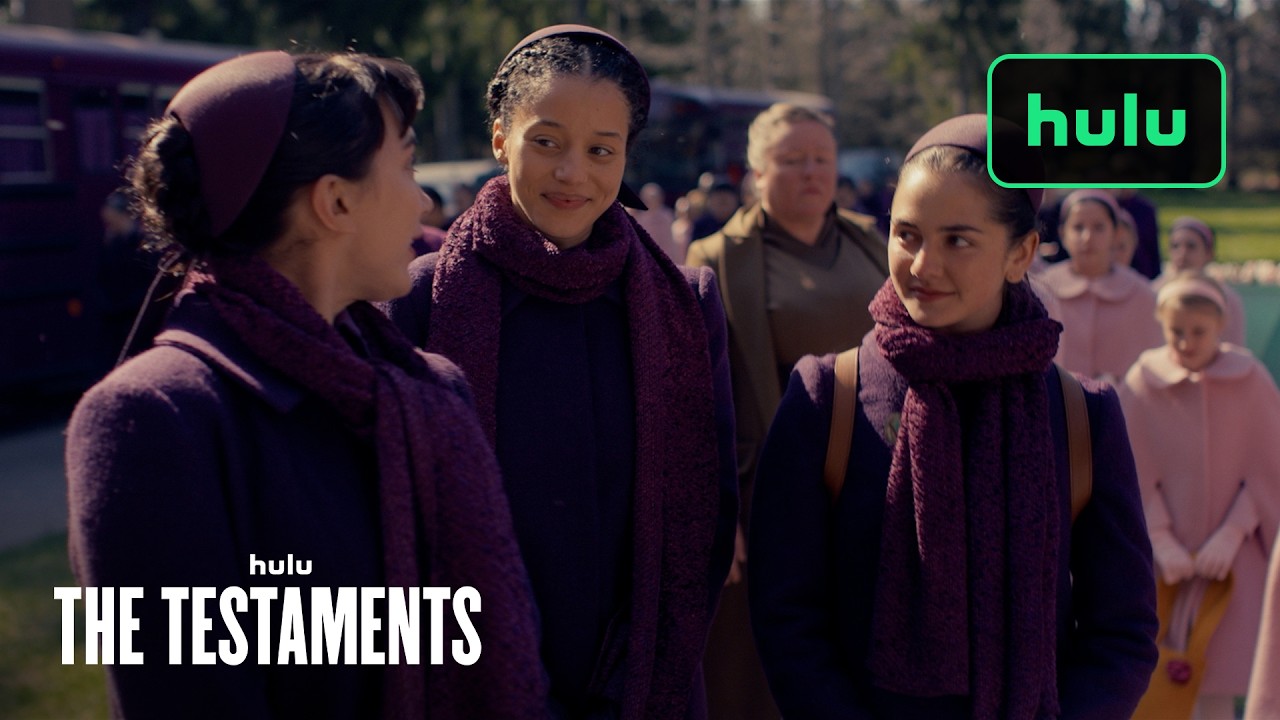
Margaret Atwood's The Testaments picks up fifteen years after The Handmaid's Tale ends, revealing the fates of Offred, Janine, and the world they inhabited through three interconnected testimonies. The novel expands the scope of Gilead's collapse from personal survival to systemic unraveling, introducing new characters while interrogating the ideology that sustained the regime. The 2025 series adaptation inherits this ambition, translating Atwood's fragmented narrative structure into television's visual language while deepening the political reckoning at the story's core.
This comparison matters because The Testaments represents a rare case where an author directly controls the continuation of her own adapted world. Atwood didn't just write a sequel—she wrote it with full awareness of how the first adaptation had reshaped her original vision in the cultural imagination. The series must therefore navigate a triple loyalty: to the novel's text, to the established visual grammar of the Hulu show, and to Atwood's own evolved understanding of Gilead's mythology.
| Character | In the Book | In the The Series |
|---|---|---|
| Offred / June Osborne Elisabeth Moss |
June appears only in fragmented flashbacks and testimony, her presence felt through absence rather than direct narration. Atwood uses her as a ghost haunting the sequel's moral landscape, a figure whose survival remains deliberately ambiguous until the novel's final pages. She is less protagonist than catalyst for the other women's stories. | Elisabeth Moss's June becomes the emotional anchor of the series, her agency and resistance foregrounded in ways the novel deliberately withholds. The show grants her scenes and confrontations that the book reserves for other narrators, transforming her from absent legend into active architect of Gilead's downfall. Moss carries the weight of the audience's investment from the first series into this new chapter. |
| Daisy / Kiki Samira Wiley |
Janine's daughter appears as a young woman raised in Canada with no memory of Gilead, her testimony forming one of the novel's three pillars. She is naive, idealistic, and driven by a need to understand her mother's trauma and her own origins. Atwood uses her as a bridge between Gilead and the outside world, her innocence both touching and politically complicated. | The series deepens Daisy's backstory and her psychological journey, showing her recruitment into the resistance and her gradual radicalization. Samira Wiley's performance emphasizes the character's internal conflict between her Canadian upbringing and her biological connection to Gilead's violence. The show grants her agency and moral complexity that the novel's epistolary structure sometimes flattens. |
| Aunt Lydia Ann Dowd |
Lydia's testimony reveals her as a true believer corrupted by power, a woman who constructed Gilead's ideology from her own wounded past. The novel presents her with unexpected depth and even moments of self-awareness, though she remains fundamentally unredeemable. Her narrative voice is controlled, precise, and deeply unsettling in its rationalization of atrocity. | Ann Dowd's Lydia becomes increasingly unmoored from certainty as the series progresses, her faith in the regime visibly fracturing. The show visualizes her internal collapse through performance and mise-en-scène rather than relying on her internal monologue. She emerges as a tragic figure—not sympathetic, but comprehensible in her desperation to maintain a world that no longer exists. |
| Tuello Daniel Brühl |
The Eye operative appears primarily through Lydia's testimony, a shadowy figure representing Gilead's intelligence apparatus. He is efficient, amoral, and ultimately a functionary of the regime's machinery. The novel keeps him deliberately opaque, a reminder that Gilead's evil is often bureaucratic rather than theatrical. | The series gives Tuello unexpected dimension, revealing his own doubts and his complex relationship with the regime's leadership. Daniel Brühl's performance suggests a man caught between loyalty and conscience, making him a more active player in Gilead's unraveling. The show uses him to explore how systems collapse from within through the defection of true believers. |
| Janine Yvonne Strahovski |
Janine exists primarily through her daughter's memories and Lydia's observations, a figure whose trauma has rendered her both dangerous and unreliable. The novel suggests her survival but keeps her largely off-stage, allowing readers to imagine her fate. She is more symbol of Gilead's damage than fully realized character. | Yvonne Strahovski's Janine becomes a central figure in the series, her psychological unraveling and eventual radicalization shown directly rather than reported. The show explores her capacity for both vulnerability and violence, making her a key player in the resistance's strategy. Her presence grounds the political upheaval in personal consequence and trauma. |
Key Differences
The Novel's Fragmented Testimony Structure Becomes Linear Television Narrative
Atwood's The Testaments is built on three distinct first-person testimonies—from Daisy, Lydia, and an unnamed third narrator—that create deliberate gaps and contradictions. The reader must actively reconstruct events from competing perspectives, with the novel's power deriving partly from what remains unsaid and ambiguous. This structure forces engagement with unreliable narration and the impossibility of objective truth in a totalitarian state.
The series necessarily flattens this architecture into a more conventional dramatic timeline, using voiceover and intercut scenes to suggest the novel's polyphonic structure while maintaining television's demand for forward momentum and clarity. The show gains visual storytelling and immediate emotional impact but sacrifices the novel's formal innovation. Where the book asks readers to doubt their own understanding, the series shows us what happened and lets us judge it—a fundamentally different epistemological project.
Atwood Expands Gilead's Collapse; The Series Dramatizes Its Final Days
The novel treats Gilead's unraveling as a systemic failure—economic, ideological, and demographic—that unfolds across years through bureaucratic memo and personal testimony. Atwood is interested in how totalitarian regimes don't fall in dramatic moments but through the slow erosion of their own contradictions. The Testaments is as much about institutional decay as it is about individual resistance.
The series compresses this into a more urgent timeline, staging Gilead's final collapse as a series of escalating crises and confrontations. The show privileges dramatic confrontation and personal agency over Atwood's slower analysis of systemic failure. This makes the series more immediately gripping but less interested in the novel's deeper argument about how power actually dissolves. The book is a political autopsy; the series is a revolution narrative.
The Novel Keeps June's Fate Deliberately Ambiguous Until the Final Pages
In The Testaments, Offred's survival is the central mystery that Atwood withholds from readers for most of the novel. She appears in fragments and references, her ultimate fate unknown until the final testimony reveals she escaped to Canada. This ambiguity is crucial to the novel's thematic project—the reader experiences the same uncertainty that Gilead's victims endured, never knowing if loved ones survived or were disappeared.
The series cannot sustain this ambiguity across multiple seasons; Elisabeth Moss's presence demands narrative and agency. The show must show us June's journey rather than leave her as a ghost in other women's stories. This transforms The Testaments from a novel about absence and uncertainty into a series about presence and action. The shift is not a failure but a recognition that television and literature operate under different narrative contracts.
Atwood's Lydia Remains Ideologically Committed; The Show's Lydia Fractures
The novel's Aunt Lydia testimony is chilling precisely because she never fully doubts her own righteousness. She rationalizes atrocity through a twisted logic that remains internally consistent, even as readers recoil from it. Atwood refuses to grant her redemption or even genuine self-awareness—Lydia is a true believer to the end, which makes her far more disturbing than a villain who knows she's evil.
The series gradually destabilizes Ann Dowd's Lydia, showing her faith in Gilead's project eroding as the regime collapses around her. The show uses performance and visual language to suggest her psychological unraveling, making her increasingly sympathetic even as her actions remain monstrous. This is a more conventional dramatic arc—the true believer confronted with the failure of her faith—but it softens the novel's more radical refusal to grant Lydia any escape from her own complicity.
The Book Ends in Ambiguity; The Series Must Resolve Into Closure
The Testaments concludes with Daisy's testimony incomplete, with readers left uncertain about the full scope of Gilead's fate and the success of the resistance. Atwood deliberately withholds closure, suggesting that totalitarian collapse is ongoing and that the future remains contested. The novel's final pages are deliberately unsettling in their refusal to provide the satisfaction of total victory.
A television series, particularly one spanning multiple seasons, must eventually move toward narrative resolution. The show will likely provide more definitive answers about Gilead's fate and the resistance's success than the novel permits itself to offer. This is not a failure of adaptation but an acknowledgment that serialized television and literary fiction operate under different formal pressures. The book can end in productive ambiguity; the series must eventually answer the questions it raises.
Should You Read First?
Read the novel first. The Testaments is deliberately constructed as a literary experience—its fragmented testimony structure, unreliable narrators, and withheld information create a reading experience that cannot be replicated on screen. Atwood's prose carries philosophical and political weight that visual storytelling, however sophisticated, cannot fully translate. The novel also rewards the reader who brings knowledge of The Handmaid's Tale to it; reading the sequel in Atwood's own words deepens the thematic resonance of the adaptation.
The series will be more immediately gripping and emotionally direct than the novel, which is precisely why reading first matters. You'll appreciate the show's dramatization of events that Atwood only hints at, and you'll understand what the adaptation has chosen to emphasize and what it has necessarily abandoned. The novel is the architecture; the series is the building. See the blueprint first.
The series wins as television but the novel wins as literature, and they are not the same victory. The 2025 adaptation is a sophisticated, visually stunning dramatization that understands Atwood's political project and executes it with intelligence and emotional force. But The Testaments on the page does something the screen cannot: it forces readers into the epistemological uncertainty of living under totalitarianism, where truth is fragmented, narrators are unreliable, and closure is impossible. The series gains urgency and clarity; the novel retains philosophical depth. Both are worth experiencing, but they are fundamentally different works.