The Story in Brief
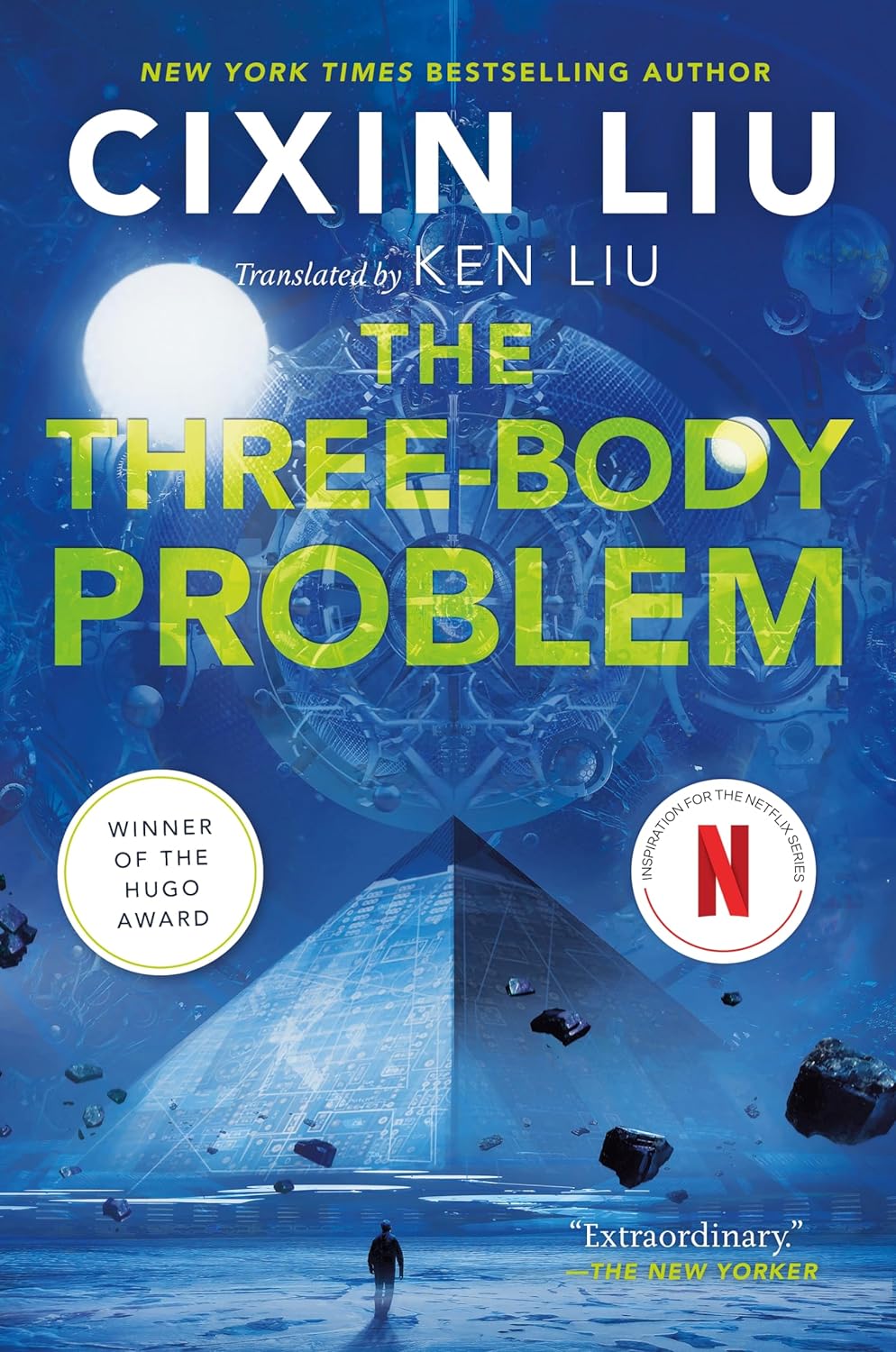
Liu Cixin's The Three-Body Problem opens during China's Cultural Revolution, where astrophysicist Ye Wenjie witnesses her father's brutal execution by Red Guards. Decades later, disillusioned with humanity, she responds to an alien signal from the Trisolaran civilization—a species whose planet orbits three suns in chaotic, unpredictable patterns. Ye's transmission invites the Trisolarans to Earth, setting in motion a four-hundred-year countdown to invasion. Nanomaterials scientist Wang Miao stumbles into the conspiracy through a mysterious VR game that simulates Trisolaran history, eventually uncovering the Earth-Trisolaris Organization—a group of human collaborators preparing for alien arrival.
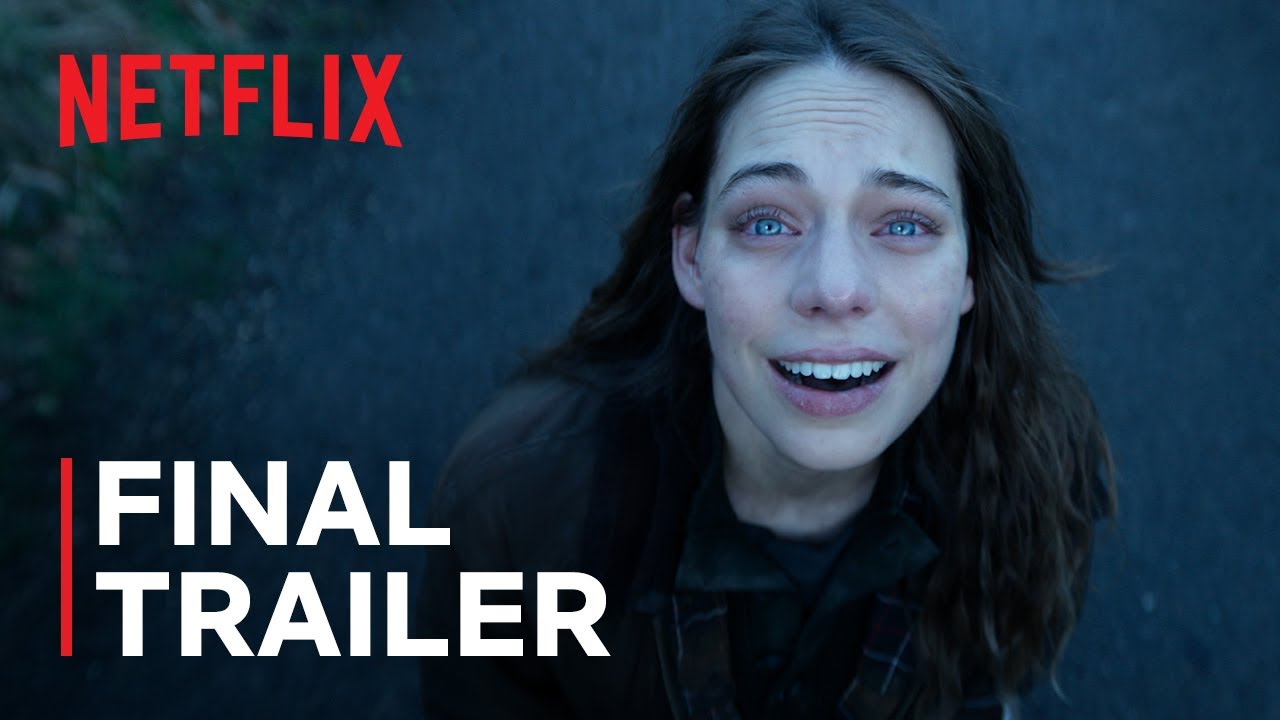
The 2024 Netflix adaptation, developed by Game of Thrones showrunners David Benioff and D.B. Weiss, relocates most of the action from Beijing to Oxford and splits Wang Miao's role among five scientists: Jin Cheng, Auggie Salazar, Saul Durand, Jack Rooney, and Will Downing. Benedict Wong plays Detective Da Shi (Shi Qiang in the novel), now investigating a wave of physicist suicides in London rather than China. The series condenses the novel's deliberate pacing into eight episodes, adding romantic subplots and interpersonal drama absent from Liu's cerebral original.
The novel won the Hugo Award in 2015—the first translated work to do so—and launched a trilogy that redefined hard science fiction for a global audience. Netflix's version premiered to mixed reviews, praised for its visual effects and performances but criticized for diluting the source material's philosophical rigor and Chinese cultural specificity.
| Character | In the Book | In the The Series |
|---|---|---|
| Ye Wenjie Rosalind Chao / Zine Tseng |
A Chinese astrophysicist traumatized by the Cultural Revolution who sends the fateful transmission from Red Coast Base, becoming the Earth-Trisolaris Organization's spiritual leader. | Portrayed in dual timelines—young Ye (Zine Tseng) endures the same trauma, while elderly Ye (Rosalind Chao) mentors Jin Cheng in present-day England, her backstory condensed into flashbacks. |
| Wang Miao Split into five characters |
A nanomaterials researcher and the novel's primary protagonist, who investigates the Three-Body game and uncovers the Trisolaran conspiracy through methodical scientific inquiry. | His role is divided among Jin Cheng (Jess Hong), Auggie Salazar (Eiza González), Saul Durand (Jovan Adepo), Jack Rooney (John Bradley), and Will Downing (Alex Sharp)—five Oxford colleagues with distinct personalities and conflicts. |
| Shi Qiang (Da Shi) Benedict Wong |
A gruff, chain-smoking Beijing detective who provides street-smart pragmatism to balance Wang Miao's intellectualism, becoming his unlikely ally. | Reimagined as Detective Clarence "Da" Shi in London, Benedict Wong brings charisma and humor, though the character's working-class Chinese identity is replaced with a more generic tough-cop archetype. |
| Mike Evans Jonathan Pryce |
An American oil heir and radical environmentalist who funds the ETO and commands the Judgment Day ship, believing humanity deserves extinction. | Jonathan Pryce plays Evans with aristocratic menace, his motivations clarified through added dialogue that makes his misanthropy more explicit than the novel's ambiguous portrayal. |
| Tatiana Marlo Kelly |
A minor ETO operative in the novel, briefly mentioned during the Judgment Day operation. | Expanded into a major antagonist who recruits Jack Rooney and serves as the series' human face of the Trisolaran threat, adding personal stakes absent from the book. |
Key Differences
The Cultural Revolution becomes a prologue, not the foundation
Liu Cixin's novel opens with a harrowing fifty-page sequence set during the Cultural Revolution, where Ye Wenjie watches Red Guards beat her physicist father to death for refusing to denounce Einstein's theory of relativity. This trauma—rooted in specific Chinese history—motivates her betrayal of humanity. The book spends chapters exploring her exile to Red Coast Base, her discovery of the alien signal, and her gradual radicalization.
The Netflix series compresses this into two brief flashback episodes. Young Ye's story is told in fragments, intercut with present-day Oxford scenes. The Red Guards' violence is shown but not dwelled upon, and the political context—Mao's campaign against intellectuals—is barely explained. This makes Ye's decision feel more like personal revenge than a philosophical rejection of human civilization, flattening the novel's critique of ideological extremism.
Wang Miao splits into five Oxford scientists with invented drama
The novel's Wang Miao is a solitary, methodical researcher who investigates the Three-Body game alone, his scientific curiosity driving the plot. The series replaces him with five former Oxford classmates—Jin, Auggie, Saul, Jack, and Will—whose personal relationships generate conflict. Jin and Jack have romantic tension. Auggie struggles with guilt over her nanofiber research. Will is dying of cancer, a subplot invented for the show.
This ensemble approach allows for more conventional TV drama—arguments, betrayals, tearful reconciliations—but dilutes the novel's focus on ideas over personalities. The book's Wang Miao is defined by his intellectual rigor; the series' characters are defined by their emotional wounds. Benioff and Weiss clearly wanted a Game of Thrones–style ensemble, but Liu's novel is not structured for that.
The sophons arrive earlier and more visibly
In the novel, the sophons—subatomic supercomputers sent by the Trisolarans to sabotage Earth's particle accelerators—are revealed late, through exposition. Their effects are subtle: experimental results become unreliable, physics research stalls. Wang Miao sees a countdown in his vision, but the sophons themselves remain invisible, a conceptual threat.
The series makes them literal antagonists. Auggie sees the countdown projected onto her retinas in glowing red numbers. The sophons manifest as shimmering distortions, slicing through the sky and causing mass panic. In the finale, they unfold into higher dimensions, creating a cosmic light show. This visual spectacle works for television but undermines the novel's emphasis on invisible, insidious control—the idea that humanity is already defeated without knowing it.
The Judgment Day operation becomes a heist thriller
The novel's Judgment Day sequence is clinical: Da Shi and Wang Miao use Auggie's nanofibers to slice Mike Evans' ship into sections, killing everyone aboard to retrieve ETO data. Liu describes it in detached, almost documentary prose, emphasizing the cold logic of the plan. The horror is intellectual—the realization that humanity must commit atrocities to survive.
The Netflix version turns it into a tense action set piece. Da Shi and Jin infiltrate the ship. There's a countdown timer. Tatiana confronts them. The nanofibers slice through the vessel in slow motion, bodies falling in gruesome detail. It's viscerally effective but shifts the tone from philosophical dread to blockbuster spectacle. The book asks whether the ends justify the means; the show asks whether our heroes will escape in time.
The series borrows from The Dark Forest to raise the stakes
The first novel ends quietly, with humanity aware of the Trisolaran threat but four centuries away from invasion. The series, however, pulls plot points from the second book—The Dark Forest—into its finale. Saul Durand is revealed as a "Wallfacer," chosen to devise secret strategies against the Trisolarans, a concept not introduced until book two. The series also hints at the "dark forest" theory—that the universe is full of civilizations hiding from each other—through dialogue that doesn't appear in the first novel.
This accelerates the narrative but creates confusion for book readers and newcomers alike. The Wallfacer project is complex, requiring extensive setup; the show introduces it in a single scene. By jumping ahead, the series sacrifices the first novel's slow-burn dread for immediate dramatic payoff, betting that viewers won't wait for a second season to see the stakes escalate.
If you value hard science fiction that trusts your intelligence, read Liu Cixin's novel before watching the series. The book demands patience—its first hundred pages are dense with physics, Chinese history, and philosophical asides—but rewards readers with a rigorously constructed vision of first contact. Liu doesn't simplify the Three-Body Problem or the sophon technology; he expects you to follow the math. The novel's protagonist, Wang Miao, is a scientist first, a character second, and the plot unfolds through his methodical investigation rather than emotional beats.
The Netflix series, by contrast, prioritizes accessibility and character drama. If you're intimidated by the novel's reputation for difficulty, or if you prefer ensemble casts and visual storytelling, the show offers a faster entry point. But you'll miss the Cultural Revolution's weight, the novel's critique of blind faith in ideology, and the eerie sense that humanity is already checkmate without realizing it. The series is competent adaptation; the book is a genre landmark. Read first, then watch to see what survives translation.
Should You Read First?
If you value hard science fiction that trusts your intelligence, read Liu Cixin's novel before watching the series. The book demands patience—its first hundred pages are dense with physics, Chinese history, and philosophical asides—but rewards readers with a rigorously constructed vision of first contact. Liu doesn't simplify the Three-Body Problem or the sophon technology; he expects you to follow the math. The novel's protagonist, Wang Miao, is a scientist first, a character second, and the plot unfolds through his methodical investigation rather than emotional beats.
The Netflix series, by contrast, prioritizes accessibility and character drama. If you're intimidated by the novel's reputation for difficulty, or if you prefer ensemble casts and visual storytelling, the show offers a faster entry point. But you'll miss the Cultural Revolution's weight, the novel's critique of blind faith in ideology, and the eerie sense that humanity is already checkmate without realizing it. The series is competent adaptation; the book is a genre landmark. Read first, then watch to see what survives translation.
Liu Cixin's novel wins for its uncompromising intelligence and cultural specificity—the Cultural Revolution isn't set dressing but the moral engine of the story. The Netflix series delivers spectacle and star power, making the material more palatable but less profound. The book asks what humanity deserves; the show asks whether you'll tune in for season two.