The Story in Brief
At twenty-six, Cheryl Strayed was in freefall. Her mother Bobbi had died of cancer four years earlier. Her marriage to Paul had collapsed under the weight of her grief and infidelity. She had drifted into heroin and a string of destructive relationships. With no hiking experience and a backpack so heavy she nicknamed it Monster, she set out alone in 1995 to walk over a thousand miles of the Pacific Crest Trail from the Mojave Desert through California and Oregon to the Bridge of the Gods at the Washington border.
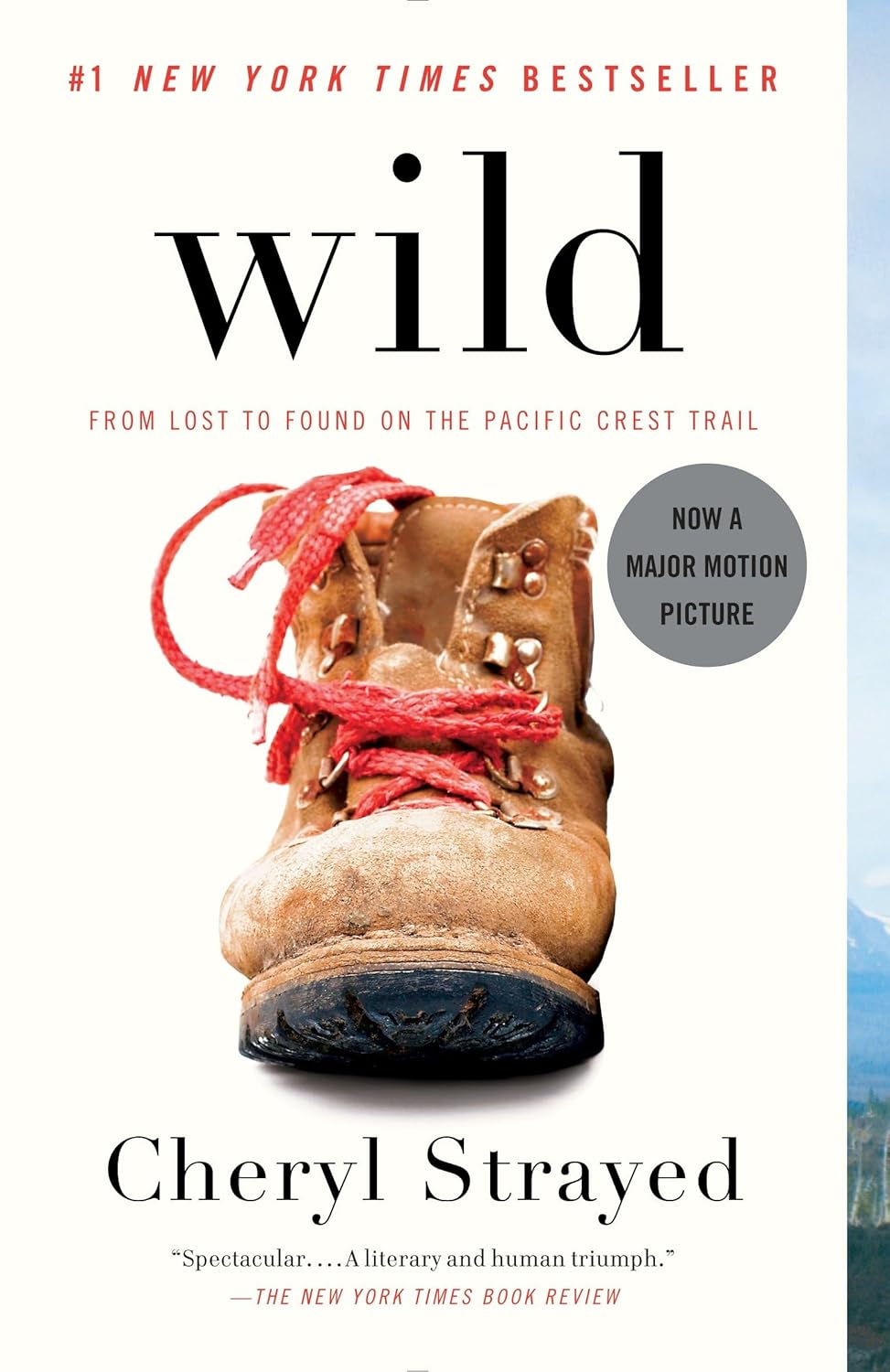
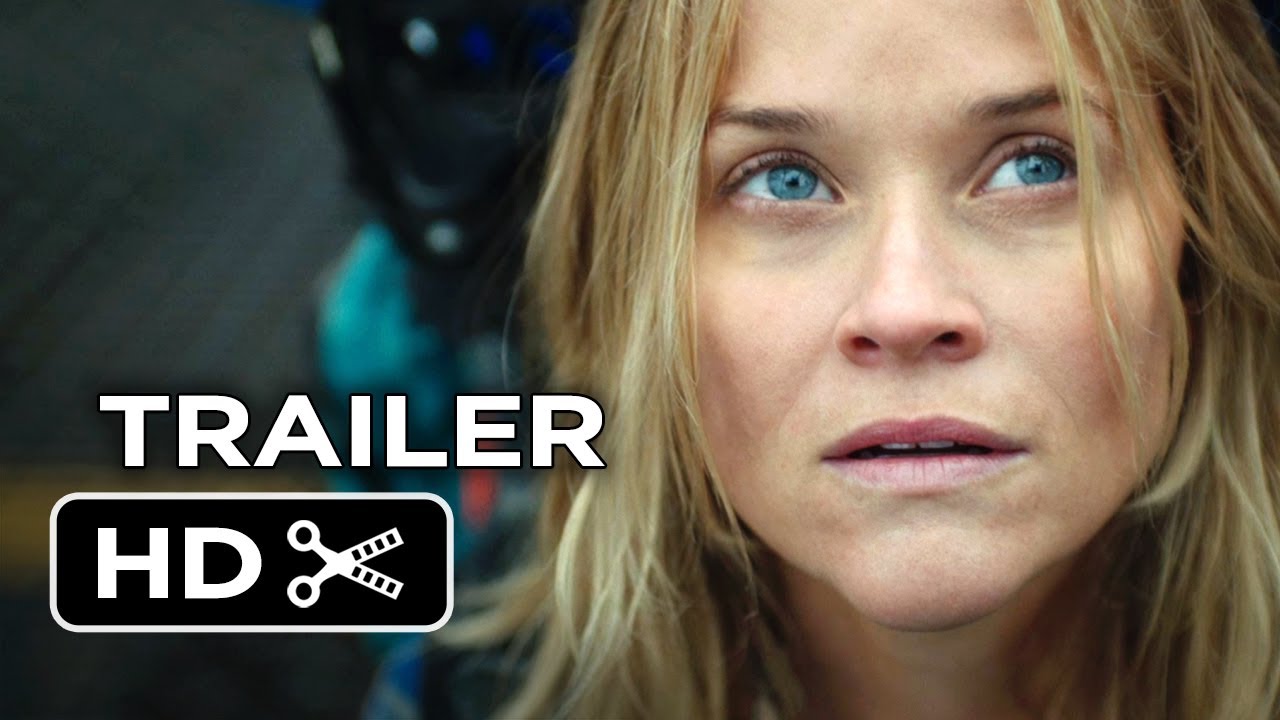
Cheryl Strayed's 2012 memoir became a surprise bestseller and cultural phenomenon, spending over a year on the New York Times bestseller list. Jean-Marc Vallée's 2014 film adaptation, with a screenplay by Nick Hornby, earned Reese Witherspoon an Oscar nomination for Best Actress and Laura Dern a nomination for Best Supporting Actress. The film was praised for its visual beauty and Witherspoon's committed performance, though critics noted the difficulty of translating Strayed's interior voice to screen.
Wild arrived at a moment when women's memoirs of self-discovery through physical challenge were finding mainstream audiences, and both book and film helped establish the PCT as an iconic American pilgrimage route.
| Character | In the Book | In the Film |
|---|---|---|
| Cheryl Strayed Reese Witherspoon |
Unflinchingly honest narrator who details her drug use, sexual behavior, and emotional chaos with the same clarity she brings to describing the trail. | Witherspoon captures Cheryl's determination and vulnerability but the film softens some of the memoir's harsher self-portrait, making her more immediately sympathetic. |
| Bobbi Grey Laura Dern |
Cheryl's mother, fully rendered across decades—her abusive first marriage, her return to college, her fierce optimism, and her rapid decline from lung cancer at forty-five. | Dern is luminous in flashbacks but appears in fragments; the film conveys her warmth and loss without the accumulated weight of knowing her as a complete person. |
| Paul Thomas Sadoski |
Cheryl's husband, a kind man she married young and destroyed through repeated infidelity during her grief spiral; the book details their relationship with painful specificity. | Sadoski plays Paul with quiet decency in brief flashbacks, but the film compresses their marriage into a few scenes, losing the cumulative guilt Cheryl carries. |
| Greg W. Earl Brown |
A fellow hiker Cheryl meets on the trail who offers practical help and becomes a brief companion; represents the trail community's unexpected kindness. | Greg appears in the film much as he does in the book—a welcome presence who helps Cheryl with her oversized pack and offers no-strings friendship. |
Key Differences
Strayed's voice is the book's irreplaceable element
The memoir's greatest asset is Strayed's prose—frank, funny, unsentimental, and capable of great tenderness. She is a gifted writer who doesn't spare herself: her drug use, her infidelities, her chaos are described with the same clarity as her grief and her love for her mother.
The film uses voiceover drawn directly from the book, and Witherspoon's narration helps. But two hours of performance can only suggest what four hundred pages of first-person reckoning delivers. The book feels like a confession; the film feels like a portrait. You're inside Cheryl's head in the memoir, watching her thoughts spiral and settle. In the film, you're watching Witherspoon embody those thoughts from the outside.
Bobbi exists fully in the book, fragmentarily on screen
Laura Dern received an Oscar nomination for her performance as Strayed's mother Bobbi, and she is luminous in the role—warm, optimistic, fiercely alive. But the film's Bobbi arrives in fragments, flashback glimpses of warmth and illness that serve primarily as motivation for Cheryl's journey.
The memoir has room to establish Bobbi fully: her escape from an abusive marriage, her late-blooming education, her specific and fierce love of life, her rapid decline from lung cancer. When Strayed describes her mother's death and her own collapse at the funeral, you have spent enough time with Bobbi to feel it as a genuine loss rather than a narrative catalyst. The film earns your sympathy; the book earns your grief.
The film owns the landscape in ways prose cannot
This is where the film has a genuine advantage. Vallée and cinematographer Yves Bélanger shoot the PCT with real grandeur—the scale of the Mojave, the brutality of the High Sierra snowfields, the particular quality of light at altitude in Oregon. Strayed's descriptions of the trail are vivid on the page, but seeing Witherspoon dwarfed by the landscape or picking her way across a snowfield with bleeding feet communicates the physical undertaking in a way prose cannot fully replicate.
The film also captures the absurdity of Monster, Cheryl's catastrophically overpacked backpack. Watching Witherspoon struggle to lift it or tip over backward under its weight is both funny and visceral. The book tells you it was too heavy; the film shows you what that meant.
The self-destruction is harsher and more sustained in the memoir
Strayed is unflinching in the memoir about the extent of her unraveling—the heroin, the casual sex with strangers, the deliberate self-harm of it all. She describes shooting up in a gas station bathroom and sleeping with men whose names she didn't know, not as dramatic low points but as the texture of several years of her life.
The film touches on this but softens the edges, partly for reasons of tone and partly because two hours can't sustain the cumulative weight of years of bad decisions. The book's Cheryl is harder to like and more honest; the film's Cheryl is easier to root for. Both choices are defensible, but the book's version is more true to the messiness of actual self-destruction and recovery.
The ending is quieter and more earned on the page
Both versions end at the Bridge of the Gods on the Oregon-Washington border, and both earn the moment. The film adds a brief flash-forward showing Strayed's later life—her remarriage to documentary filmmaker Brian Lindstrom, her two children, the life she built after the trail—which the memoir largely leaves implicit.
Strayed's ending on the page is quieter and more inward: a woman standing at the end of a long walk, not yet knowing who she'll become, simply knowing she has become someone capable of finishing what she started. The film's coda is warmer and more reassuring, but slightly less earned. The book trusts you to sit with uncertainty; the film wants to send you home comforted.
Should You Read First?
Yes—this is a memoir, which means the film is always going to be an interpretation of a real person's inner life rather than a faithful rendering of it. Strayed's voice is the book's irreplaceable element. Her ability to describe both the trail and her own worst behavior with the same clear-eyed honesty is what makes Wild more than a hiking story. Read it first and the film becomes a companion piece: Witherspoon embodying a woman you already know from the inside, Vallée showing you landscapes Strayed described.
Watch it first and you'll get a moving portrait of grief and recovery, anchored by one of Witherspoon's best performances. But you'll be missing the texture and honesty that make the book genuinely transformative—the sense of being inside someone's head during the worst and most clarifying years of her life.
Witherspoon is exceptional and Vallée films the American West with real beauty—the film is worth seeing on its own terms. But Wild is fundamentally a book about what it sounds like inside a particular woman's head during the worst and most clarifying years of her life, and no film can fully go where good memoir goes. The book gives you Strayed's voice, her honesty, her refusal to make herself easier to like. The trail is beautiful on screen. It's essential on the page.